

Intended Advantage, Part 4: Consistency Rewarded

by Steve Johnson, photos courtesy of Audi and the International Motor Racing Research Center
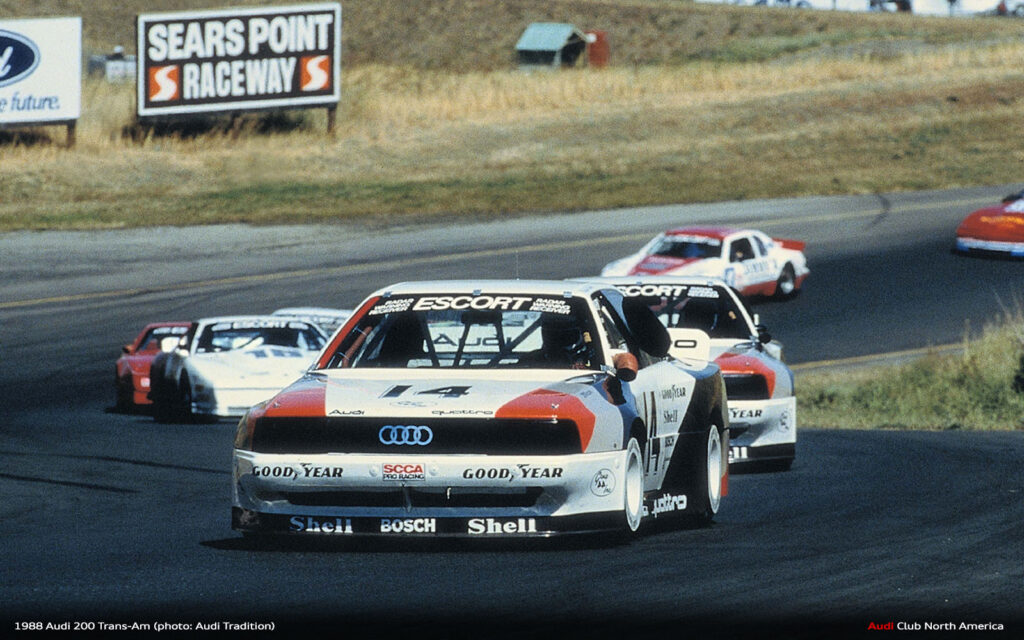
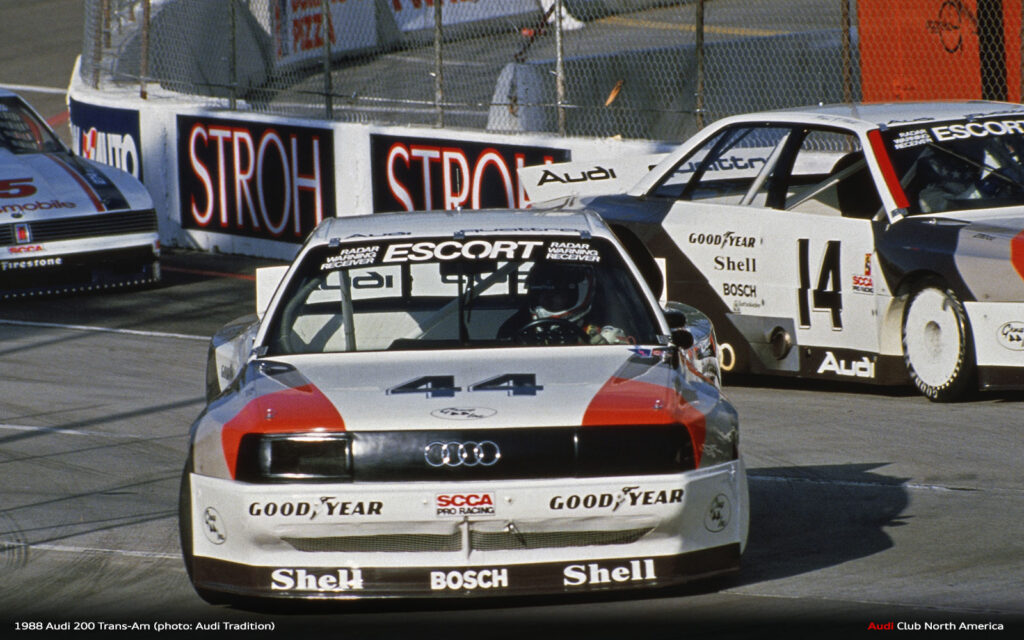
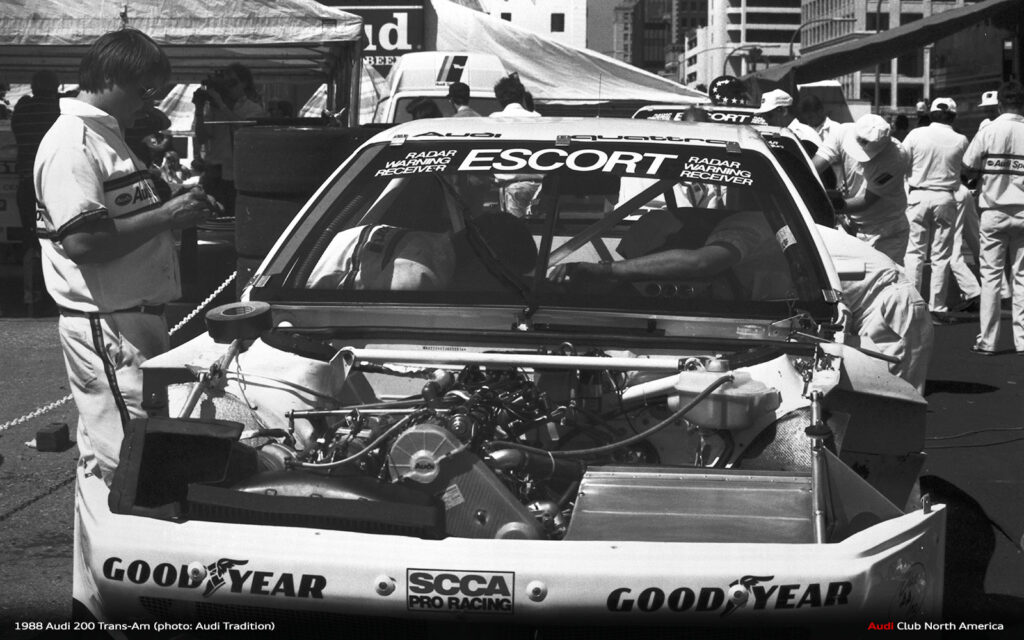
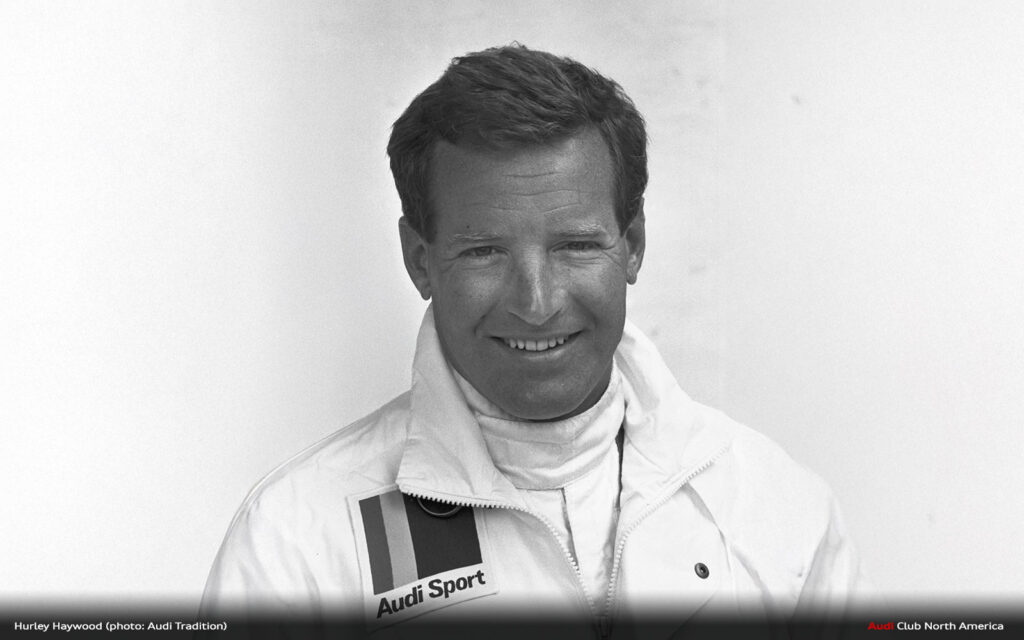
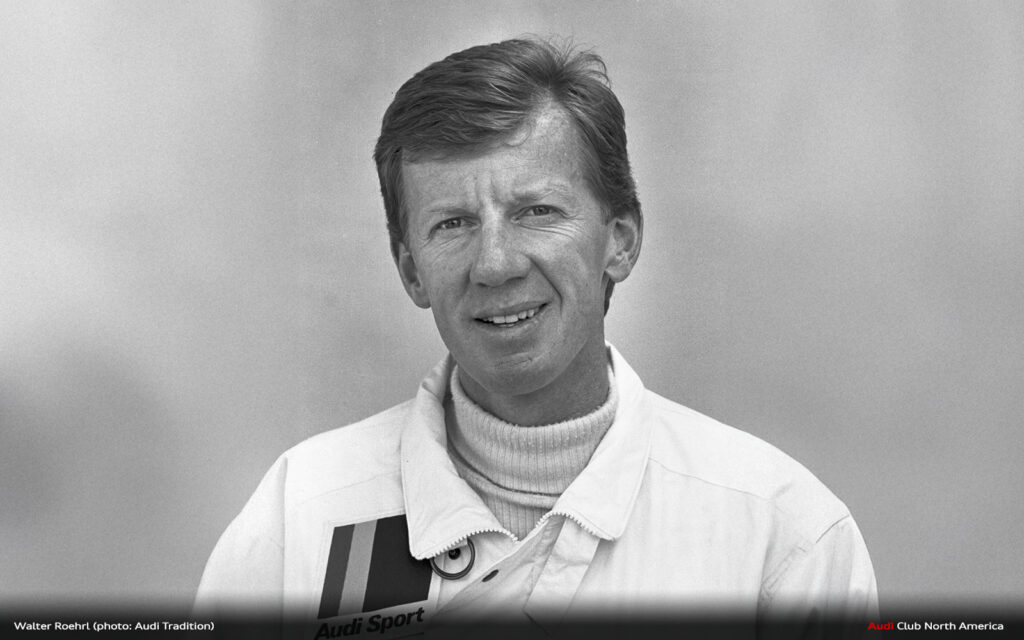
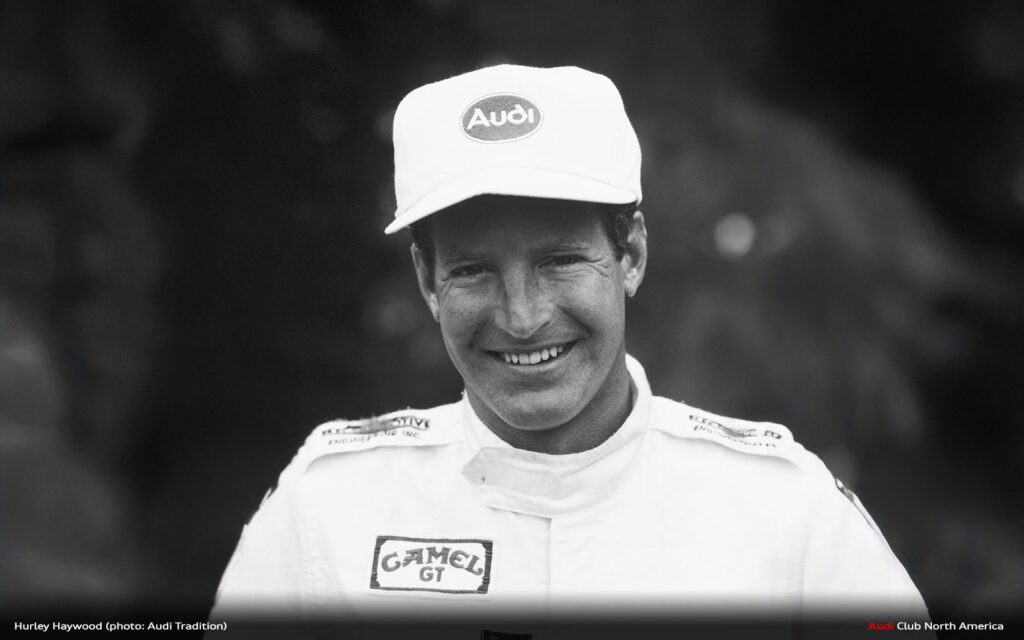
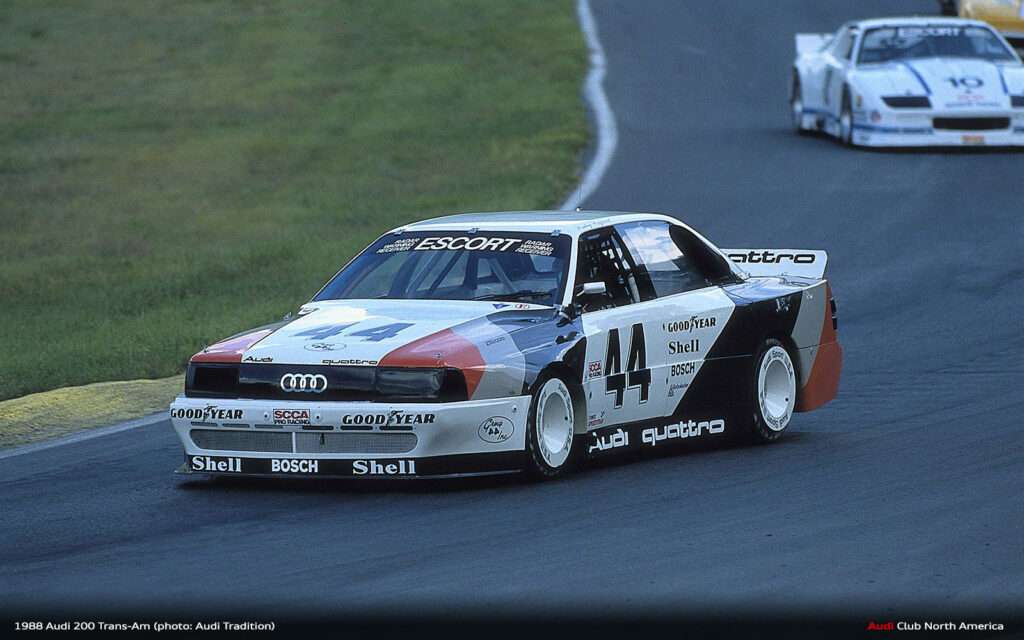
This year marks the 35th anniversary of Audi taking on the might of American muscle cars in the Trans-Am (T-A) series in an effort to rebuild the company’s damaged reputation. In Part 1, we covered the details of what caused the damage and what the team put together to rectify the situation. In Part 2 and 3, we described the season’s racing action and the efforts by T-A officials and fellow competitors to slow the winning Audis down. It’s now late September and the Group 44 race team with drivers, Hurley Haywood, Walter Rohrl and Hans Stuck, have won the T-A Manufacturer’s Championship at race 10 in Mid-Ohio. Haywood is now poised to win the Driver’s Championship at the next race despite the rule changes meant to slow his Audi 200. How would Haywood close-out the season? Let’s go to the races and find out!
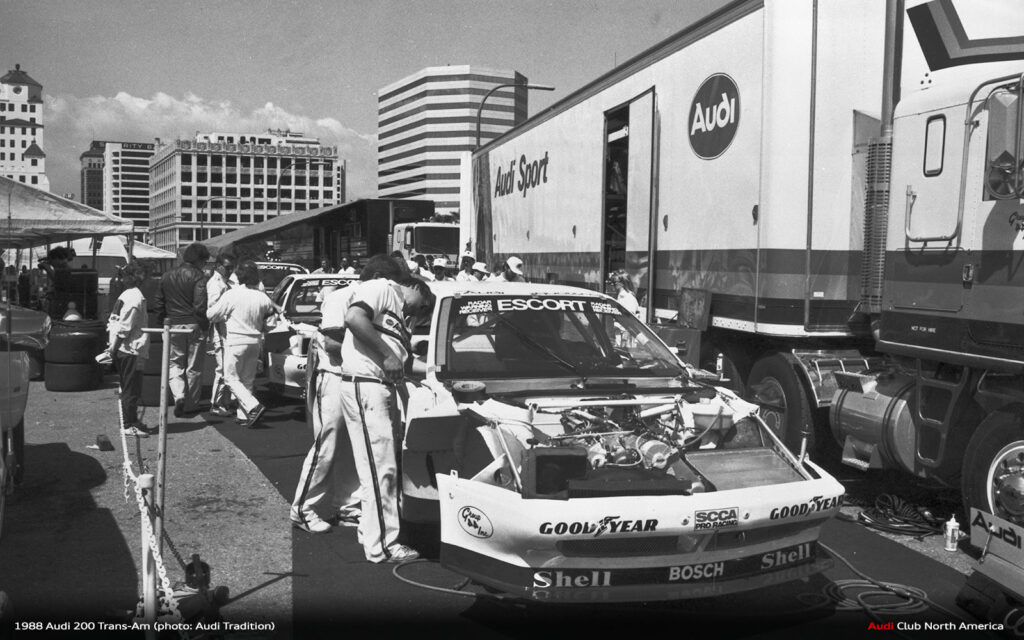
The Rothmans Trans-Am Weekend, September 25, Mosport Park, Bowmanville, Canada. Now called Canadian Tire Motorsports Park, it’s an ‘old school’ track with corners designed by and named for Sir Stirling Moss (fun fact: in 2008 Marco Werner set the fastest lap ever recorded on the track of 1:05.823 in an Audi R10 TDI). Here 50 laps of the 10-turn course would add up to 122.95 miles thus requiring the third pit stop race of the season. This is a fast, sweeping track with only turns 5a and 5b, Moss Corner, which is slow enough to show the Audi advantage under breaking and acceleration. But high tire temperatures caused by the tracks long-duration corners were the hot topic pre-race. The tire width restriction placed on Group 44 at the Lime Rock Park race was partially lifted for the Mid-Ohio and Road America races. Partially, meaning the Goodyear tires were back to their original width, but they were still mounted on one-inch narrower rims. After considerable deliberation between Goodyear tire reps, Group 44 team members and T-A Series Chief Steward, Dave Watson, lifted the rim size limitation.
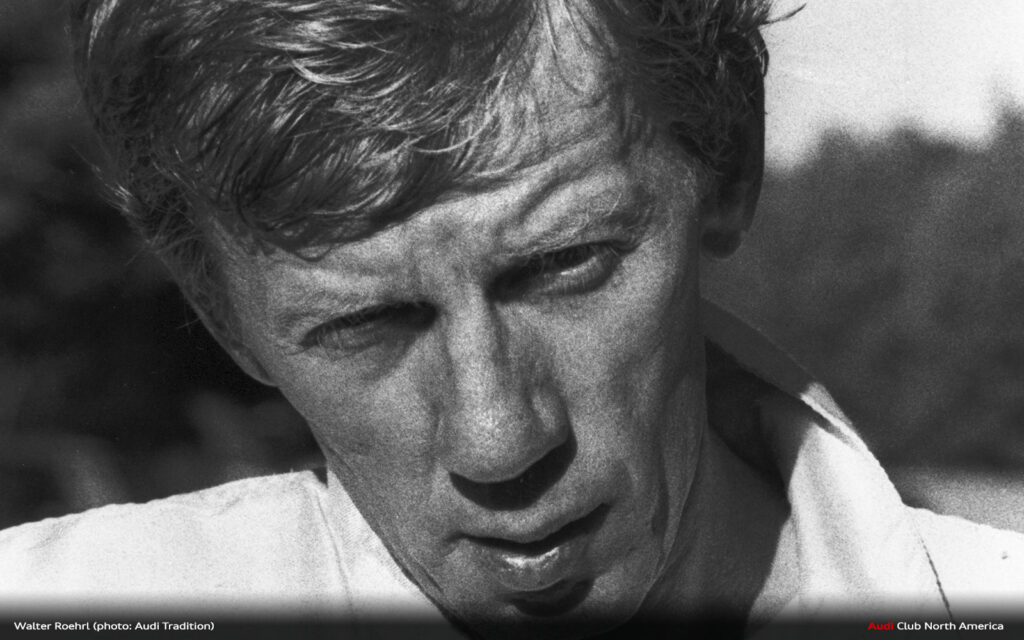
Fastest qualifier was hometown boy, Ron Fellows, in a Merkur XR4Ti with Darin Brassfield’s Corvette alongside on row 1. Haywood’s Driver’s title rival Irv Hoerr and Walter Rohrl shared the second row with Haywood in sixth place. From the green flag, it was a Brassfield-Fellows-Rohrl battle until Rohrl dispatched the Merkur and took aim on the Corvette of Brassfield. Rohrl took the lead on lap 34 before the mandatory pit stop then he and Brassfield traded the lead two more times. On the last lap, ironically, his right rear tire dramatically expired in a plume of smoke. Rohrl limped to the finish line crossing in fourth, last car on the lead lap, having already taken the race’s fastest lap as well.
But what of title contender Haywood’s day? Having passed Les Lindley and Irv Hoerr, he was running in third when Lady Luck left him. A misfiring engine meant an unscheduled pit stop to diagnose the problem. Back on the track just a few laps after pitting, Haywood’s 5-pot engine perished in a burst of flames.
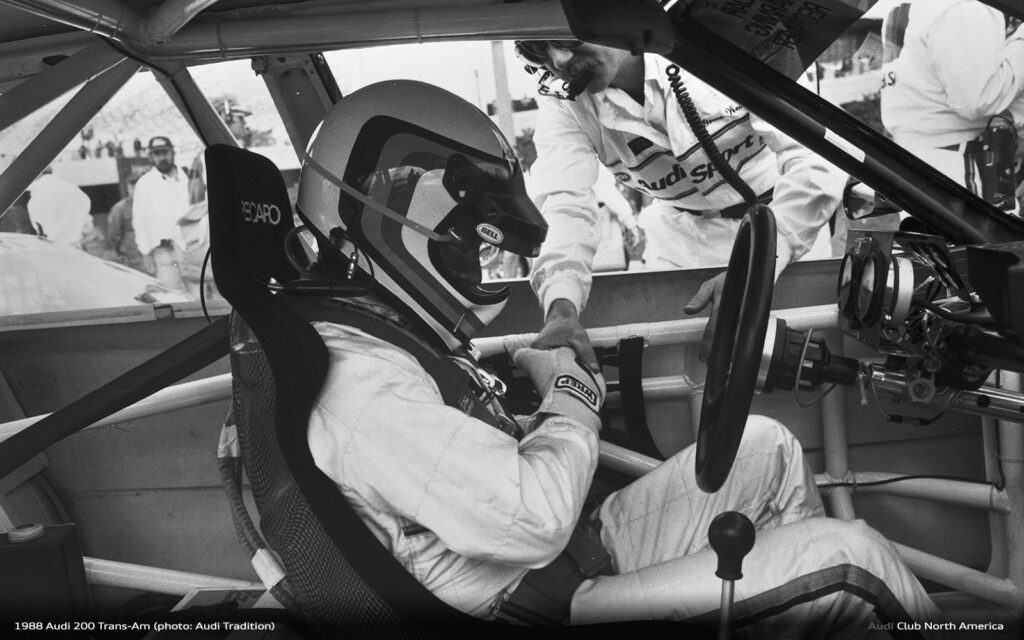
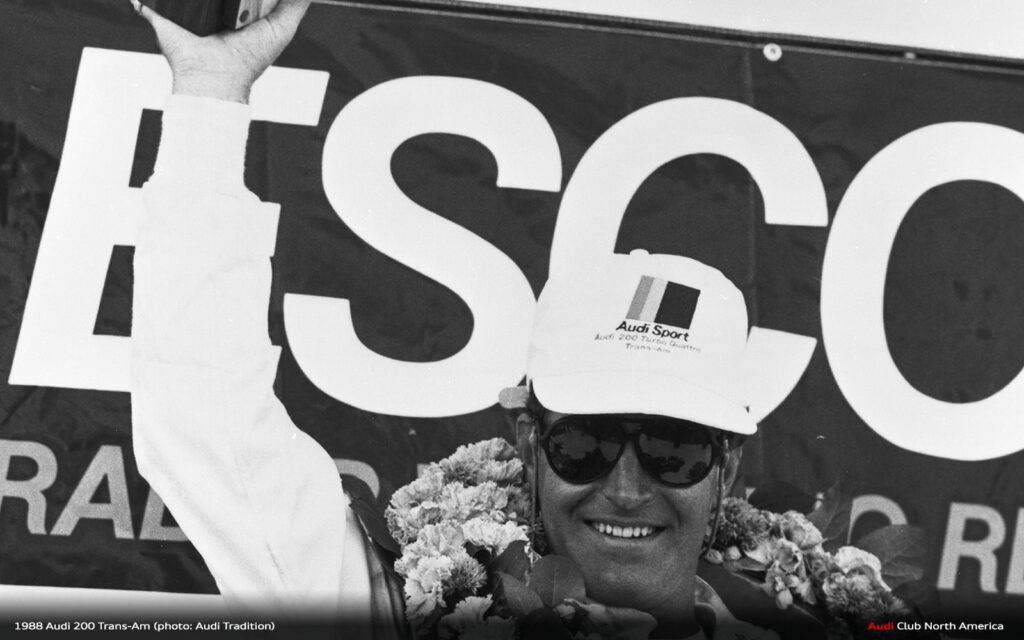
Starting the day with a 33.5-point lead and Hoerr only netting 11 points for his damage-induced fifth place, Hoerr was mathematically eliminated by that half-point Haywood earned in the Dallas race for splitting the number of laps led with Willy T. Ribbs. At the penultimate race, the 1988 T-A Driver’s Championship was secured by Haywood’s 151.5 points. Teammate Rohrl was up to 49 points.
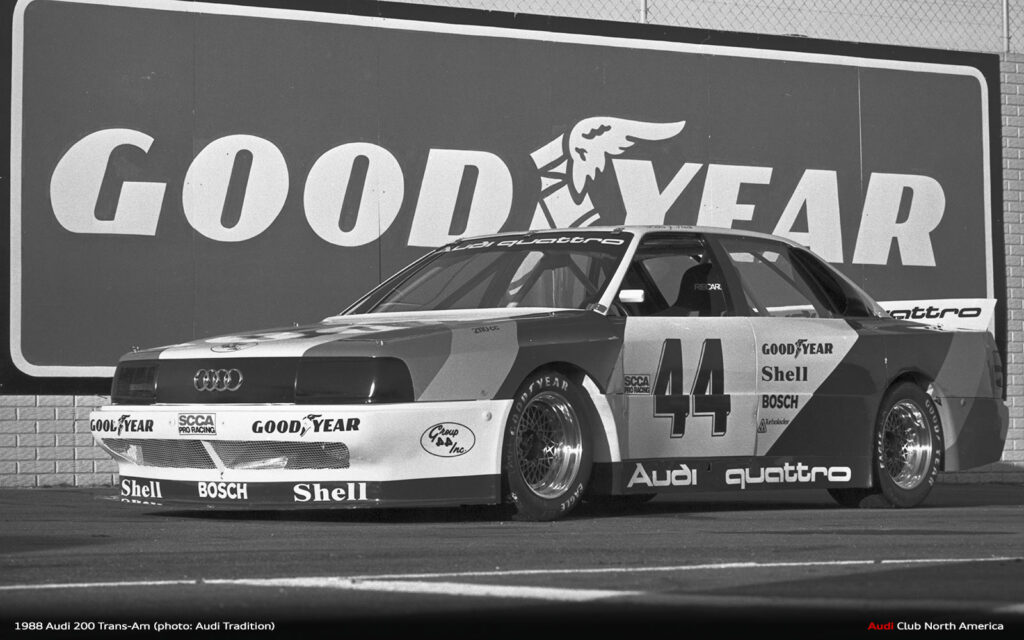
The GTE St. Petersburg Grand Prix, October 23, St. Petersburg, Florida. The season’s final race took place on a 2-mile, 10-turn temporary circuit on the streets of St. Pete, but not the layout currently used by IndyCar to begin their season which includes the airport runway. Through turn numbers three to five, the course was tight, but mainly it was long open straights. Set for 63 laps, racers would need to make another mandatory pit stop for fuel to complete the 126-mile distance.
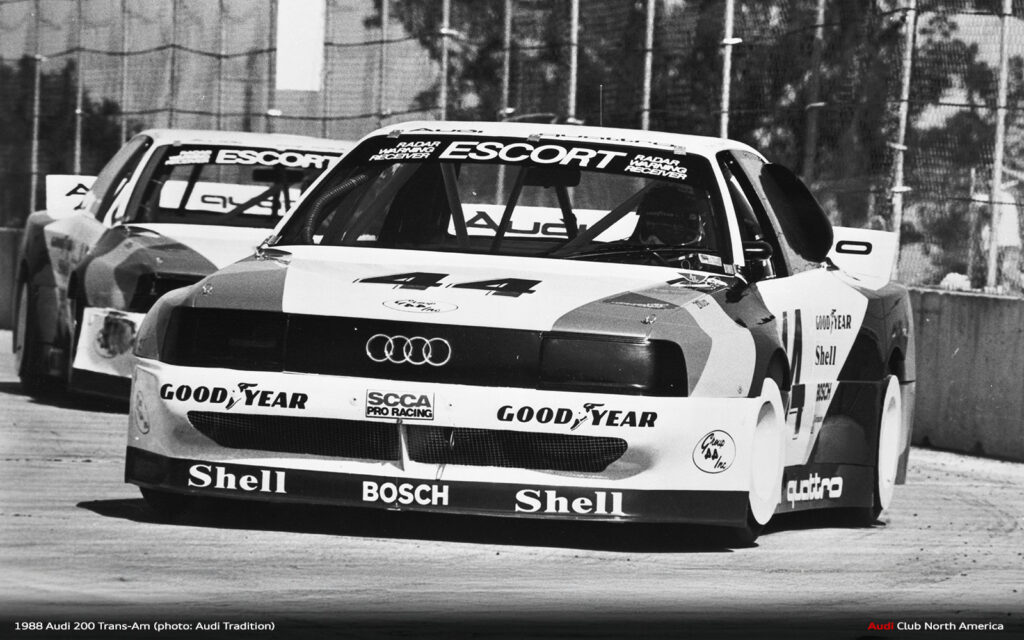
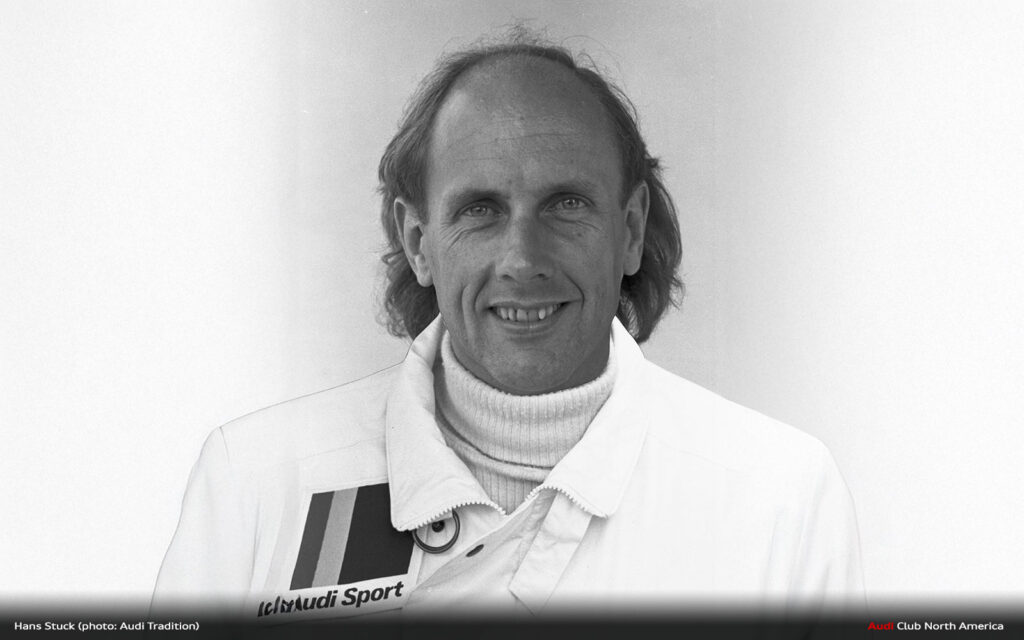
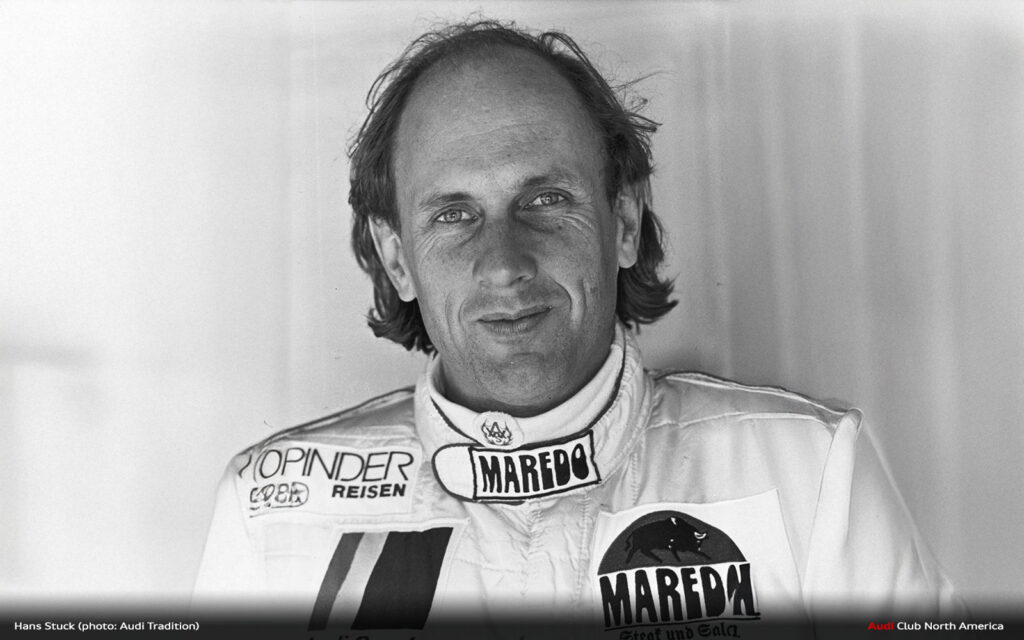
Group 44 brought all three Audi pilots to St. Pete to end the season en masse. They started the weekend in style by qualifying 1-2-3: Stuck, Rohrl and Haywood. Race day however, did not stick to the script. Pole sitter Stuck grabbed the lead at the end of lap one and held it for the next 12 laps until his engine let go with a watery bang. During the ensuing full-course yellow, Rohrl and Haywood came in for their mandatory pit stops. Darin Brassfield stayed out inheriting first place and built a big lead but used up his tires in the process. To save time during his pit stop, Brassfield’s team only changed one rear tire. He resumed the race in second behind Willy T. Ribbs just in front of a hard-charging Rohrl.
A short battle between the three drivers resulted in a Brassfield-Rohrl-Ribbs running order that lasted until an aggressive pass attempt of a lapped car by Brassfield, dropped him to fifth behind Haywood. While Rohrl distanced the field, Haywood struggled with low fuel pressure dropping him back through the field to an eventual 18th place finish. But all of Rohrl’s hard driving and 35-second lead were eliminated when another full-course yellow came with nine laps left. After the restart Rohrl was able to, again, gap the field coming home with the win and fastest lap.
At the conclusion of the 13-race season, the Driver’s title point standings for the main contenders were: Haywood 151.5, Hoerr 141, Pruitt 117, Brassfield 101, Stuck 100 and Rohrl 95. The final Manufacturer’s title standings were: Audi 92, Chevy 63, Olds 51 and last year’s champ Lincoln-Mercury with 48 points.
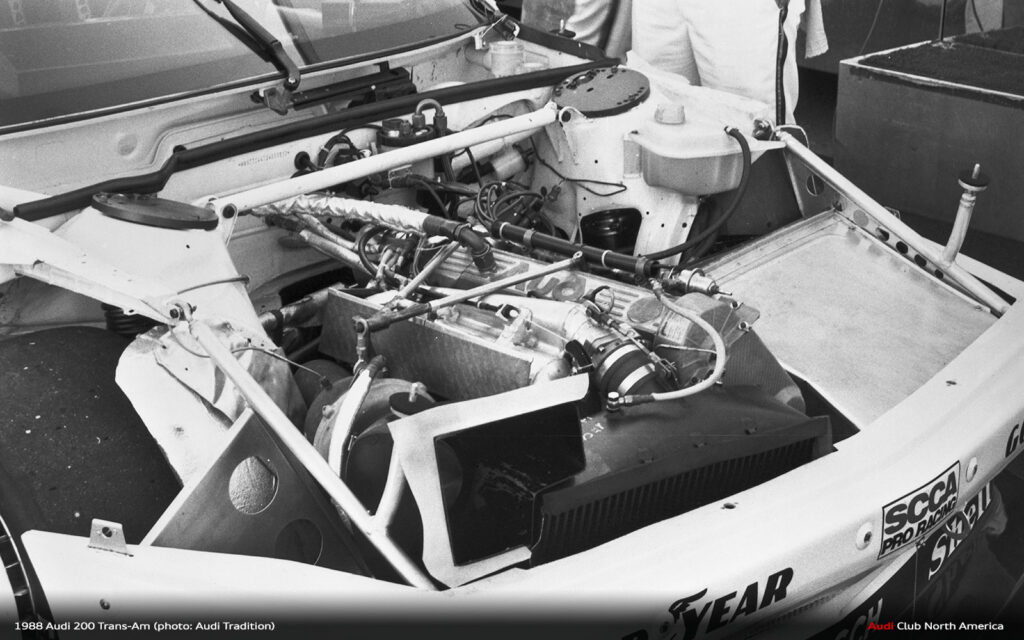
Was it really an “unfair advantage” in the form of quattro drive that earned Audi the Manufacturer’s Championship and Haywood the Driver’s title? When checking the season’s final Driver statistics, one would think Scott Pruitt took the championship. He led the most laps (200) for the season, four times as many laps as Haywood and claimed five poles to Haywood’s zero. Even Hans Stuck and Walter Rohrl lead more laps, 135 and 133 respectively, then Haywood. As for the Manufacturer’s statistics, they tell the story of the Audi domination. The most laps led went to Audi with 317 to Lincoln-Mercury’s 200 and Chevy’s 197. Audi had six fastest laps to three each for rivals Lincoln-Mercury and Chevy.
But what if the racer’s luck coin would’ve landed on the other side in a few races resulting in good luck instead of bad? Or vice versa? The best examples of this would be Hoerr and Haywood experiences over the last three races. Hoerr went scoreless once to Haywood’s twice. Their championship battle could’ve gone the other way but, thanks to Haywood’s consistency, he’d bagged enough points throughout the season to overcome his final two empty-handed finishes and stay ahead of Hoerr.
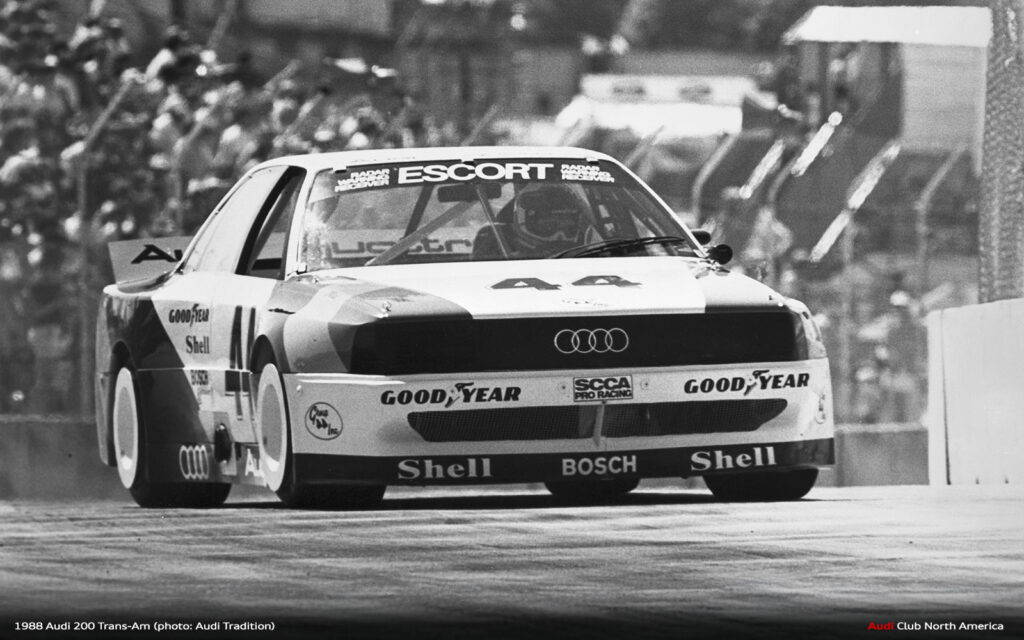
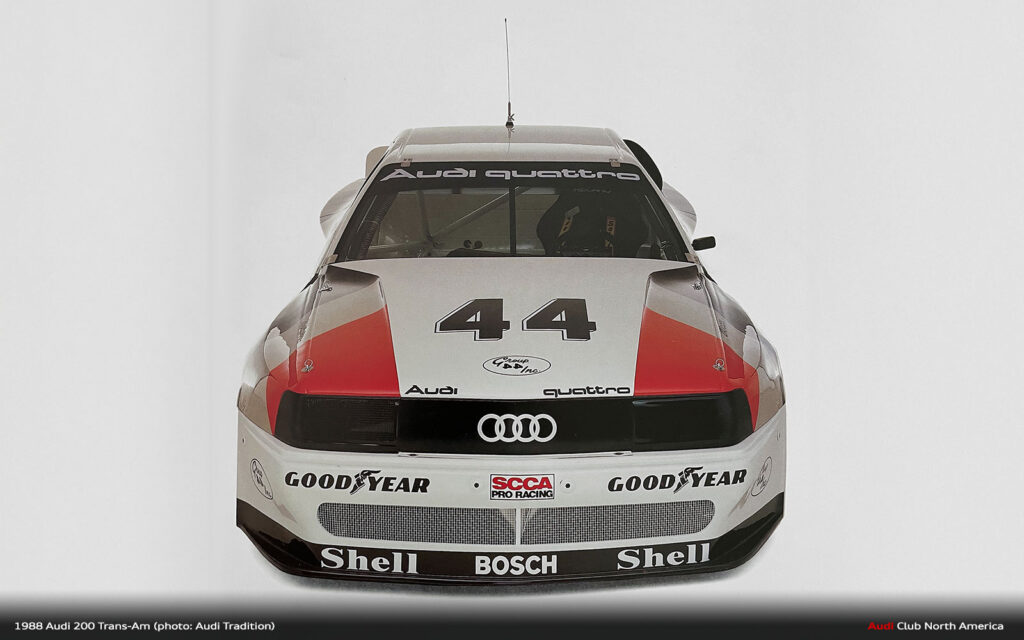
All the what ifs aside, that’s why we run the races. The fastest qualifier doesn’t always win. Things break and drivers make mistakes. Fortunately for Audi in 1988, excellent engineering meant things broke less and drivers Haywood, Stuck and Rohrl made fewer mistakes. Group 44 maximized the Audi 200’s quattro drive advantage to secure the Manufacturer’s championship and Haywood’s consistently fast, smart driving style earned him the Driver’s title. Bill Oursler’s T-A season recap in National Speed Sport News stated, 1988 “will always be remembered as the year four-wheel-drive came of age in pavement road racing….” We couldn’t agree more.
A huge ‘thank you’ goes to the International Motor Racing Research Center in Watkins Glen, New York, for their outstanding support in this story’s preparation.



Responses