

Intended Advantage, Audi 200 quattro in the 1988 Trans-Am Series – Part 2: Success Leads to Scrutiny

by Steve Johnson, photos courtesy of the International Motor Racing Research Center
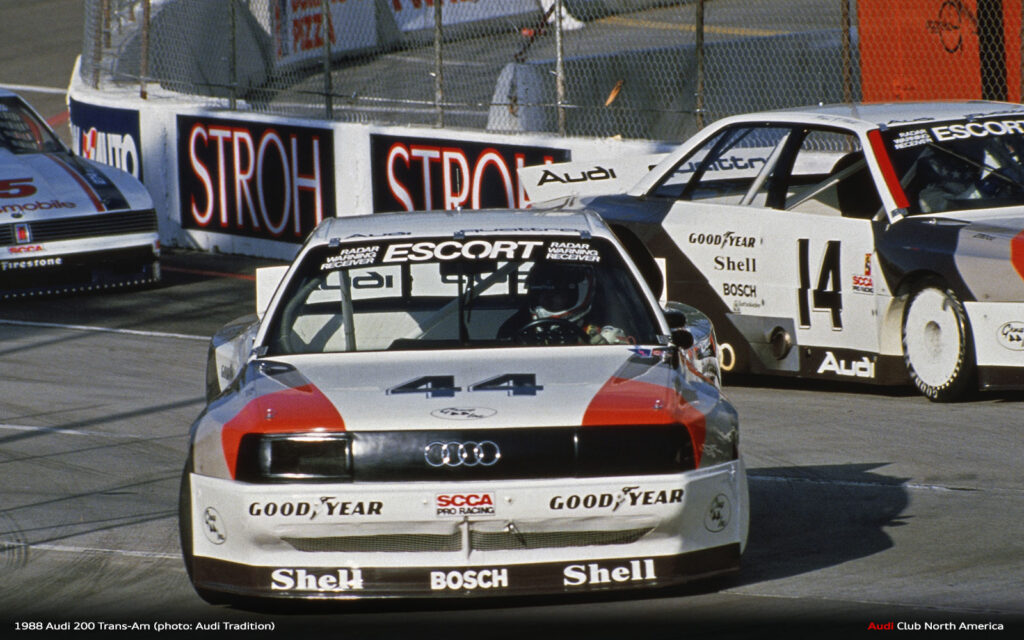
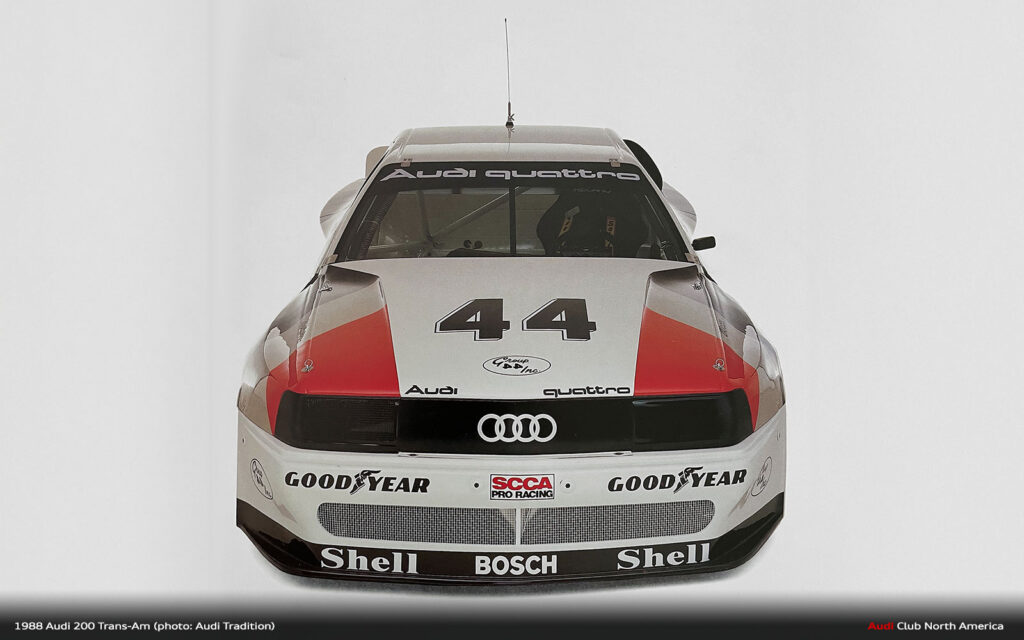
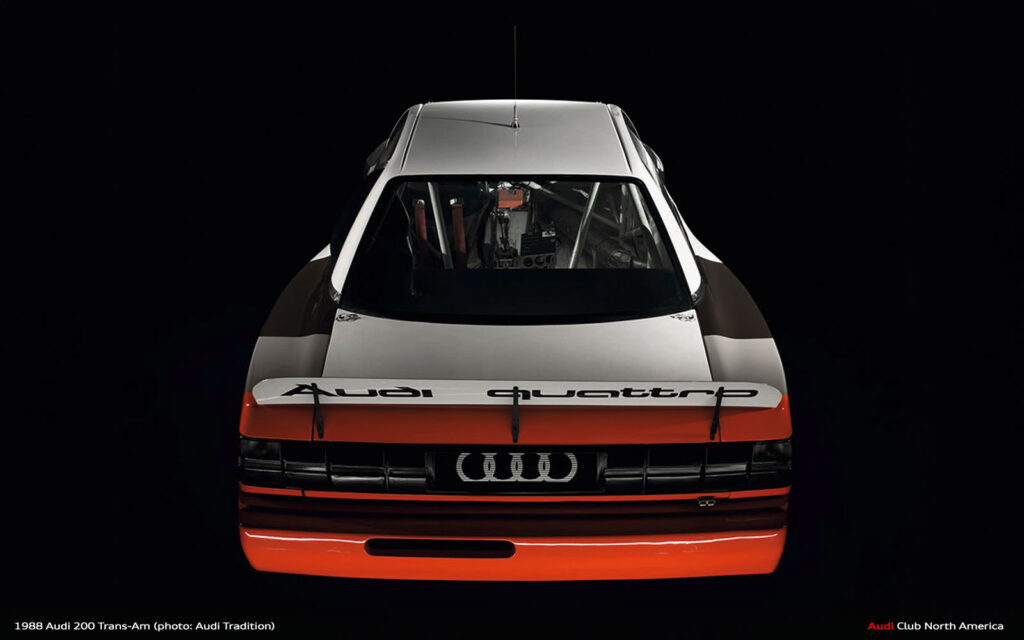
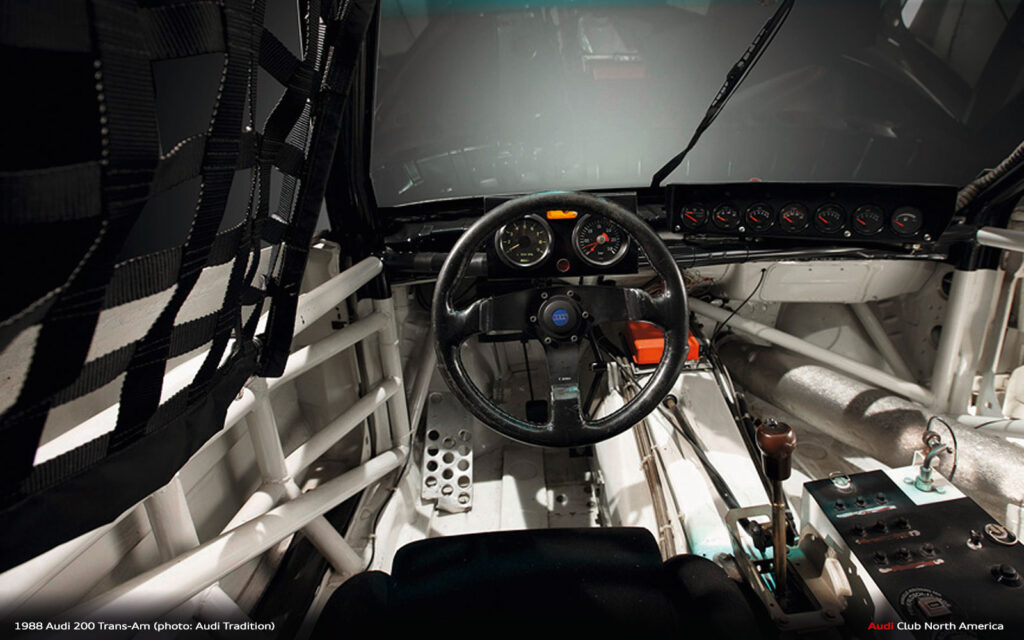
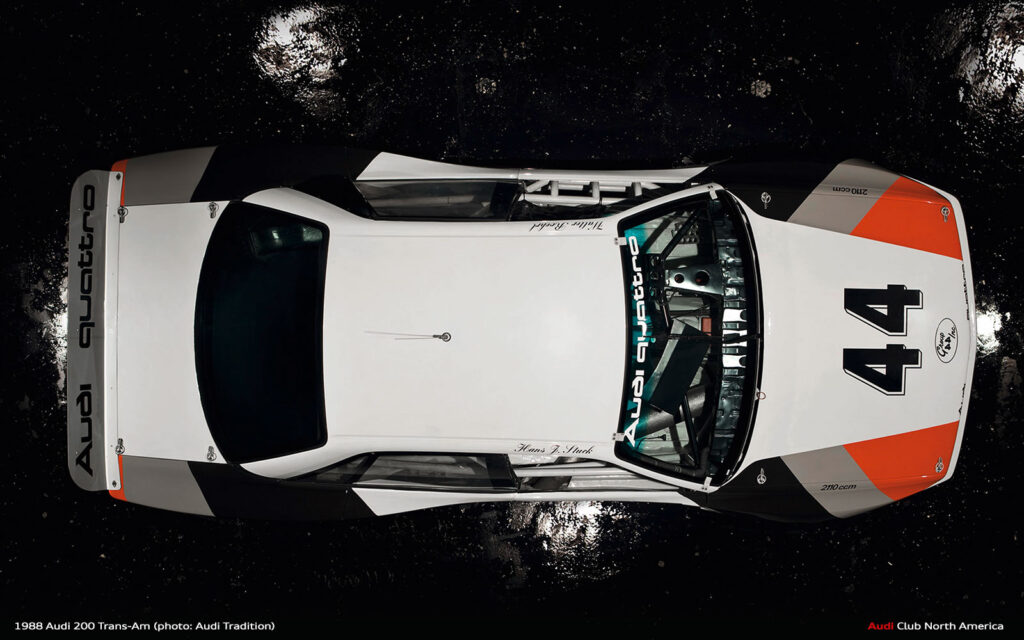
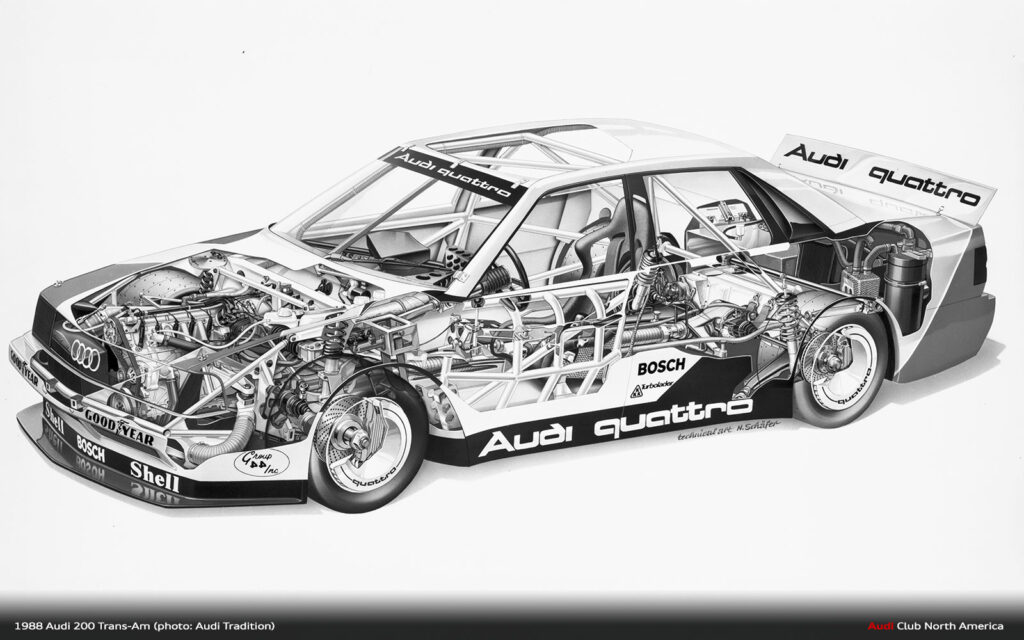
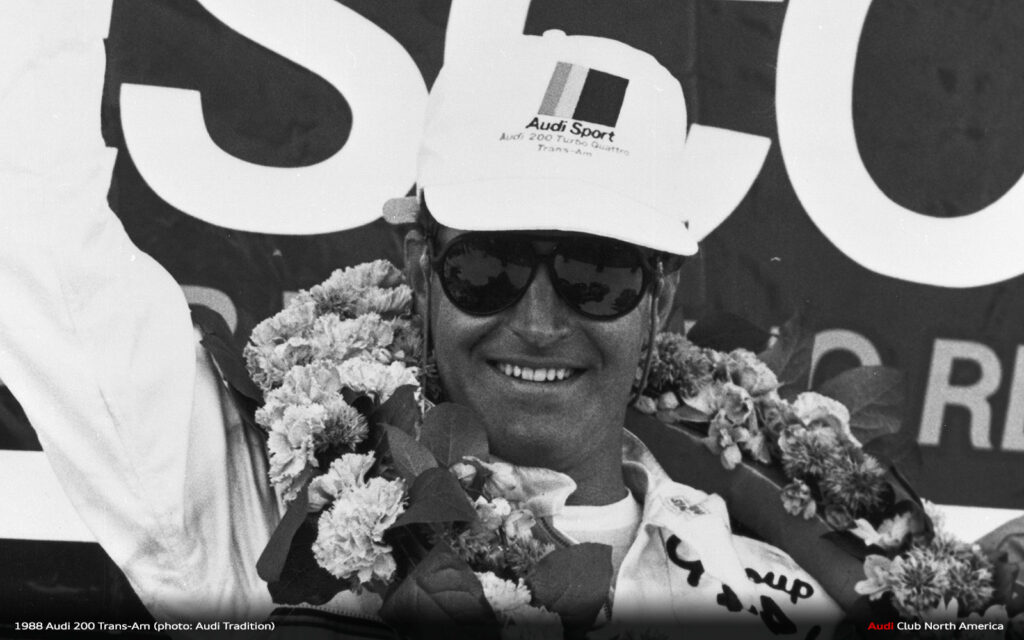
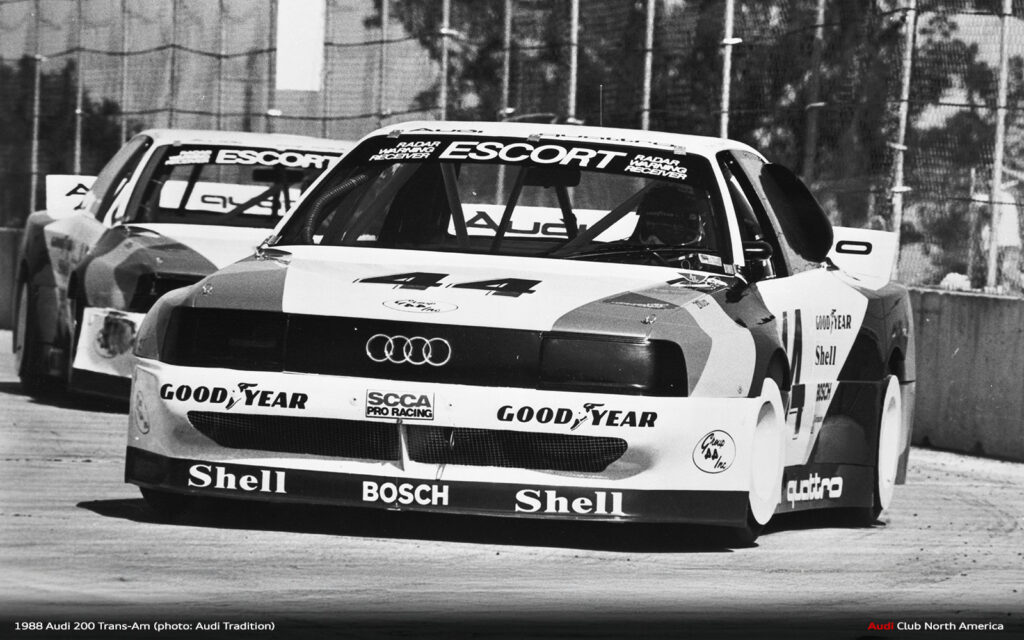
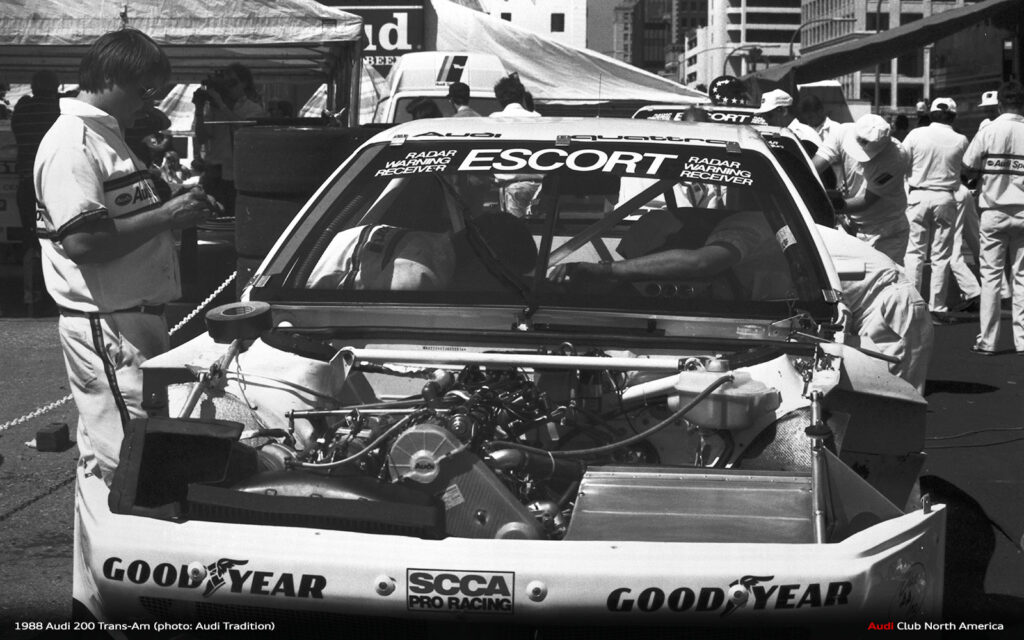
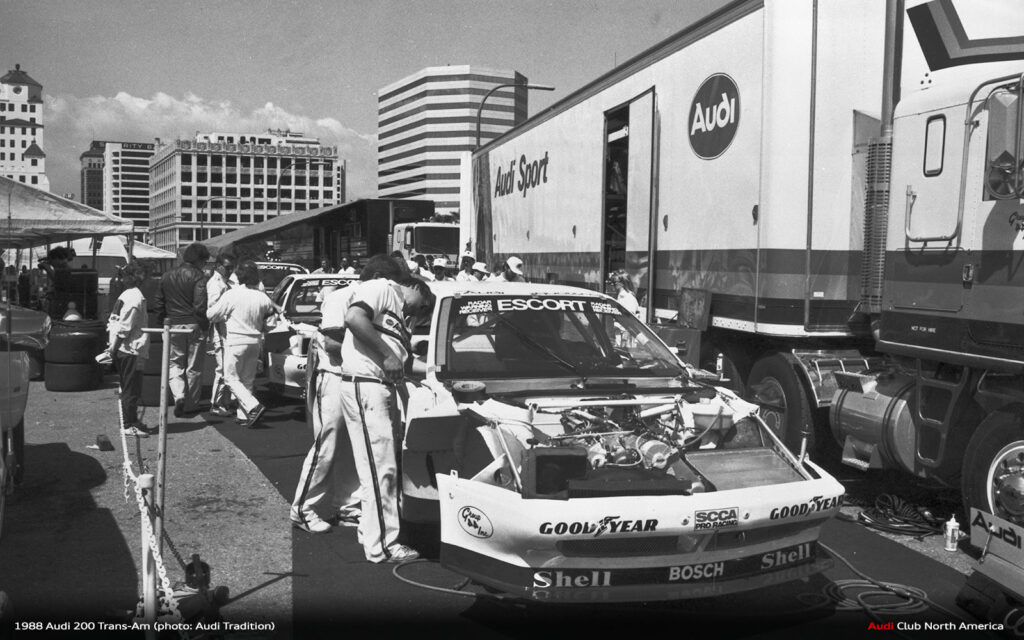
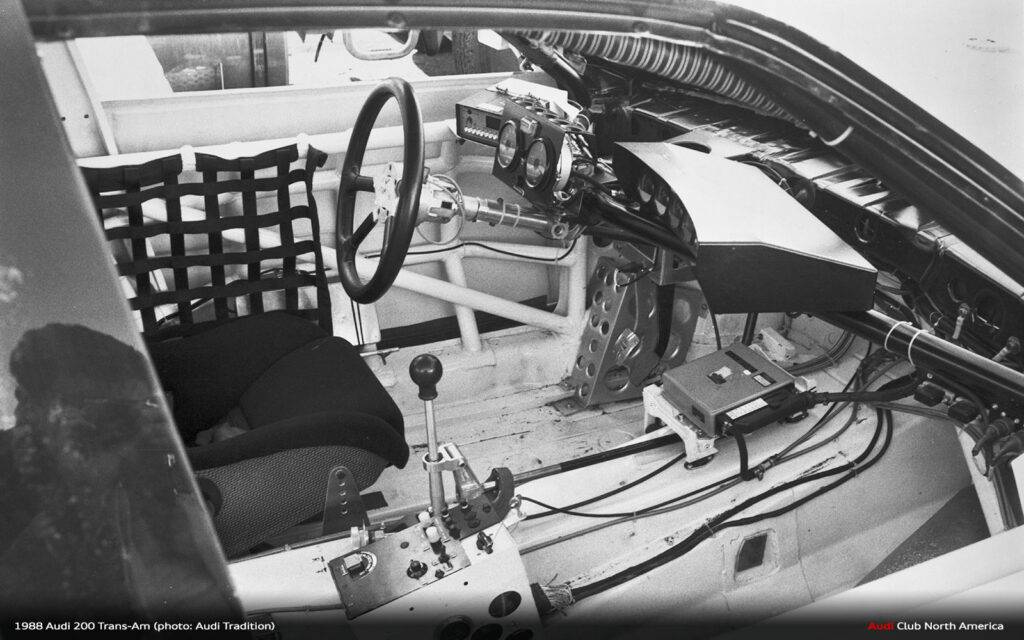
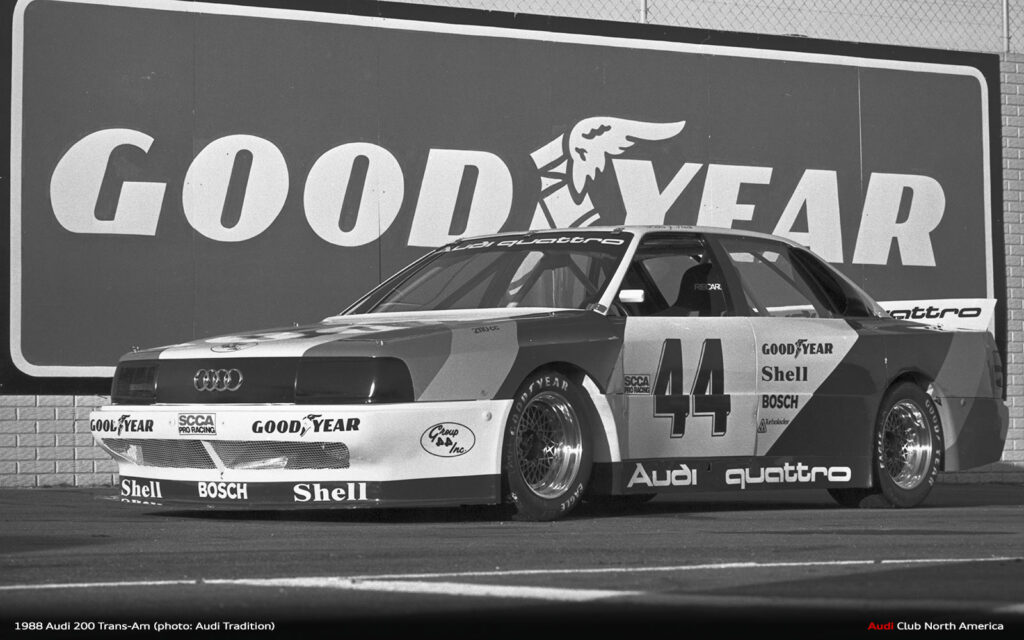
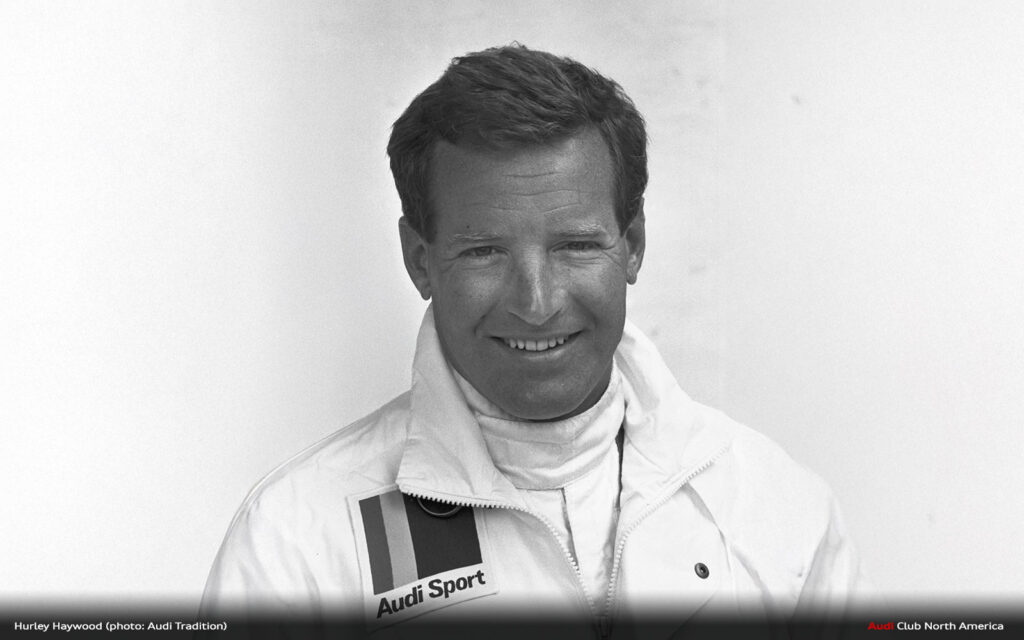
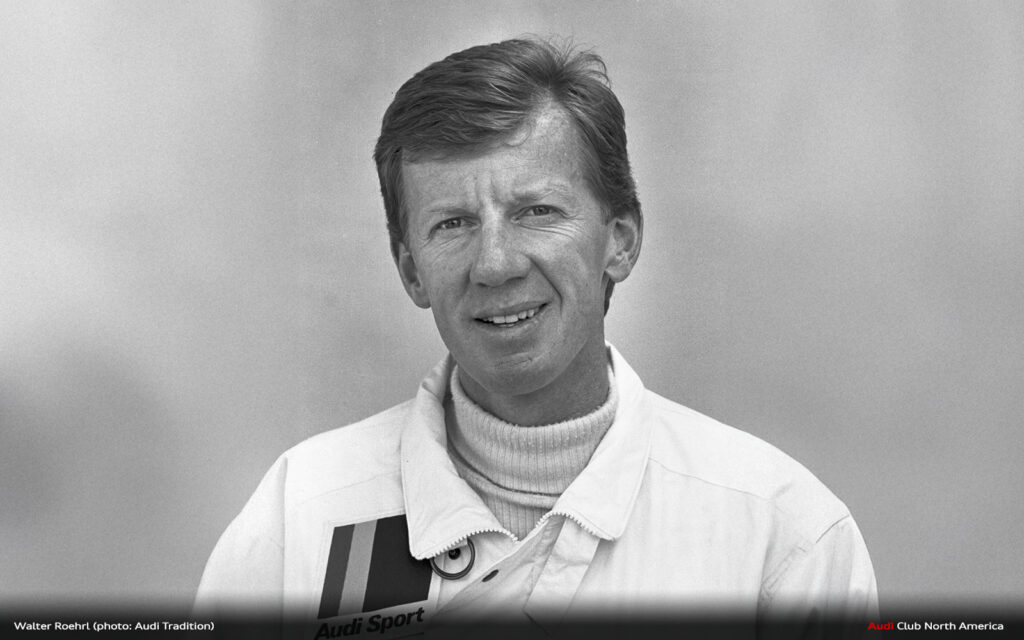
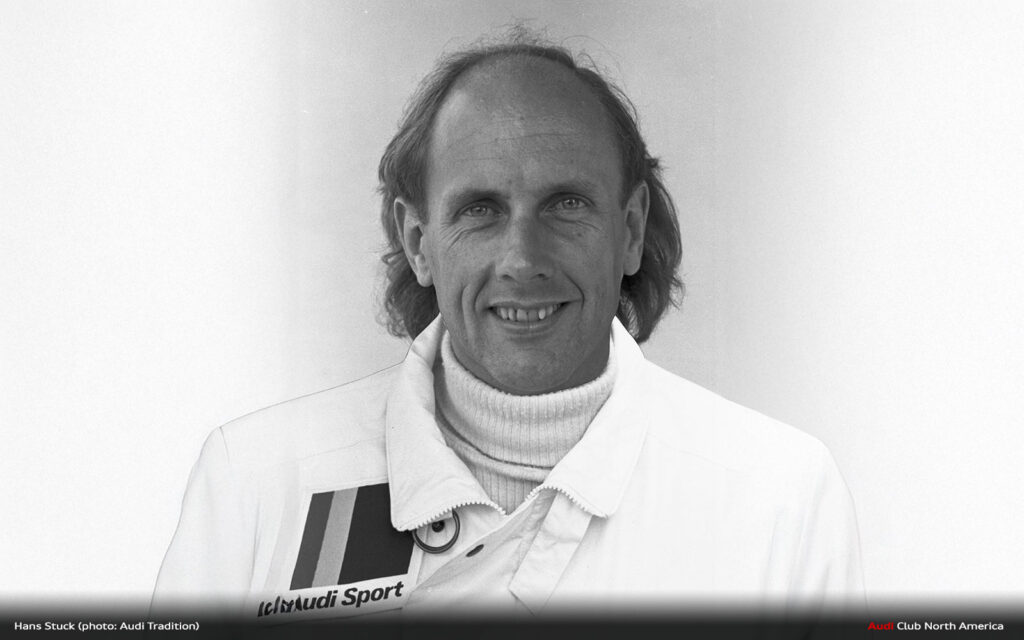
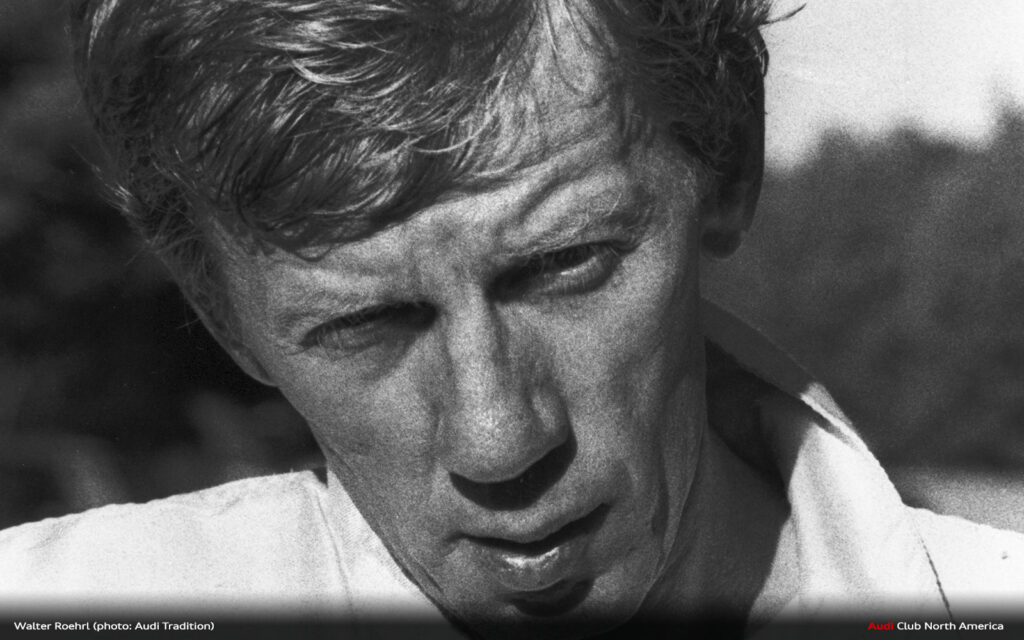
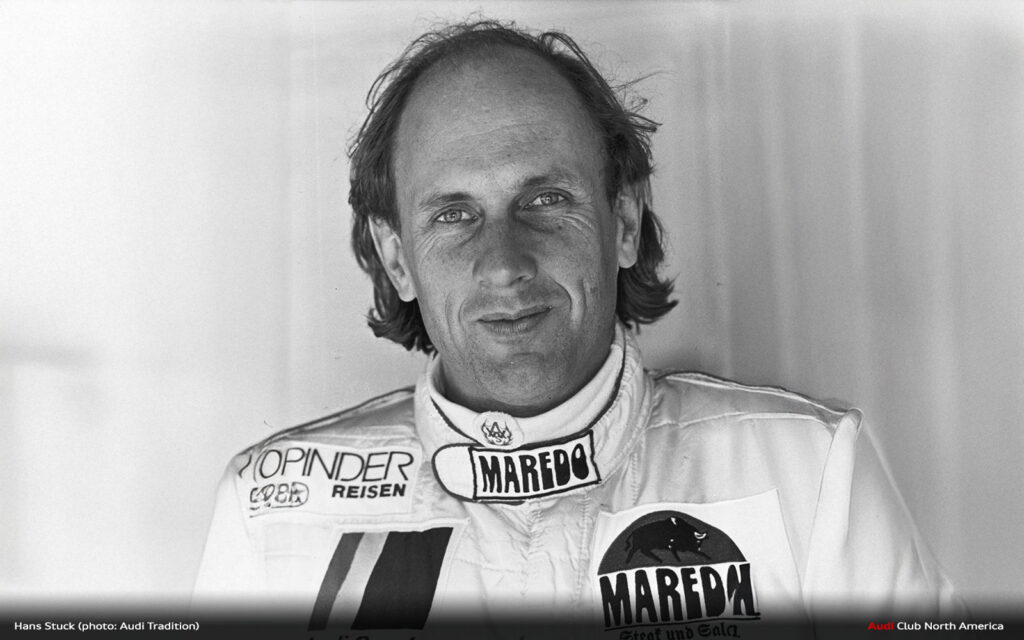
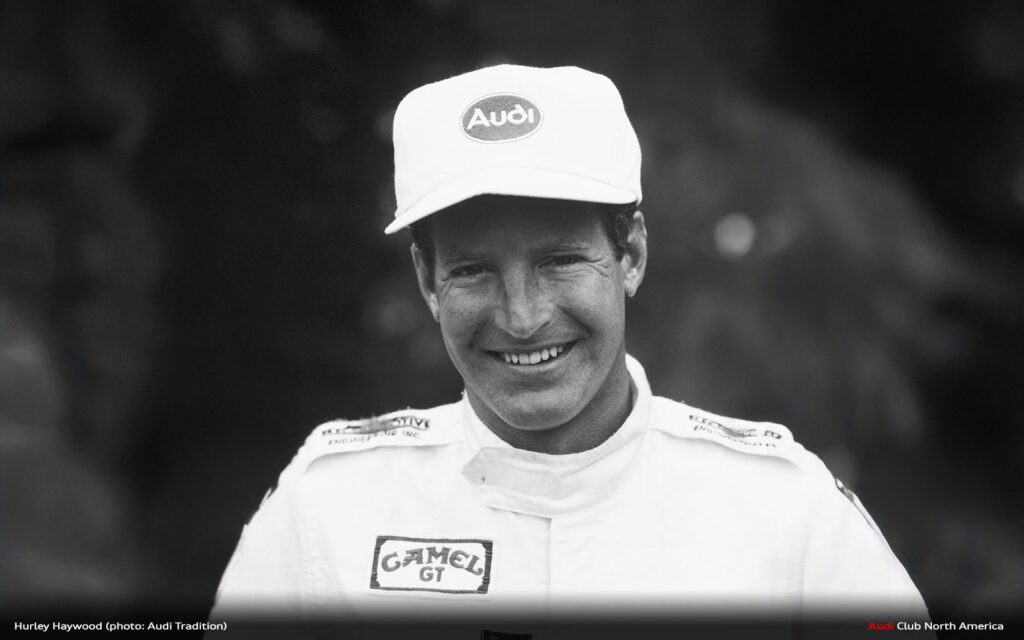
We’re looking back at Audi’s participation in the 1988 Trans-Am (T-A) series during its 35th anniversary year. As discussed in Part 1, Audi went road-racing in America to improve its image, which had been stained by a bogus 60 Minutes story on unintended acceleration. The race car was a production-based Audi 200. The drivers: Hurley Haywood in the #44 car for the full season while Walter Röhrl and Hans Stuck split duty in the #14 car.Part 1 ended at the season’s second race in Dallas, Texas, where Haywood had just won Audi’s first road race in America. Four weeks later, the series moved to the west coast.
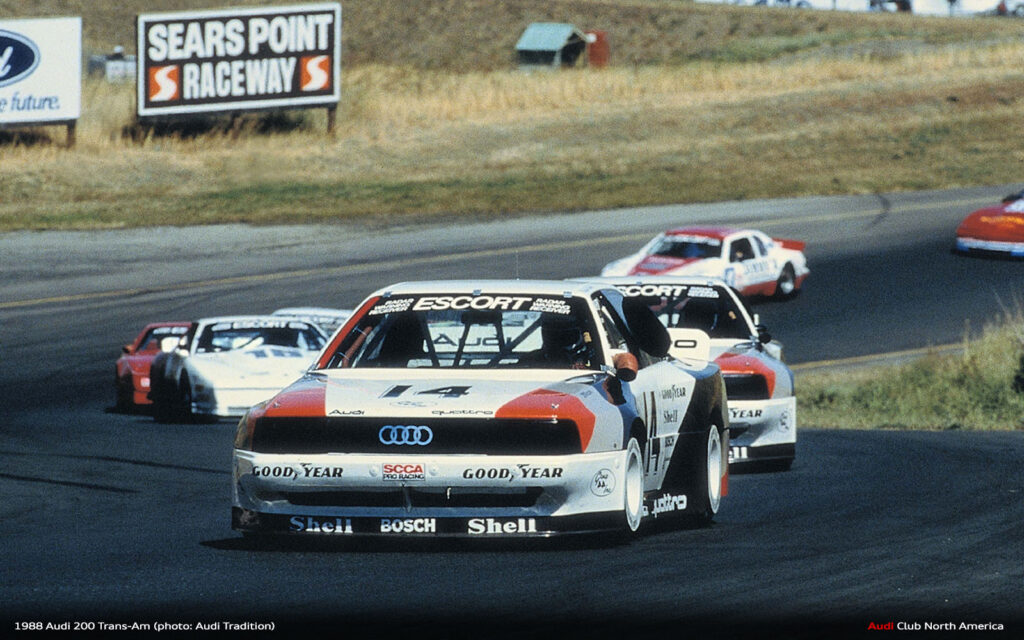
The Lincoln-Mercury Classic, May 29, Sears Point International Raceway, Sonoma, California. Now known as Sonoma Raceway, it’s a 2.523-mile, 12-turn road course on San Pablo Bay north of San Francisco. It twists its way up, down, and along a hillside; with no long straights, it should’ve suited the Audi well. Set for 40 laps, drivers would race hard for the 100.92-mile distance. In qualifying Willy T. Ribbs claimed pole position in his Camaro while Walter Rohrl, subbing again for Stuck, qualified fourth. Hurley Haywood set the seventh fastest qualifying time but only after a tie-breaker was applied. He, Scott Pruitt and Les Lindley had all posted an identical 1:36.755 qualifying time.
The race’s first half saw Ribbs out front, Scott Pruitt and Irv Hoerr battling for second, and Röhrl dropping back to sixth immediately behind Haywood. After a full-course yellow thrown mid-race regrouped the field, the racing was close with more than the occasional contact between cars. Haywood was working to get by Lindley’s Camaro on the outside for fourth but the two made contact. Haywood spun, just missing Röhrl who was immediately behind in fifth, then regained control only to find himself now in sixth. It was a close race until the end but that would be where the Audis would finish.
Ribbs owned the day, leading every lap, but now Haywood owned first place in the Driver’s Championship and Audi held second place on the Manufacturer’s side. The Driver’s point standings were now: Haywood 46.5, Hoerr 43, Röhrl 15 and Stuck 0. Manufacturer’s Championship point totals stood: Olds 21, Audi 17 and Chevy 16.
It’s worth noting that for this race the two-wheel drive turbocharged cars were allowed to remove 75 lbs, and the high-compression V8s like that of Pruitt, who finished third, 25 lbs. True to his word, SCCA’s Dave Watson was already tweaking the rules in an attempt to level the playing field. He stated this weekend’s tweak was intended to help the Porsches and would’ve also benefited the Paul Newman’s Nissan 300ZX Turbo. The changes would’ve also brought competitors closer to the Group 44 Audis.
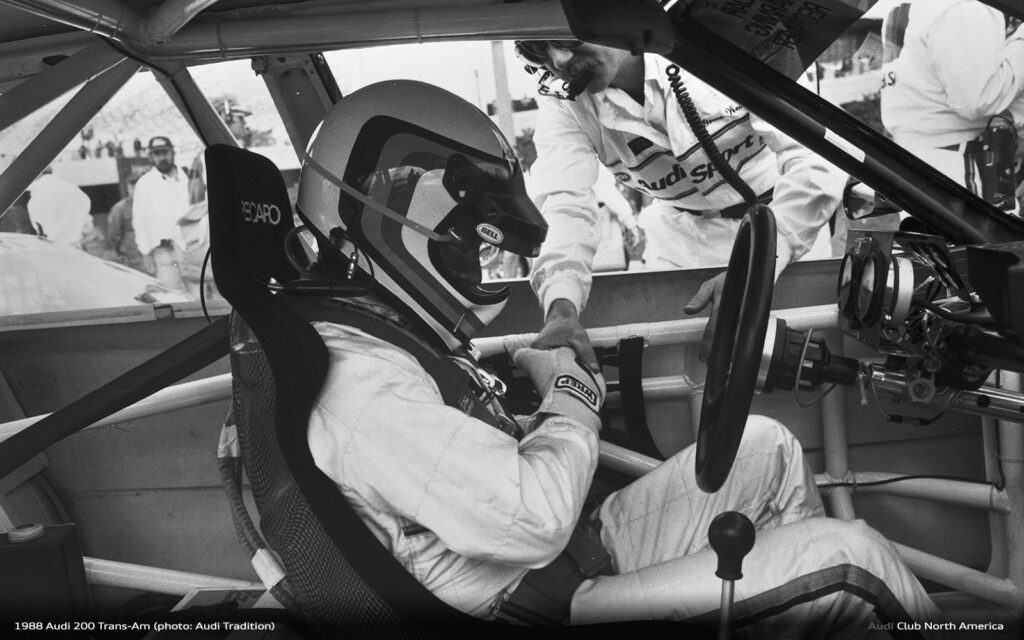
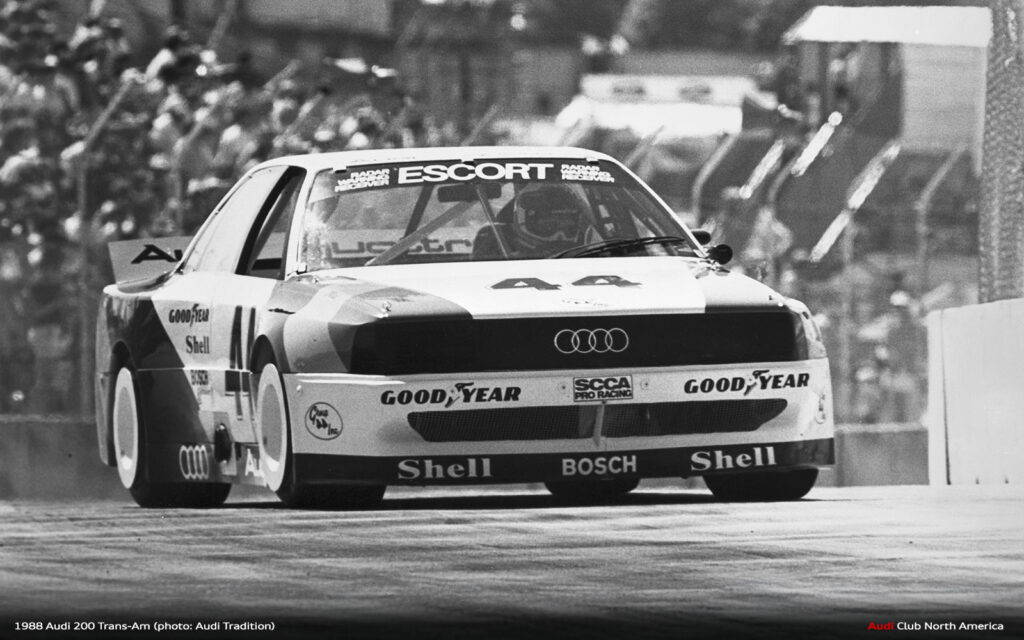
The Motor City 100, June 18, Detroit, Michigan. The race was 40 laps on a bumpy 2.5-mile, 18-turn temporary street circuit in support of the United States Formula 1 Grand Prix. With twelve tight turns and no long straightaways, suitability to the Audi was high. It was a high-visibility event due to the large television audience. Pole position went to Pete Halsmer’s Merkur, but Hans Stuck grabbed the second starting position and Hurley Haywood the tenth.
At the drop of the green, Stuck made the most of his starting advantage and grabbed the lead for the first three laps. Then Willy T. Ribbs passed Stuck who, on lap 17, had a race-ending suspension failure caused by a flat right front tire.Haywood’s race would see him both passing cars and benefiting from car’s mechanical woes until he was in third place behind Ribbs and Pruitt. Then a full-course yellow packed up the field for a 4-lap sprint to the end. Ribbs had the lead, but Scott Pruitt wanted it. These two had a history of making contact, which repeated itself on the last lap. Haywood happened upon the two stalled sideways on the circuit and drove by to grab the lead on the last lap netting himself 20 points and Audi 9 points for the victory. Pruitt got going again quickly to claim second but Ribbs’ race was over.
The Driver’s title point standings were now: Haywood 66.5, Röhrl 15 and Stuck 0. This gave Haywood a 23.5-point lead over Irv Hoerr, who finished this race outside the points. The Manufacturer’s Championship standings were now Audi in first with 26 points, Olds with 25 and Chevy with 19.
The Escort Trans-Am Weekend, June 26, Niagara Falls, New York. This was the inaugural race on a tight 1.6-mile course laid out on the streets of Niagara Falls. Driving 94 laps would add up to 150.4 miles, thus the season’s second pit stop race. Once again, a tight, narrow street circuit was well-suited to the Audis of Walter Röhrl and Hurley Haywood. Röhrl put his car on pole while Haywood qualified fifth just over 2.5 seconds back. Their main rivals, Willy T. Ribbs, Scott Pruitt and Irv Hoerr, were sandwiched between them in that order.
Röhrl put on a clinic that day in western New York by leading every lap and lapping the field up to second place finisher Pruitt. Haywood’s day, however, started going downhill in the morning warm-up with an oil pump problem necessitating an engine change. This may have induced a race-ruining hydraulic leak that became an issue after Haywood had lapped the field up to tenth place. Following an extended pit stop to fix the issue, the #44 wouldn’t go into gear to leave the pit box. Haywood finally rejoined the race in 13th, seven laps behind the leading Röhrl.
Röhrl’s hat-trick of pole, win and fastest lap maximized his points haul at 22. Haywood netted a mere three points for his forgettable race. Now the Driver’s title points stood at: Haywood 69.5, Röhrl 37 and Stuck 0. Haywood’s lead dropped to 12.5 points over third place finisher Hoerr. The Manufacturer’s title point standings were now Audi 35, Olds 29 and Chevy 22.
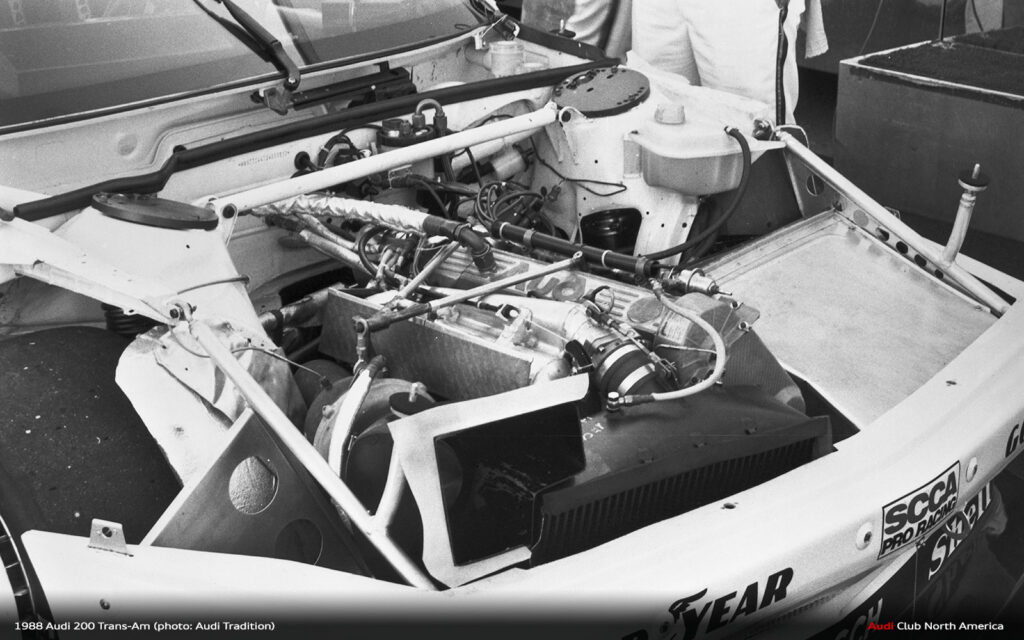
The WMSS-FM Trans-Am Weekend, July 2, Burke Lakefront Airport, Cleveland Ohio. The sixth race would see T-A racers complete 40 laps of the 2.48-mile, 10-turn circuit on an airport circuit harkening back to the early days of sports car racing in America when U. S. Air Force General Curtis LeMay allowed the SCCA to race on courses laid out on the runways of Strategic Air Command bases. The circuit’s layout was much more open than previous tracks this season and also had three long straights casting doubt on Group 44’s chances to run up front. Scott Pruitt and Irv Hoerr qualified on the front row, but the Audis of Hans Stuck and Hurley Haywood locked out the second row thanks to the help of an additional 35-40 horsepower and reduced turbo lag, the fruit of Audi engineers’ continuing car development labor.
Two laps after the green flag waived, a six-car pack of Pruitt-Hoerr-Stuck-Brassfield-Kneifel-Haywood found itself pulling away from the rest of the field. Haywood was lucky to be hanging on to this group as he was having serious shift linkage issues. Once the leading train caught up to backmarkers on lap 10, the race turned into a dice between Stuck and Pruitt, who traded the lead three times. Pruitt’s engine let go on lap 25, however, leaving Stuck to bring his Audi home for the win. Haywood would see his Audi coming home in fourth place and fourth gear, the only one of six that he could still find.
After six races the Driver’s title points were now: Haywood 81.5, Röhrl 37 and Stuck 21. Haywood’s lead was now down to 8.5 points over Hoerr, who finished second behind Stuck. The Manufacturer’s Title standings were now: Audi 44, Olds 35 and Chevy 26.
The Pepsi Grand Prix Weekend, July 17, Brainerd International Raceway, Brainerd, Minnesota. The race this weekend was back on a permanent circuit named Donnybrooke Road Course. Three miles in length, it was wide, flat and fast, possessing only 10 turns. The 33 laps would be a 99-mile sprint race. On paper, suitability to the Audi should’ve been low with only four slow corners and a long straight – really long if you include the two open corners with no passing opportunity on either end. Also working against Audi was what T-A series Dave Watson had announced after Cleveland’s checkered flag fell – that the Audis’ minimum weight must increase by 100 lbs and all turbocharged engines must run a 54 millimeter intake restrictor. But Stuck and Haywood still qualified in the same place and order as in Cleveland, on row 2, this time behind Irv Hoerr and Les Lindley.
After two aborted starts, it was 12th place qualifier Lynn St. James that grabbed the initial lead only to be passed by Hoerr’s Cutlass Supreme by the end of the first lap. Hoerr, Lindley, Stuck, Brassfield and Haywood ran up front, but lap 9 saw Brassfield’s Corvette engine go south, and on lap 16 Lindley’s Camaro suffered the same fate. On lap 29 Hoerr had to pit for a right rear tire, promoting Stuck to first and Haywood to second. Stuck may have only led five laps, but once again, the last lap is the most important one to lead. It was the first 1-2 finish of the year for Audi.
After the halfway point in the season the Driver’s title point standings were: Haywood 97.5, Stuck 41 and Röhrl 37. Haywood’s Driver Championship lead bumped up to 11.5 points over fifth-place finisher Hoerr. The Manufacturer’s point standings were now Audi 53, Olds 38 and Chevy 30.
At the end of Sport Car magazine’s Detroit race coverage they wrote, “By now, it should be obvious that this is the best year ever for Trans-Am. The completion is vicious. This one’s going down to the wire”. The motorsports press didn’t foresee the Group 44 Audi winning streak, but their success would lead to scrutiny from the T-A series officials and fellow competitors as they endeavored to level the playing field. And now there would be one less race with which to catch the Group 44 Audis as the race scheduled at Memphis was cancelled. Read about the next impact upon Audi’s success in Part 3 of Intended Advantage in the next issue of quattro.



Responses