

Intended Advantage, Part 1: Audi 200 quattro in the 1988 Trans-Am Series

[by Steve Johnson, photos courtesy of Audi Tradition]
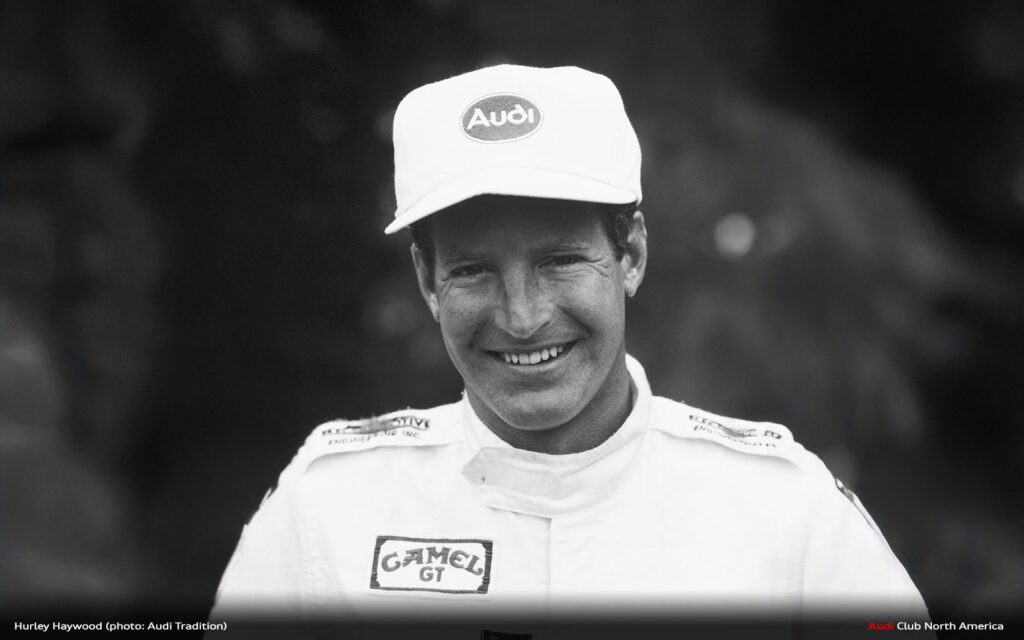
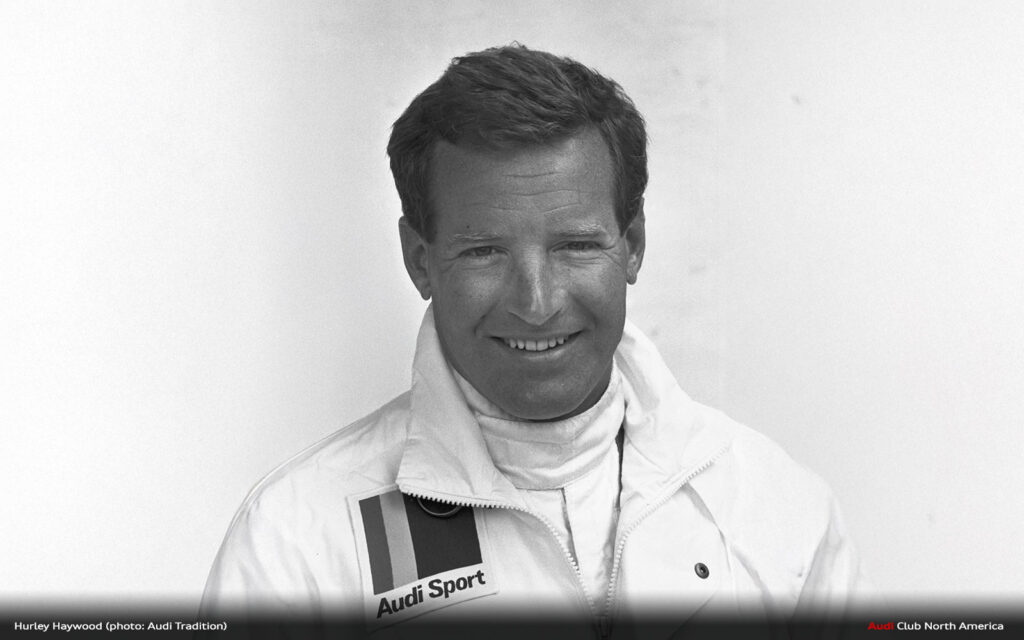
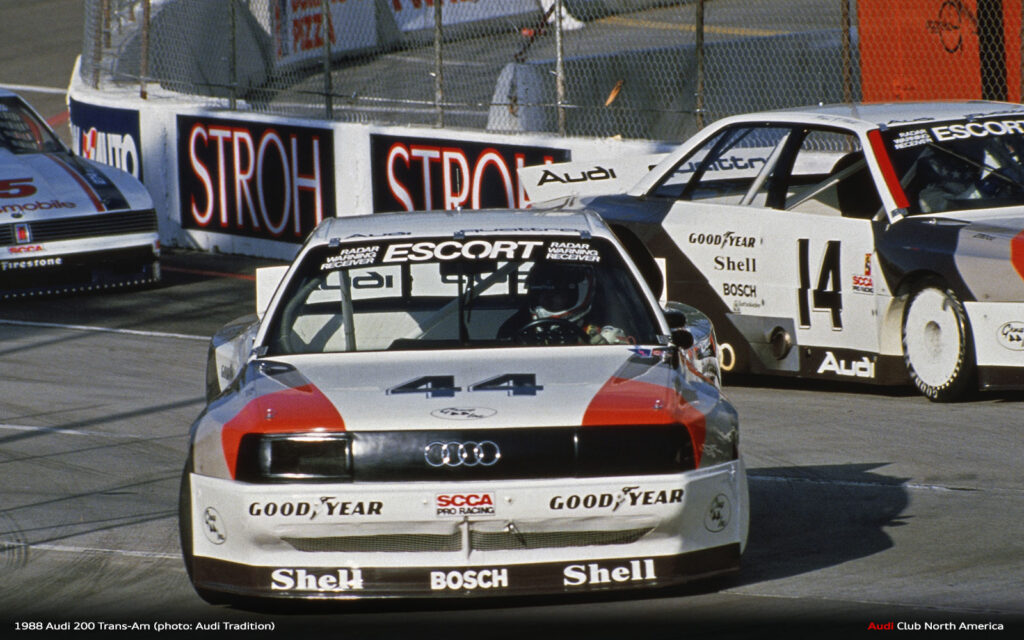
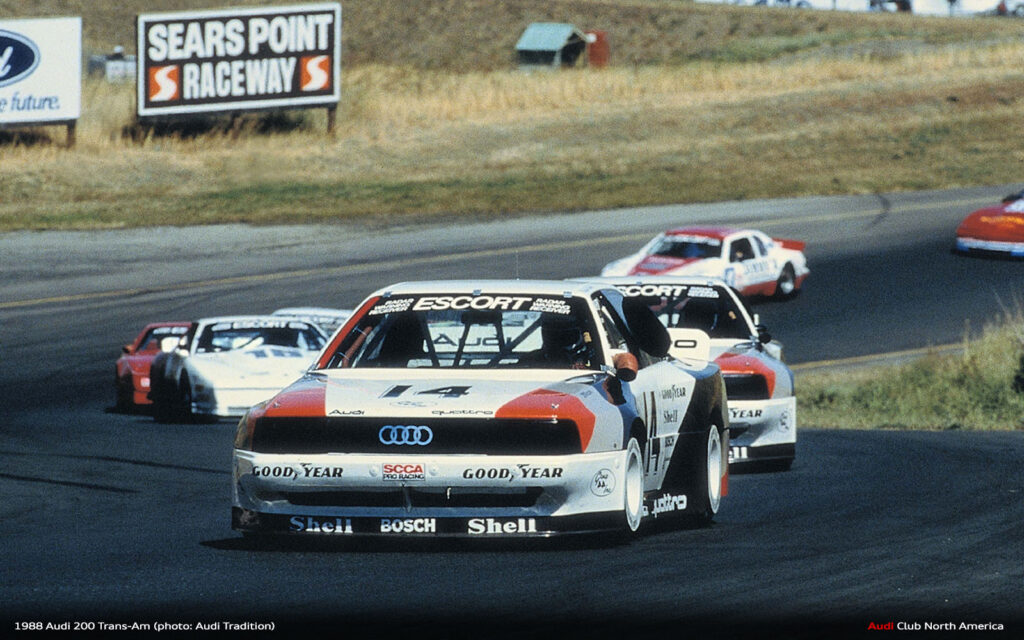
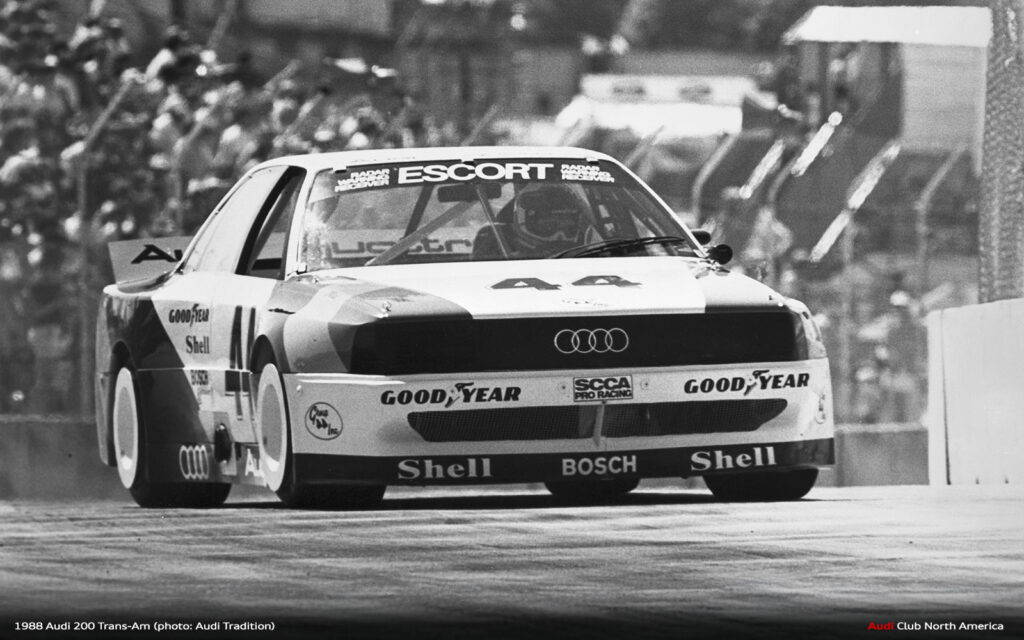
The phrase “unfair advantage” is synonymous with Audi’s winning the Sports Car Club of America’s (SCCA) 1988 Trans-Am series Manufacturer’s and Driver’s Championships. The term was originally coined about 15 years earlier to explain why Mark Donohue was so fast when racing the Porsche + Audi Penske Racing 917-30 in Can-Am team. Penske wasn’t necessarily cheating, rather working on the fringes of the regulations using smart engineering to build a more competitive car. Bob Tullius’ Group 44 racing team found themselves in a similar position when introducing Audi’s quattro racecars to Trans-Am a decade and a half later. Their rivals felt it gave them an unfair advantage. In this four-part story we’ll look back during this 35th anniversary of Audi’s and driver Hurley Haywood’s achievements to see if they really had an advantage, or if it was merely a combination of racing luck, a winning team, and Audi engineering that delivered the titles.
By 1987, Audi had an image problem in America due to the “unintended acceleration” allegations surrounding the 5000 sedan. A 60 Minutes investigative report aired on November 23, 1986, that showed a driverless Audi inexplicably lurch forward. Years later it was disclosed that, on command, the car was rigged to shift into gear causing the forward motion. Fraudulent reporting aside, Audi’s tarnished image needed some help and right away.
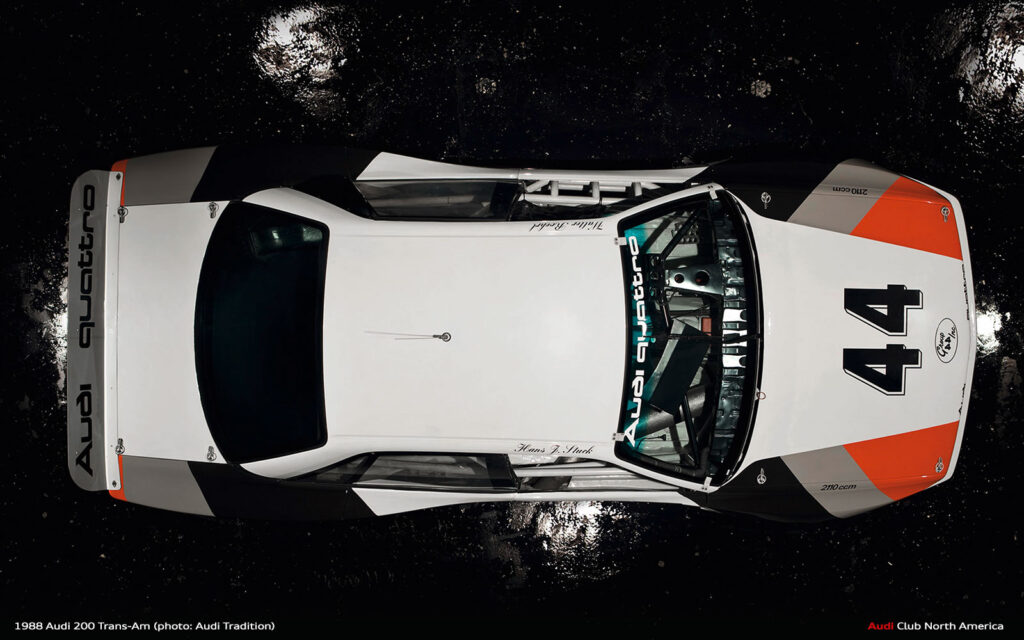
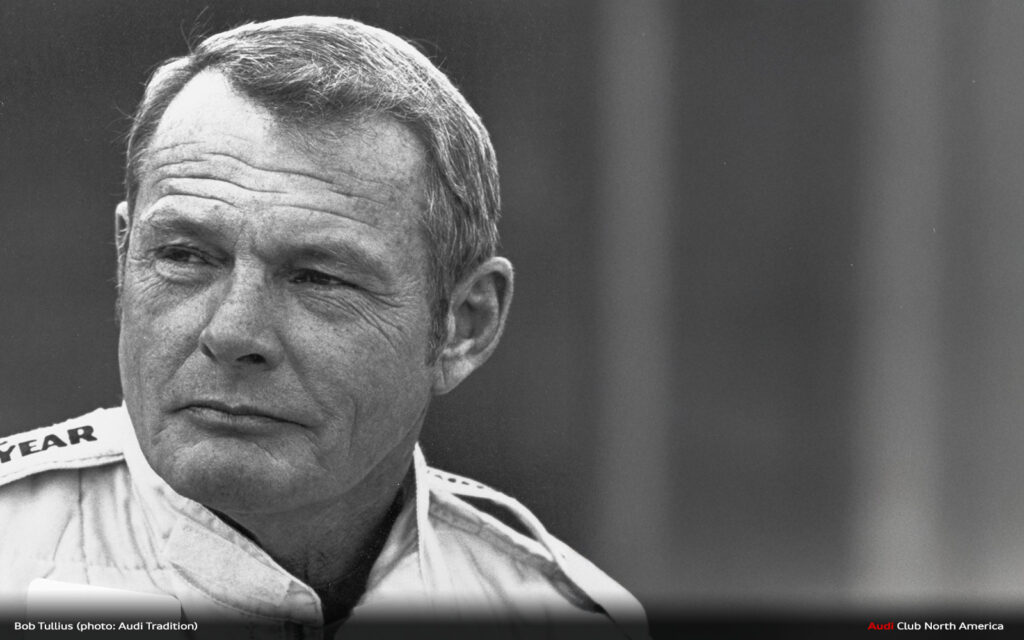
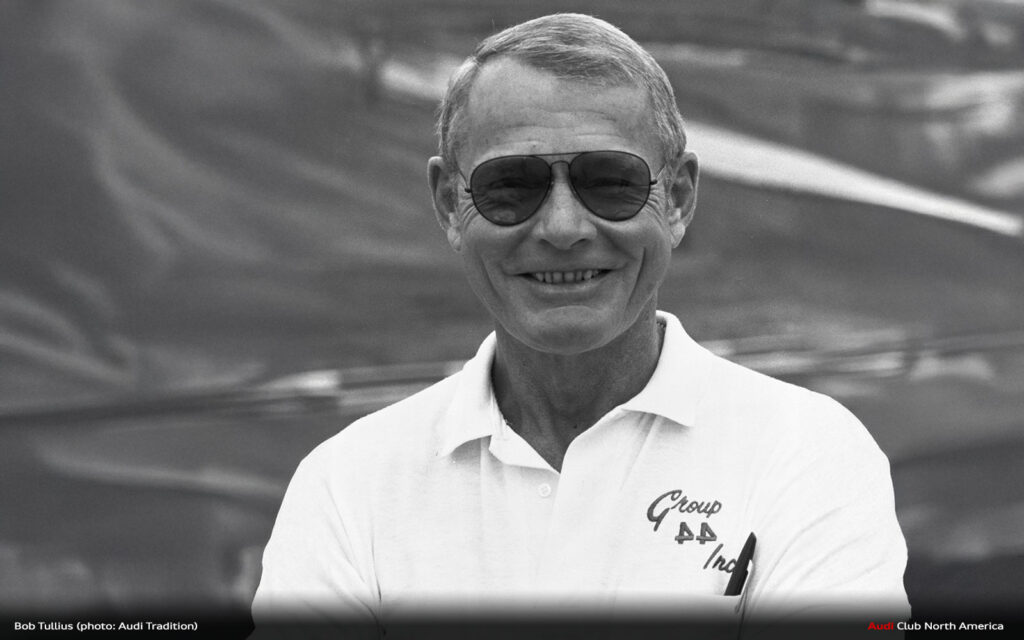
Enter Josef “Jo” Hoppen, Audi’s Special Vehicles Manager. He was responsible for Audi’s involvement in the Pikes Peak hillclimb, the world speed records set at Talladega and the Cannonball One Lap of America. But Hoppen’s real desire was to go road racing and at the end of 1987, an opportunity arose. Hoppen and Bob Tullius, President of Group 44, Inc., had previously discussed working together and now the timing was perfect. Group 44 had just ended its highly successful, 13-year Jaguar racing program that competed in both the Trans-Am (T-A) and International Motor Sports Association (IMSA) series. Group 44 would field Audi’s race car.
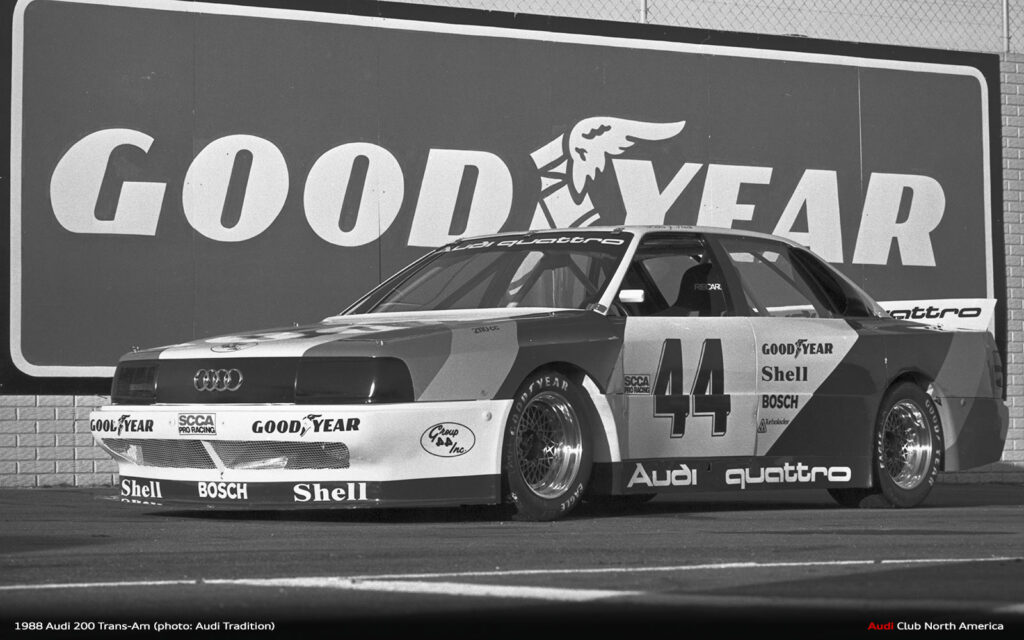
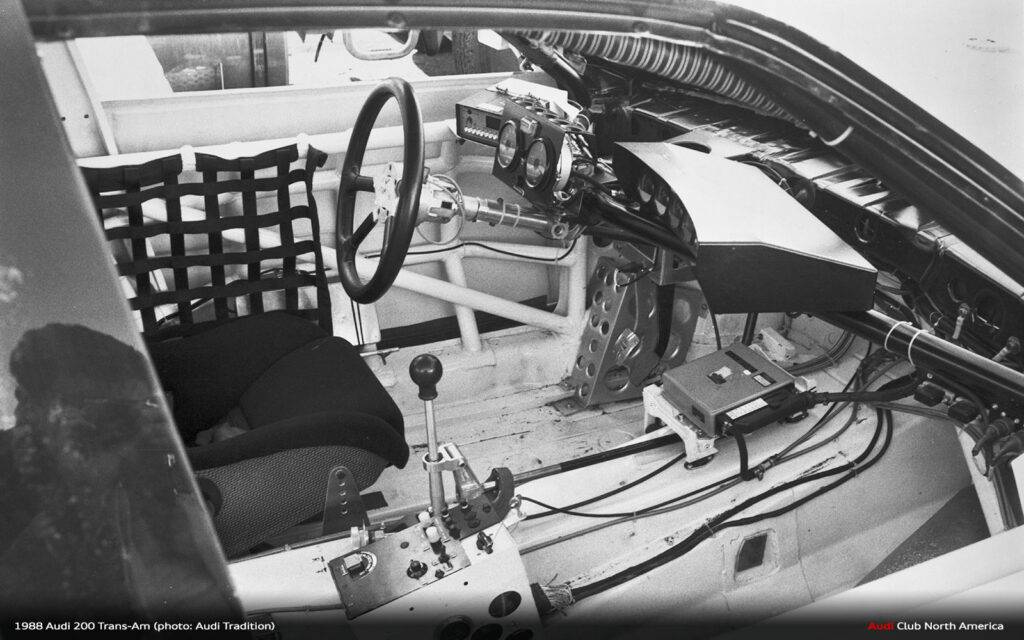
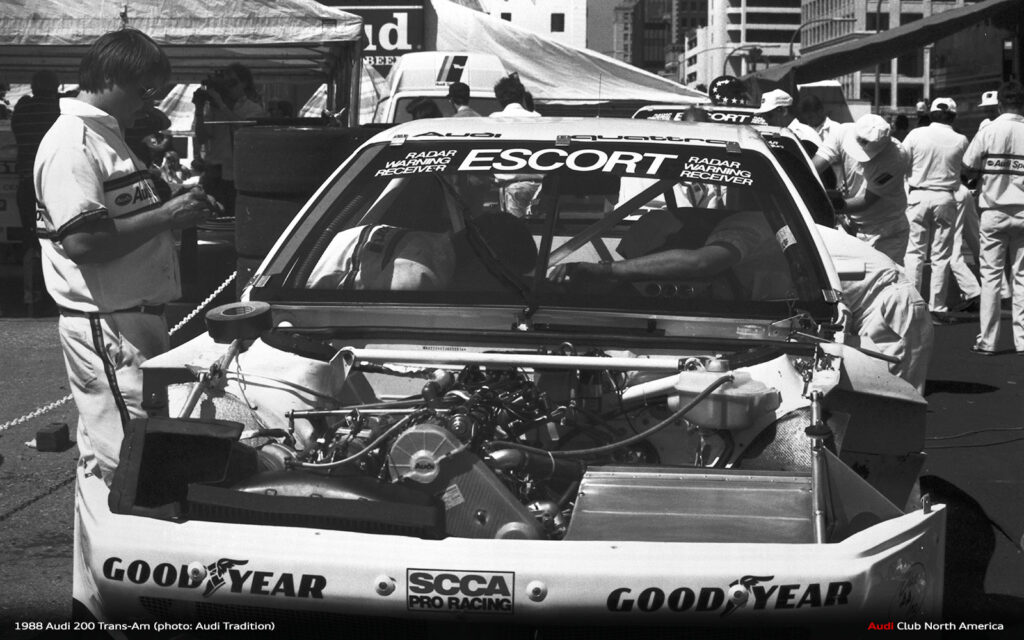
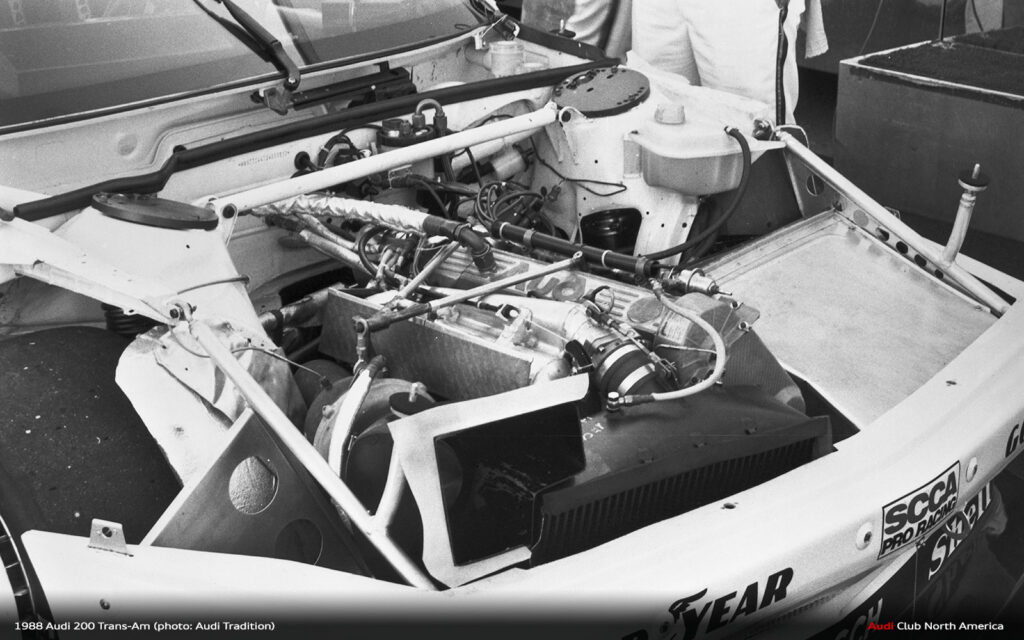
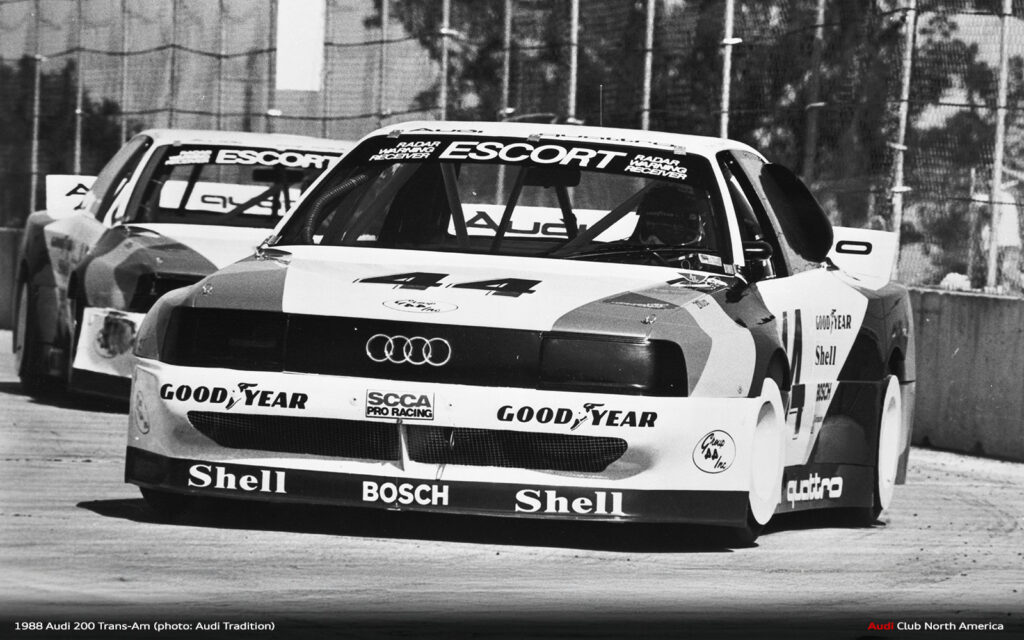
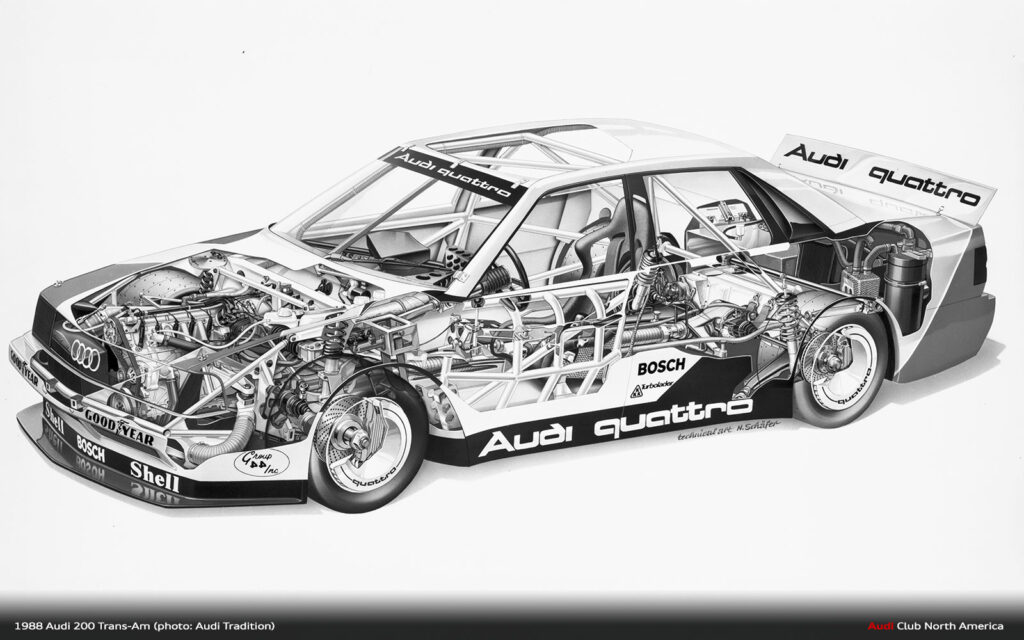
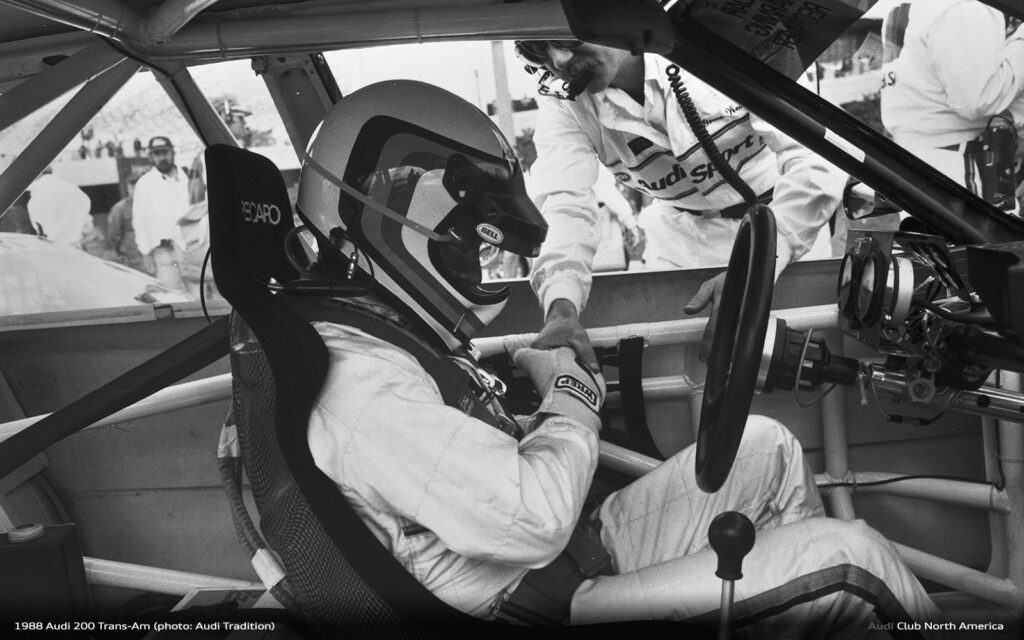
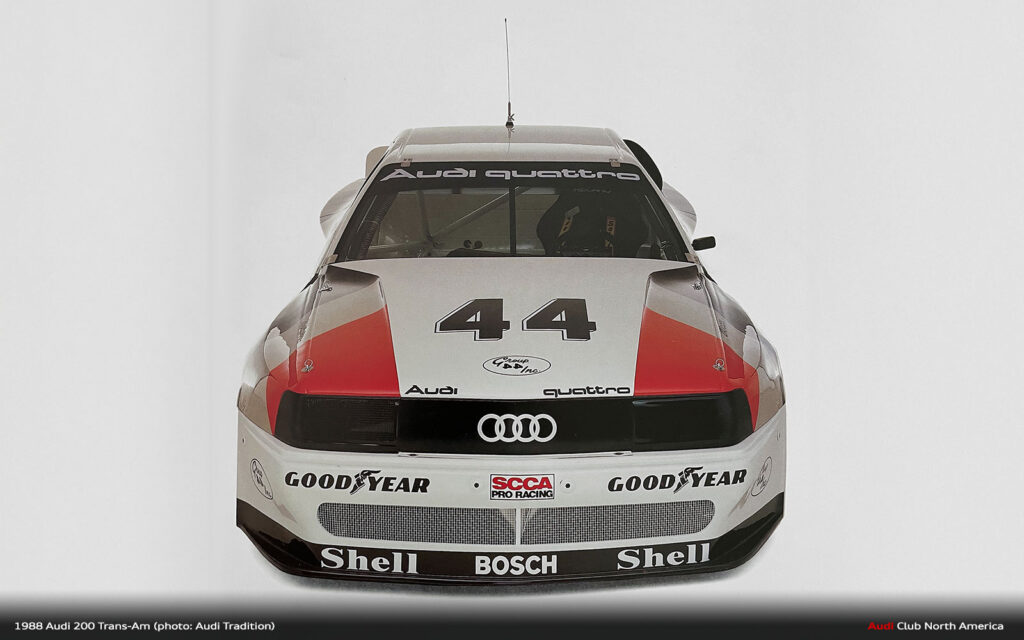
Designer and Engineer Dieter Basche oversaw turning a production Audi 200 into a race car. Three 200 sedans were literally pulled off the assembly line for conversion. This meant significantly altering the interior by adding a roll cage, stripping out all creature comforts, relocating components, etc. But little could be done about the overall size of the car which was taller and wider than its competitors. Much work went into reshaping the body panels with an eye to creating downforce. The resulting aerodynamic numbers combined with the car’s overall size led Basche to assume the car would be slower than its competitors on long straights but faster when cornering. After testing on the Osterreichring in Germany, at France’s Paul Ricard circuit, and finally at Road Atlanta, the cars were ready just in time to go T-A racing.
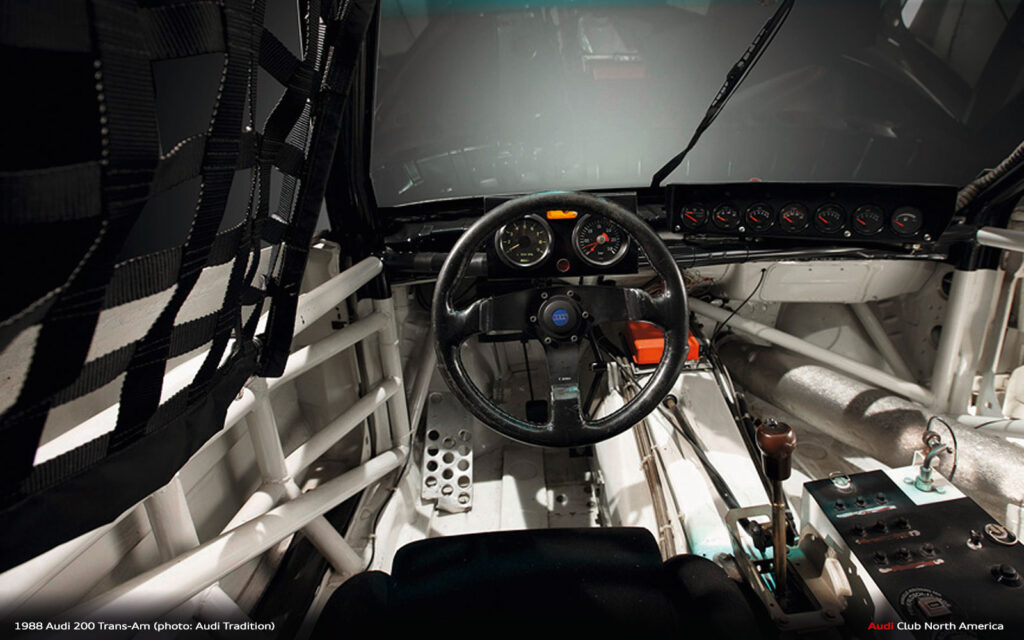
But first, why the T-A series? Why not IMSA? Hoppen’s logic was that in T-A, they’d be racing for the overall win, not a class win as would have been the case competing in IMSA. So the concept to enter a production bodyshell powered by a turbocharged 5-cylinder engine with quattro drive was presented to Dave Watson, SCCA’s Technical Administrator. He was the man in charge of T-A’s handicapping system, a process now called “balance of performance”. After analysis of how the Audi turbo 5-pot would fit in with larger displacement naturally-aspirated V-8s, turbo V-6s, and inline 6s, parameters such as car minimum weight and tire/rim size were provided back to Audi. It’s important to note here that Watson stated very early in the season that they (SCCA) had the latitude to make rule changes during the season to maintain a competitive field because it’s impossible to create a perfect rule set before cars take to the track.
Now with the Audi 200s formally added to the T-A rule book, all that was left to do was go racing where competitors get a vote on who’s going to win. During the 1987 season, the Merkurs fielded by Roush Racing and piloted by Scott Pruitt and Pete Halsmer voted often. Together they won all but one race in their tube-frame, purpose-built race cars wearing Merkur XR4Ti body panels. Pruitt won the Driver’s Championship and Lincoln-Mercury the Manufacturer’s Championship in the process. They were the preseason favorites to repeat winning both titles in ‘88.
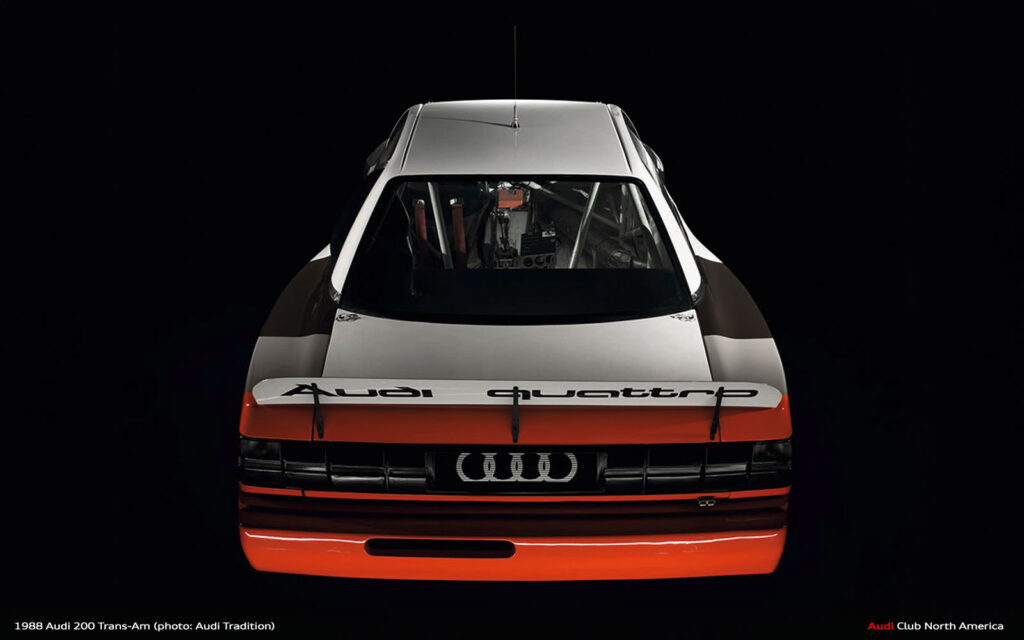
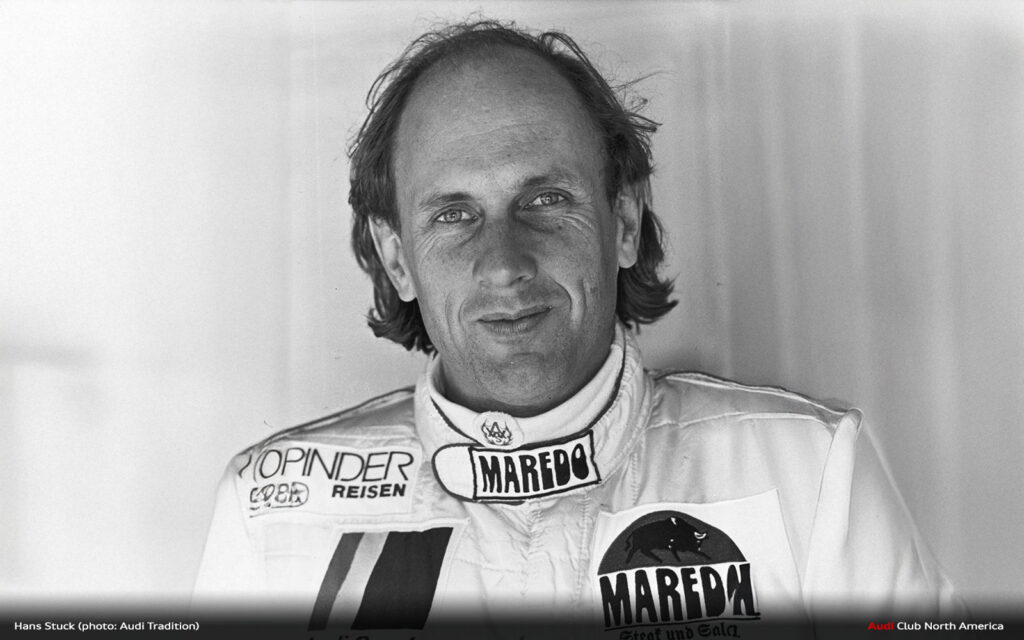
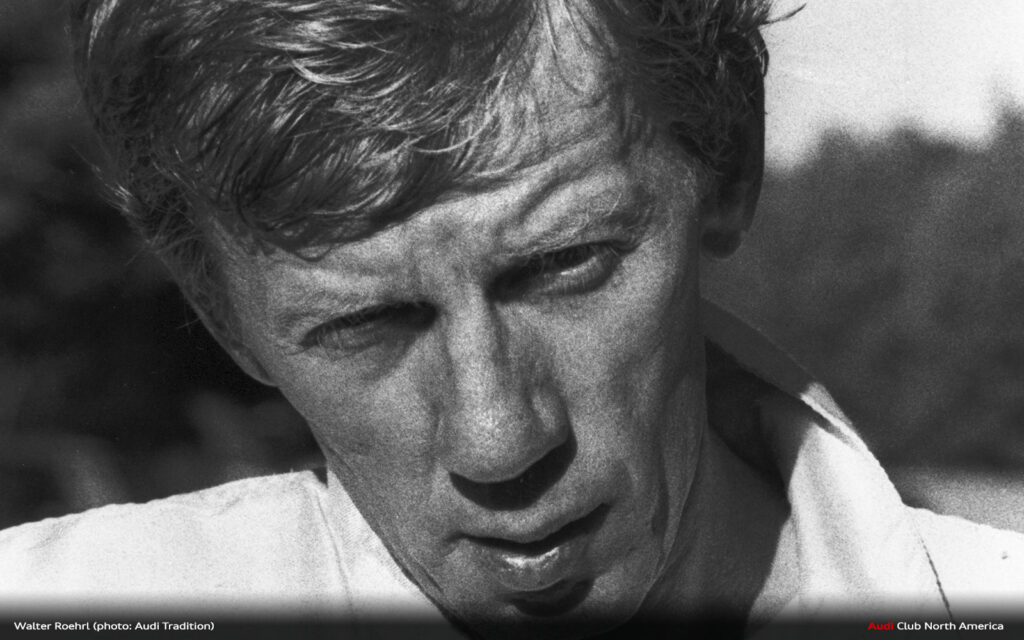
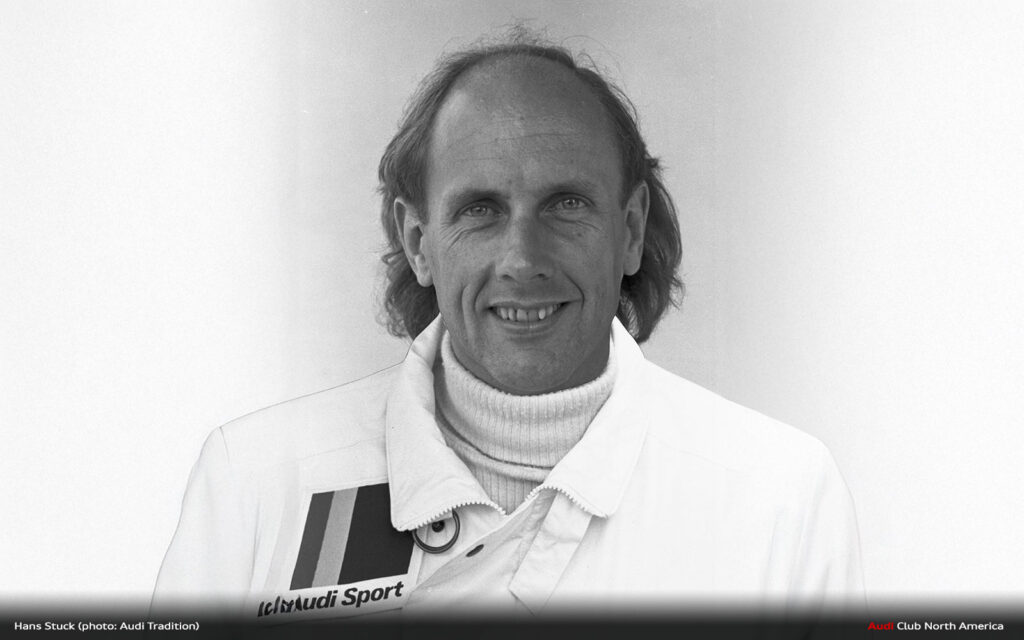
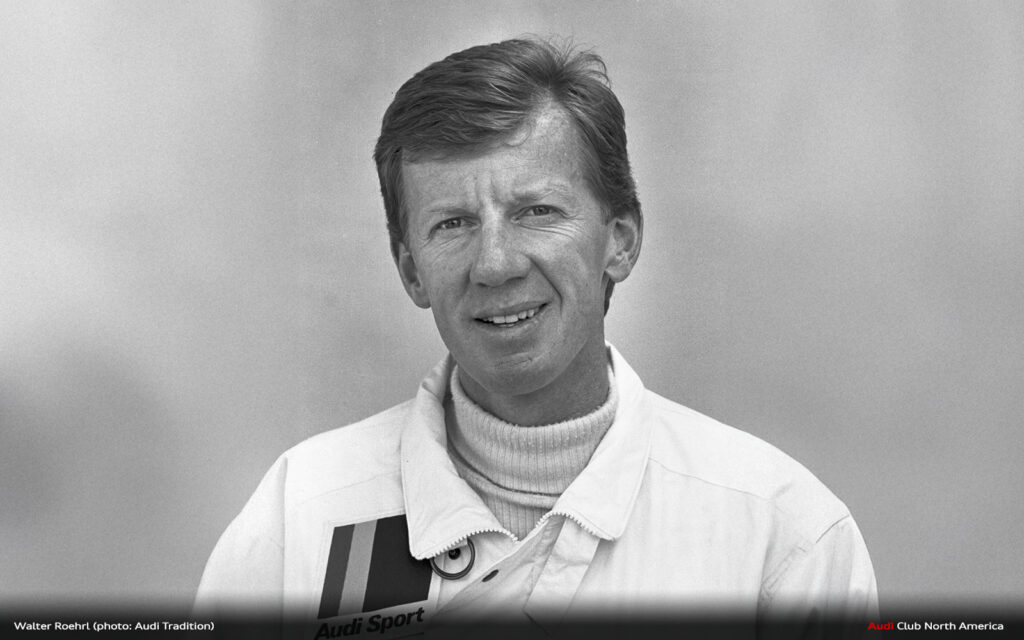
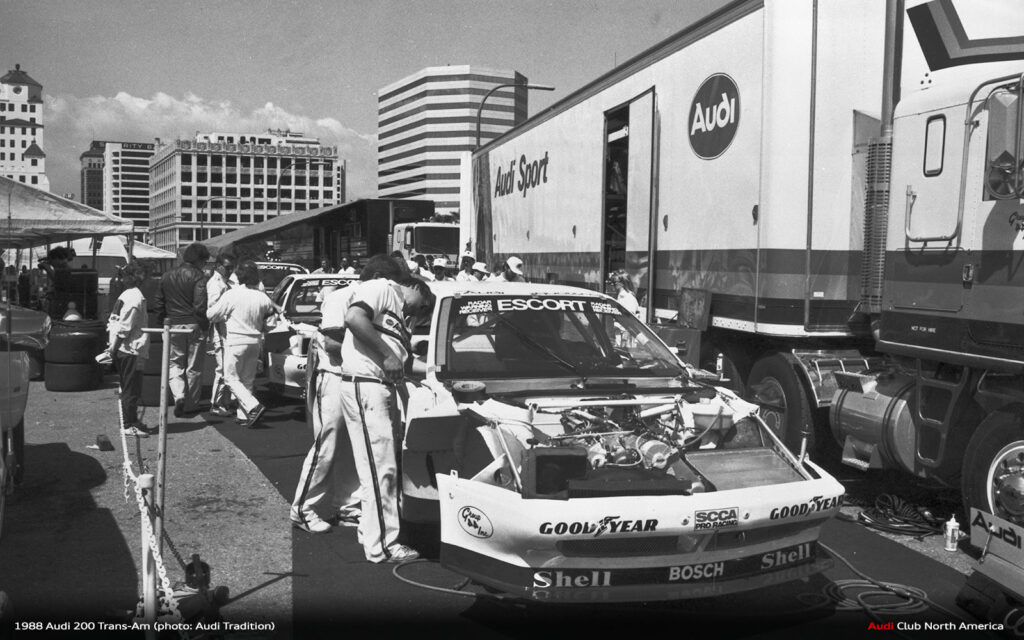
Leading into the opening weekend at the Toyota Grand Prix of Long Beach, the Group 44 Audis were considered a long shot at best.; a mysterious dark horse whose performance couldn’t be handicapped. After all, it was the car’s first season, surely there would be teething problems. And the drivers, Hans Stuck, age 37, and Hurley Haywood, age 40, were a decade or more senior to last year’s champ Scott Pruitt. And Walter Röhrl was a rally driver, not a sprint race driver. But the racing press took notice when Audi debuted the new cars on the deck of the Queen Mary docked at Long Beach. Between that media event and the size of the contingent in Group 44’s garage, surely even the casual race fan must have known Audi was out to prove themselves. It was time to go racing!
The Toyota Grand Prix of Long Beach, April 16, Long Beach, California. Taking place on a 1.67-mile, 11-turn temporary street circuit, drivers were to race 58 laps as a support series to IndyCar. Scott Pruitt put his Merkur XR4Ti on pole while Hans Stuck qualified third and Hurley Haywood seventh. Moments after the first green flag of the year, Paul Newman and Irv Hoerr came together at turn 1 hairpin. Then tragically on lap 1, Dan Croft had a major shunt on the Shoreline Drive straight that resulted in his death.
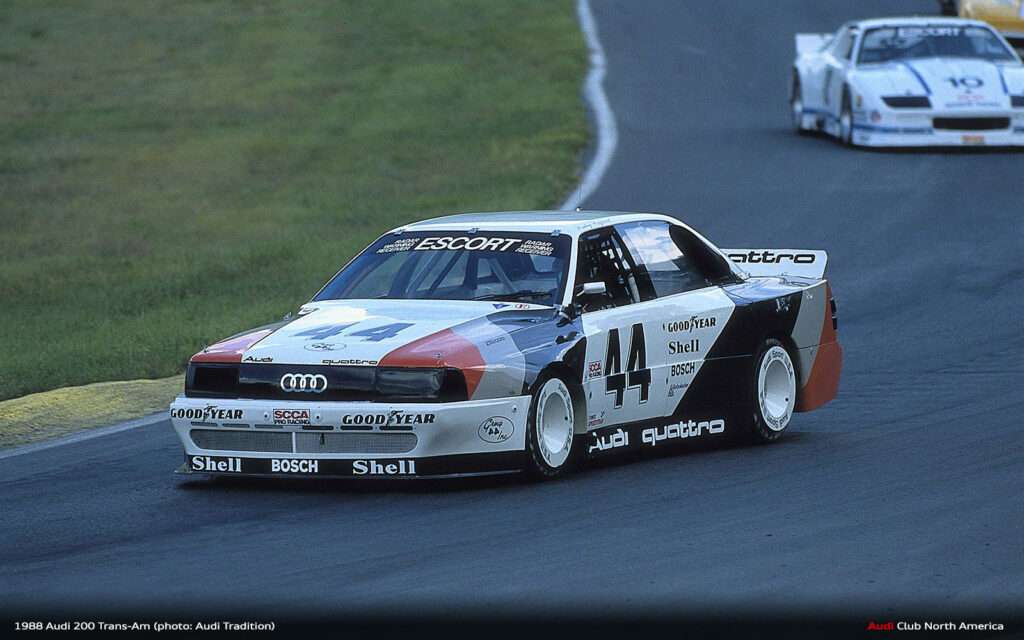
After a 43-minute red flag period, the race restarted with Pruitt in the lead, Stuck in third, and Haywood in seventh. As assumed preseason, the Audi was slower on the straight but made time under braking and accelerating out of corners. Stuck was knifing his way through lapped cars when his left front contacted Danny May’s Thunderbird putting himself out of the race and elevating Haywood to fifth. Eight laps later, Haywood passed Lynn St. James for fourth and a few laps later he passed Les Lindley’s Camaro for third. On the penultimate lap, Pruitt running out of gas, stopped at pit-out and reversed back down pit lane where his crew gave him a splash of gas. That maneuver broke the rules, so he was assessed a one lap penalty after the race dropping him to seventh.
The point system used for the Driver’s Championship was 1st place-20, 2nd-16, 3rd-14, 4th-12, and then decreasing by one down to one point for 15th. Qualifying on pole and leading the most laps also each earn one point. Fewer points are awarded for the Manufacturer’s Championship: 1st place-9, 2nd-6, 3rd-4, 4th-3, 5th-2, and 6th-1 point. And only the top finishing car scores points. So, Haywood took away 16 points from Long Beach, Stuck left pointless but with $300 of the purse, and Audi earned 6 points.
The Pontiac Grand Prix of Dallas, May 1, Fair Park, Dallas, Texas. Fittingly held on the first, would Audi win its first road race on American pavement? It would take 105 laps of the 1.3-mile, 23-turn temporary street circuit, which re-used sections of the 1984 Formula One circuit, to complete the 126-mile race distance. A greater than 100-mile distance meant it would be the first of four races this season requiring a pit stop to take on at least five-gallons of fuel. Walter Röhrl raced the #14 car this weekend as Hans Stuck had commitments to drive for the Porsche factory team at Nürburgring. Röhrl promptly put the Audi 200 on pole. Haywood qualified a solid fourth on what he described as a “one-lane racetrack”. He went on to say, “That led to real miserable conditions – probably the worst conditions I’ve seen at a racetrack. If you got offline by one inch, you went off into the wall.”
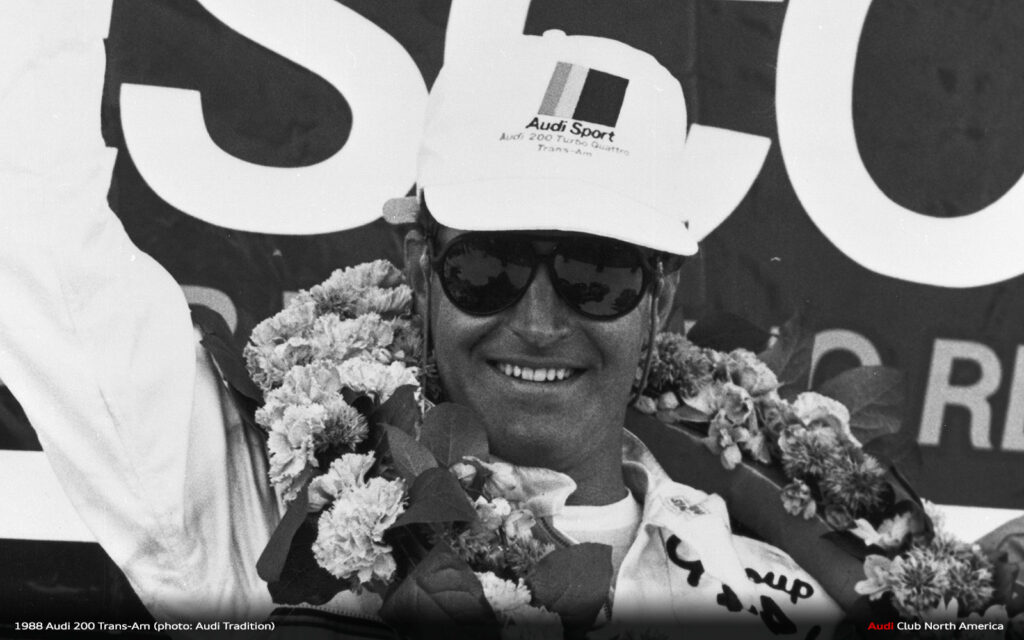
At the race’s start, second place qualifier Willy T. Ribbs briefly got in front of Röhrl but he repassed Ribbs to lead lap 1. The two traded the lead three more times over the next 28 laps but contact with a back marker sent Röhrl to the garage with suspension damage. While this action was happening, Haywood who had dropped back to seventh at the start moved forward eventually taking the lead by lap 53. Haywood never looked back taking the checkered flag with a 45-second lead. He also logged the fastest race lap but tied Ribbs in the number of laps led thus splitting that point. Even though Walter Röhrl completed only 68 laps, he was classified 13th thus earning three points plus one for pole position.
The Driver’s Championship point standings after two races were: Haywood 36.5, Irv Hoerr 27, Röhrl 4, and Stuck 0. On the Manufacturer’s Championship side, it was Audi 15, Oldsmobile 15, and Chevy with 7 points.
With two races out of a scheduled 14-race series completed, the combo of Audi and Haywood had already reached the podium’s top step. Was it racer’s luck or a sign of things to come? Read about what happened during the next handful of races in Part 2 of this series that was originally published in quattro Magazine.



Responses