

Spyker CEO Discusses 800-HP Audi V8-Powered Hypercar and Reveals Plans for Endurance Racing Return

Words: Joe Kucinski
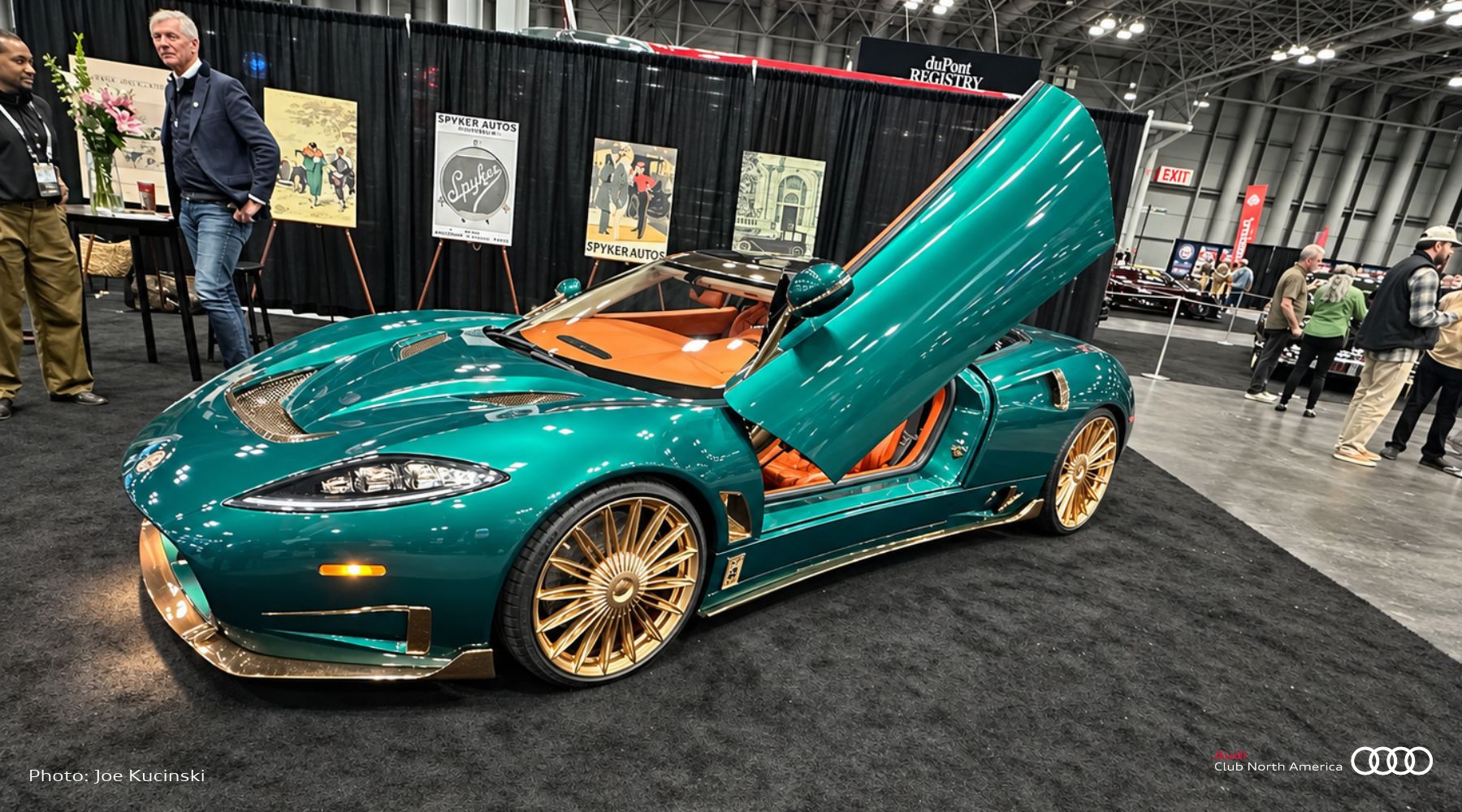
When you think of Audi-powered, mid-engine sports cars, the R8 is probably the first vehicle that comes to mind. However, Audi’s engines have also powered some of the world’s most exotic and exclusive automobiles. One of the most interesting examples is Spyker, the Dutch boutique manufacturer known for its aviation-inspired designs, exquisite craftsmanship, and extraordinarily limited production. Now, Spyker is back with an 800-horsepower hypercar powered by an Audi V8, and the company’s CEO has revealed plans for a return to endurance racing.
We spoke with Spyker CEO Victor Muller at Rétromobile New York last week, where he explained why Audi engines have remained such an important part of the company’s identity.
“We’ve always used Audi engines from the very first car, 001, to today,” Muller said.
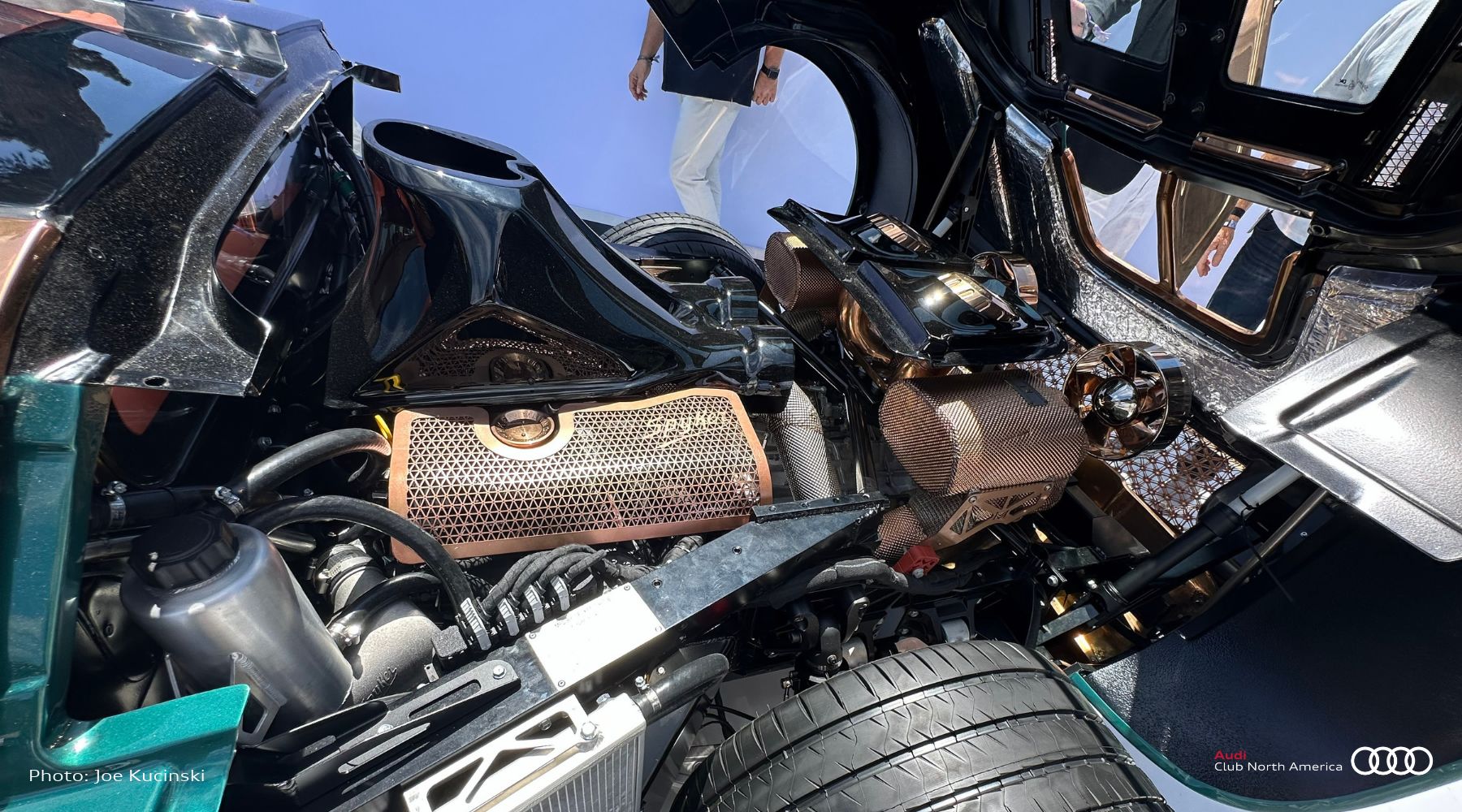
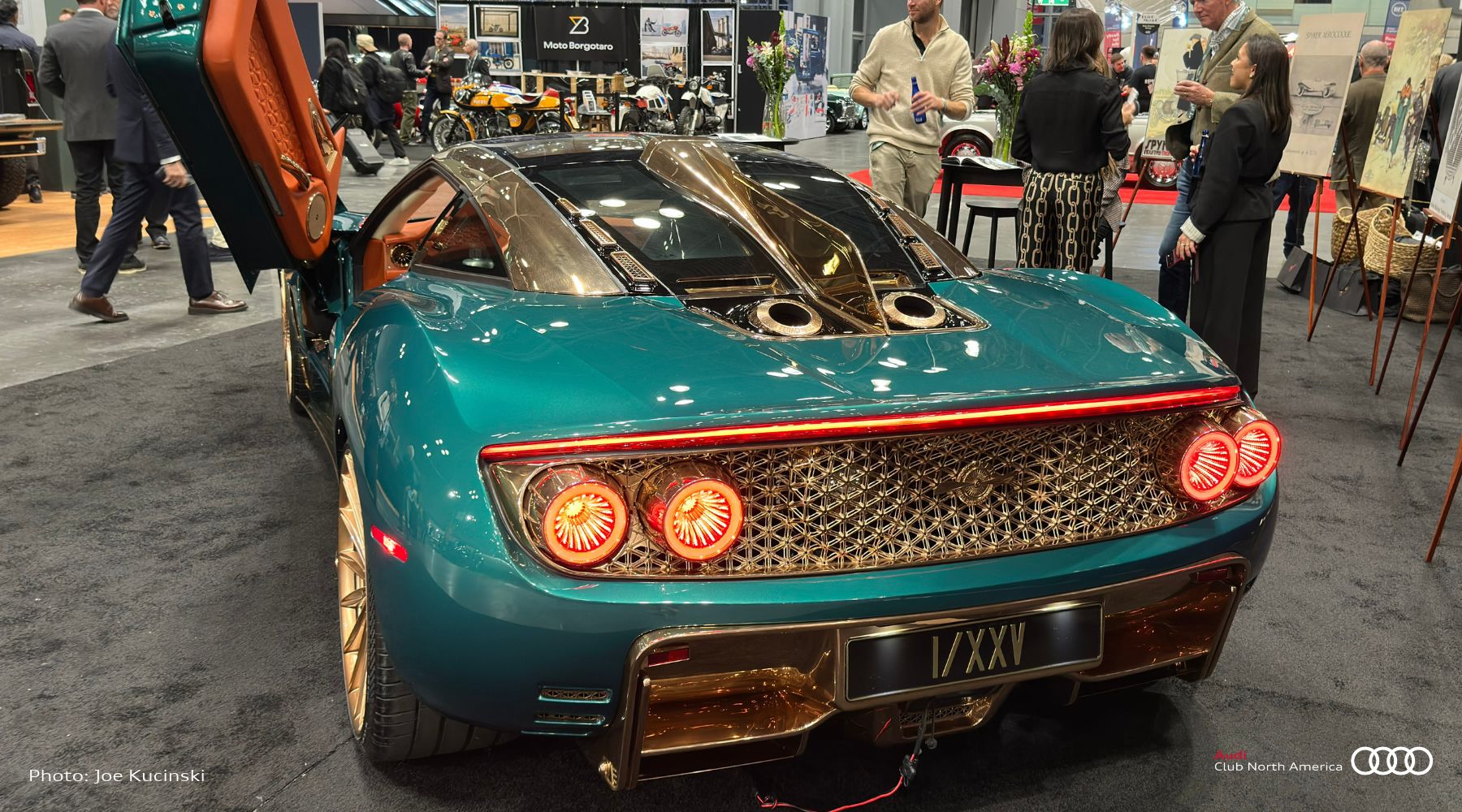
The company’s latest creation, the C8 Preliator XXV Coupé, continues the tradition. Underneath its handcrafted aluminum body sits a 4.0-liter twin-turbocharged V8 sourced from the Audi RS Q8 and tuned by German performance specialist ABT to produce 800 horsepower.
But there’s something about this particular Audi-powered machine that makes it especially interesting.
“What we do have in our car that no other Audi product has, of course, is a manual gearbox,” Muller explained.
Spyker pairs the V8 with a six-speed Graziano manual transmission, creating a combination unavailable in Audi’s own lineup. According to Muller, the decision reflects the company’s commitment to providing an engaging driving experience. A dual-clutch automatic was never part of the plan.
“We never did anything else because we think that a hypercar should be engaging,” he said.
Muller is equally enthusiastic about Audi’s engine reliability. Spyker previously used the naturally aspirated 4.2-liter Audi V8 in its earlier models, and he says those engines proved exceptionally durable.
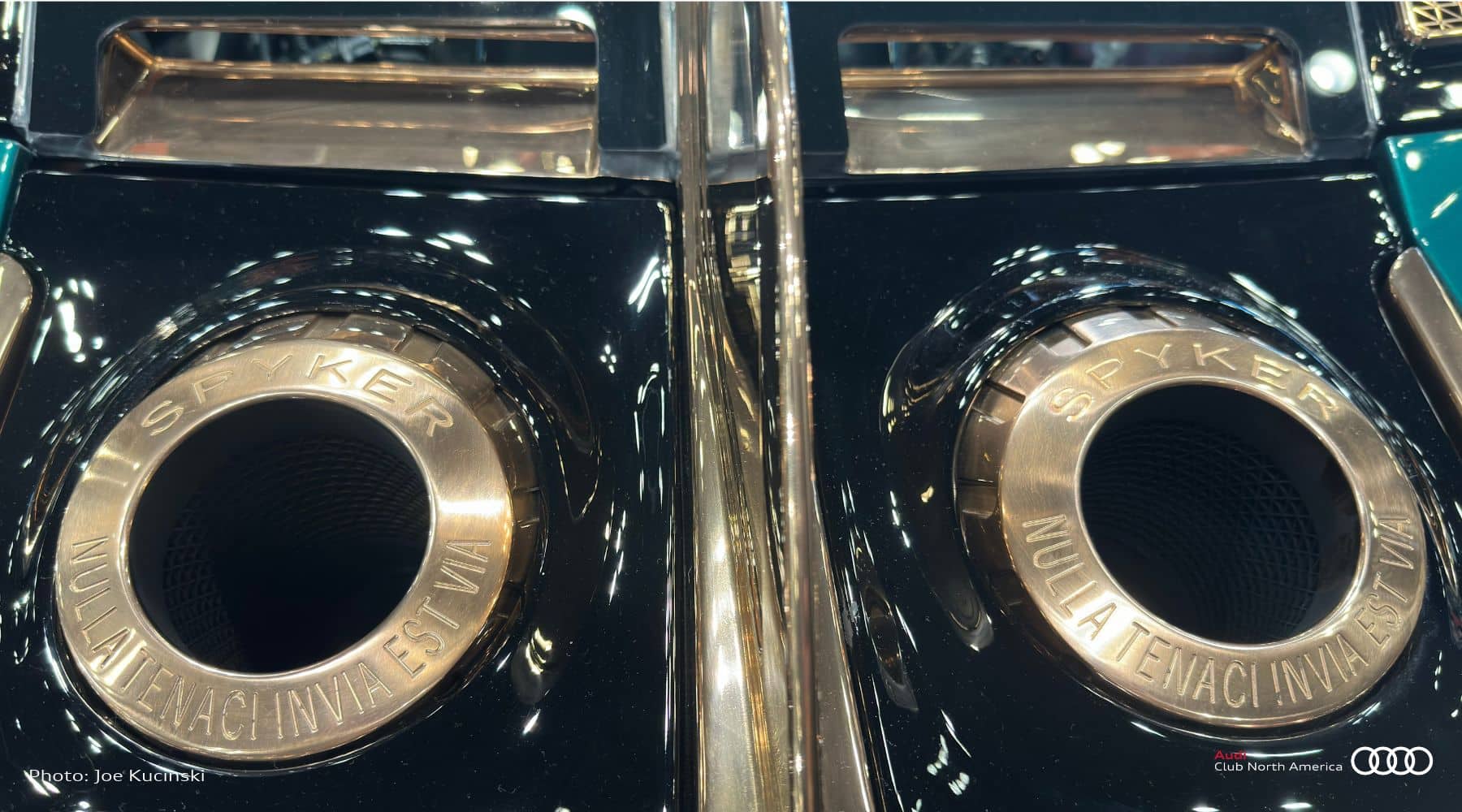
“We’ve never lost an engine in any of our cars,” Muller said. “None of the 4.2 liters ever failed.”
The transition to the twin-turbocharged V8 was relatively straightforward, thanks to Spyker’s extensive experience working with Audi powerplants. The new engine also delivers approximately 1,000 newton-meters of torque, or 738 foot-pounds.
Could Audi Power Return to Le Mans?
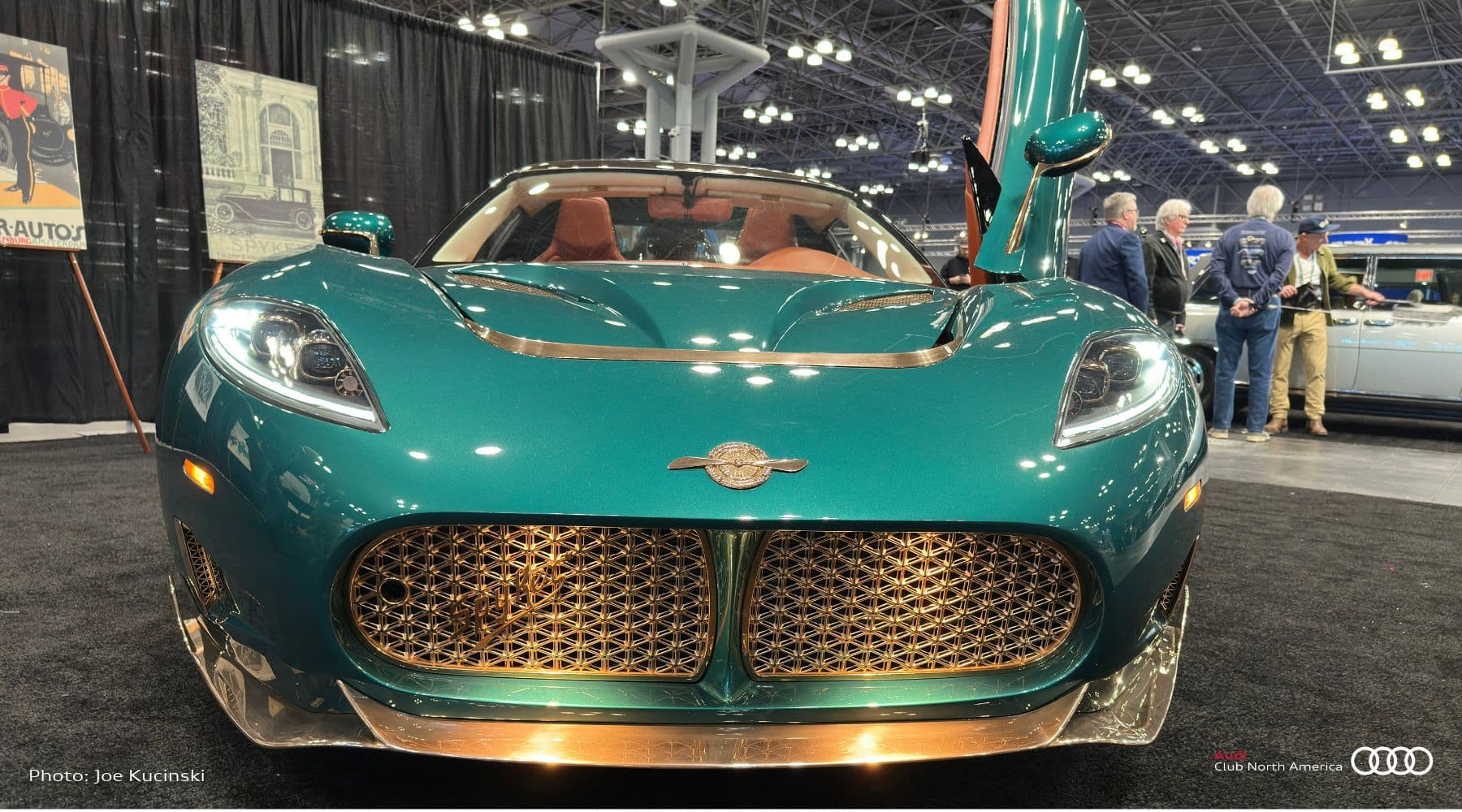
Perhaps the most exciting revelation from our conversation concerned Spyker’s motorsport ambitions.
The manufacturer has a long racing history, including eight appearances at the 24 Hours of Le Mans. Its previous GT racing cars also relied on Audi V8 power, creating an intriguing connection between the two brands.
When asked whether Spyker might return to Le Mans, Muller didn’t hesitate. “Absolutely,” he said. “We’d love to go back in racing.”
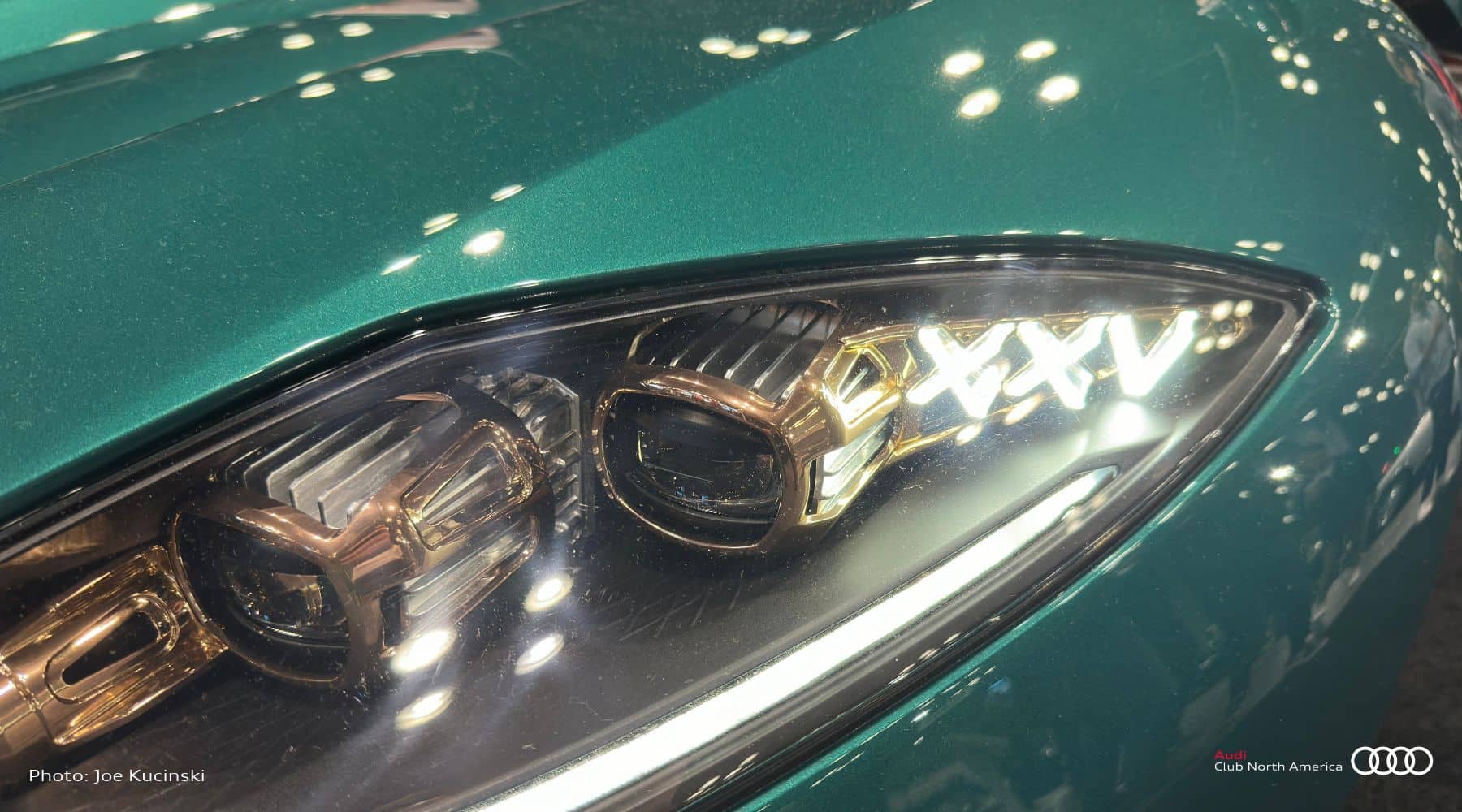
More importantly, he revealed that the company has already taken steps toward making that ambition a reality. “I actually hired my former GT2 race director again,” Muller said. “He started a week ago today.” Muller confirmed that Spyker is actively preparing for a return to endurance racing, although he stopped short of announcing a specific timetable.
“Rather than looking the part, it needs to give the competition hell on the track,” he said, referring to the possibility of racing the new car. Whether that ultimately means another Audi-powered Spyker competing at Le Mans remains to be seen. But the prospect of an 800-horsepower Audi V8 returning to the Circuit de la Sarthe inside one of the world’s most distinctive hypercars is certainly intriguing.
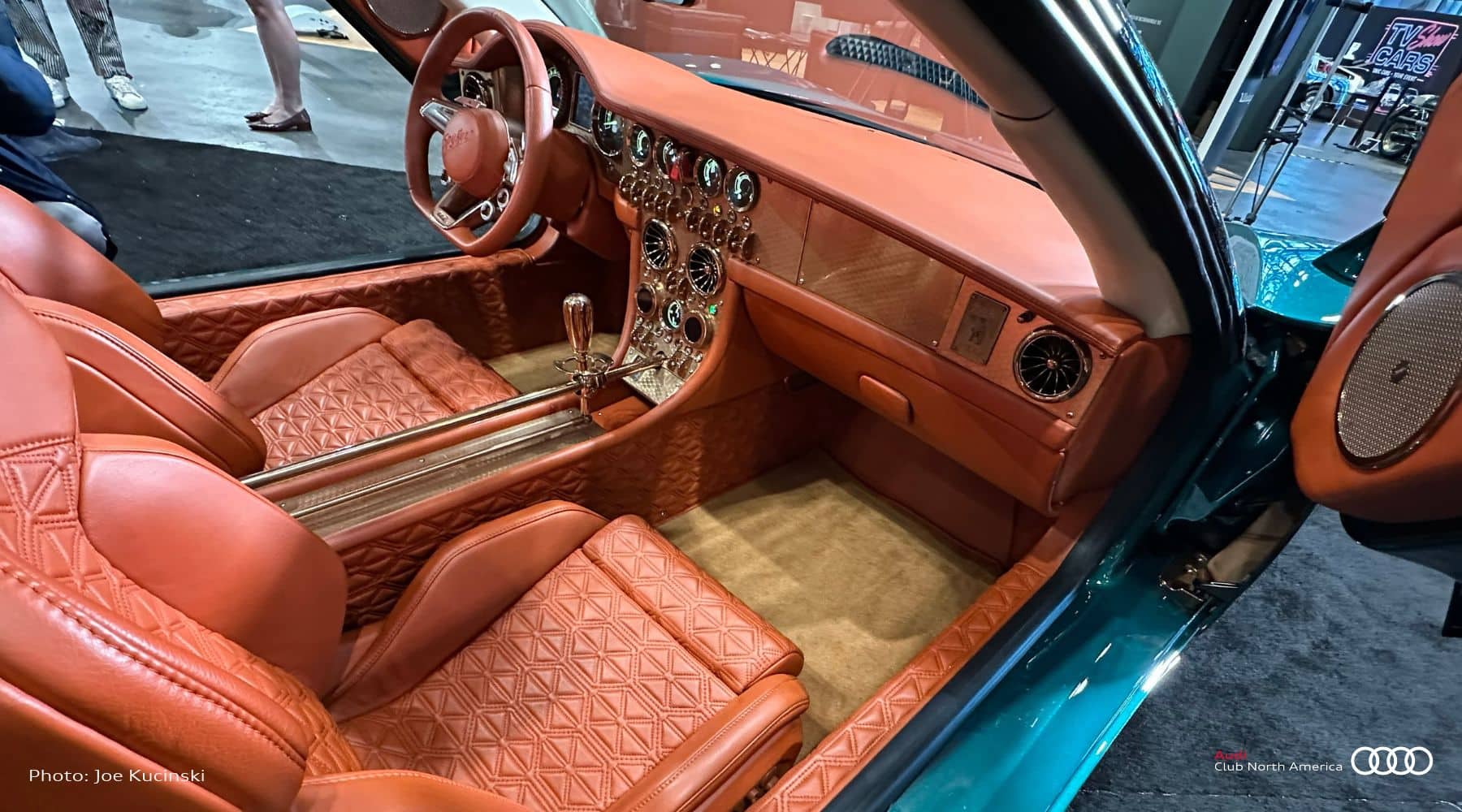
For now, Spyker is concentrating on producing 25 examples of the Preliator XXV Coupé, all of which Muller says sold during their debut at The Quail. Additional Spyder and removable-roof Sedanca variants are planned for 2028.
And while the new car carries a price approaching $1.8 million, Muller insists these machines are meant to be enjoyed rather than hidden away in private collections. “We prefer to sell our cars to people that actually use them,” he said. “Because that’s what I made them for. To drive the hell out of them.”
We love that philosophy. And we also love that when it came time to choose a powerplant for its newest hypercar, Spyker stuck with Audi rather than switching to Mercedes-AMG or BMW. When something has been working this well for more than 25 years, why change it?


Responses