

First Drive: The 2027 Audi Q7 & SQ7

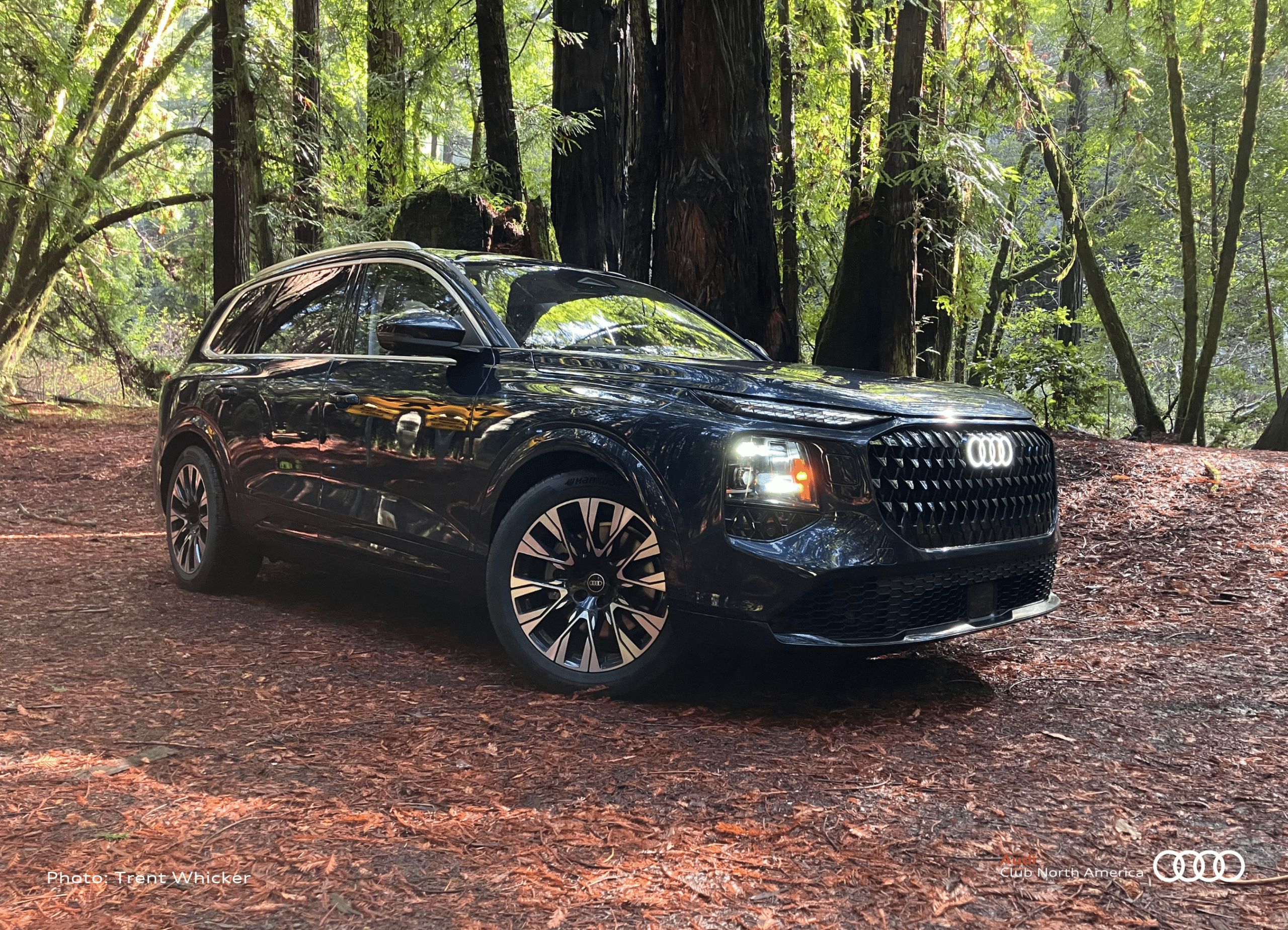
by: Trent Whicker
Performance SUV for a Performance Family
Audi’s Q-line has always represented the company’s take on the everyday performance lifestyle. First introduced as the ‘Pikes Peak quattro’ at the 2003 North American International Auto Show, the lineup’s connection to performance has remained central to its identity. Audi’s current marketing campaign featuring Michele Mouton and her family makes that intention abundantly clear: the Q-line continues to embody the idea of a Performance SUV for a Performance Family.
Through twenty years and three generations, Audi builds on this legacy through Vorsprung durch Technik, applying best-in-class performance, everyday versatility, advanced safety & intuitive technology for daily drives or the next adventure in this newest generation.
We offer a huge thanks to Audi of America for granting us the unique opportunity to test drive the new Q7 and SQ7 models along the country and coastline of Sonoma County, California.
Performance, with Lifestyle in Mind
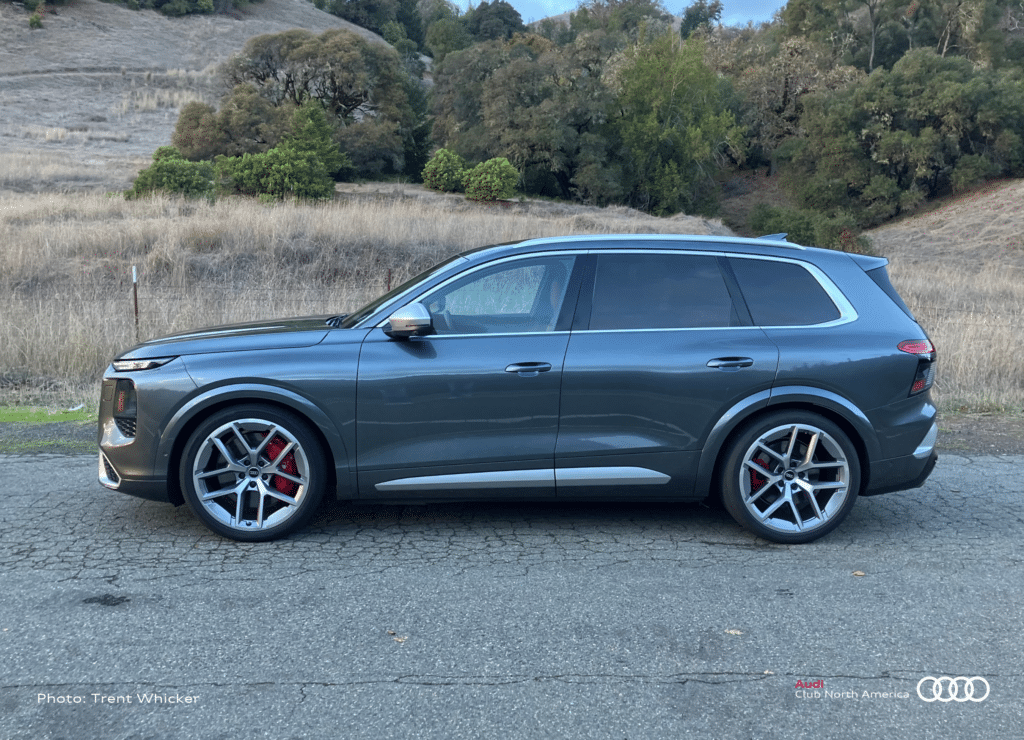
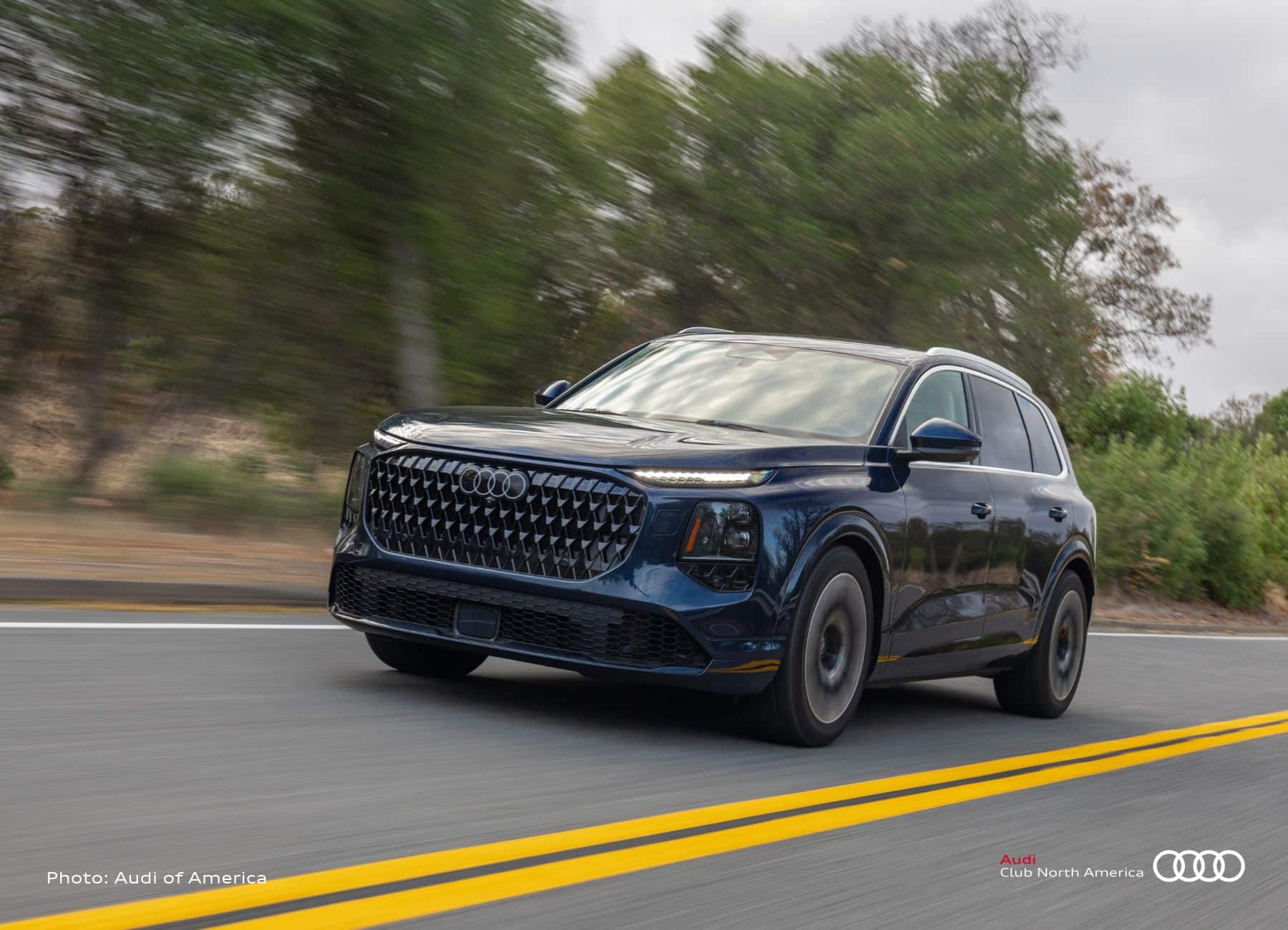
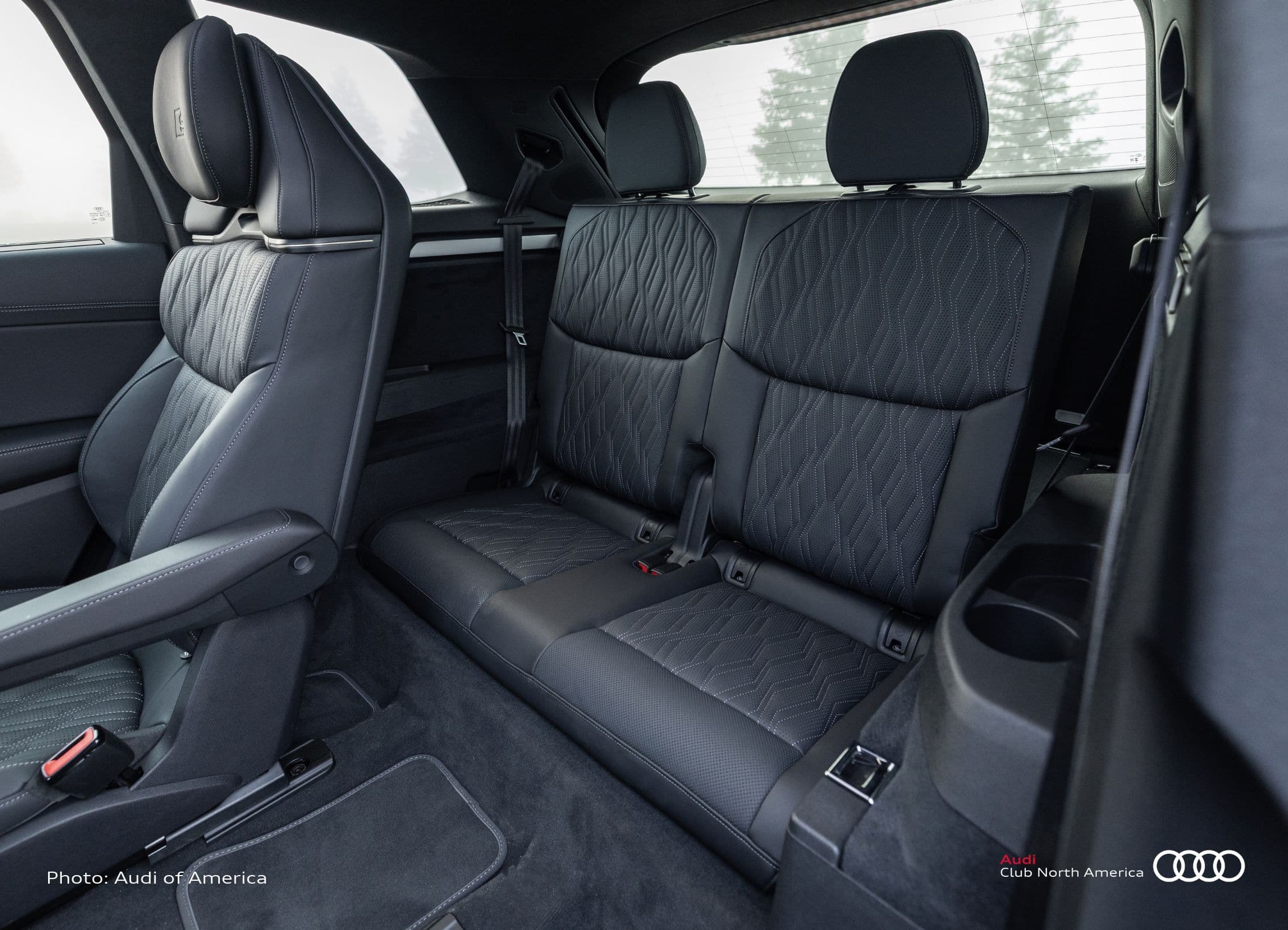
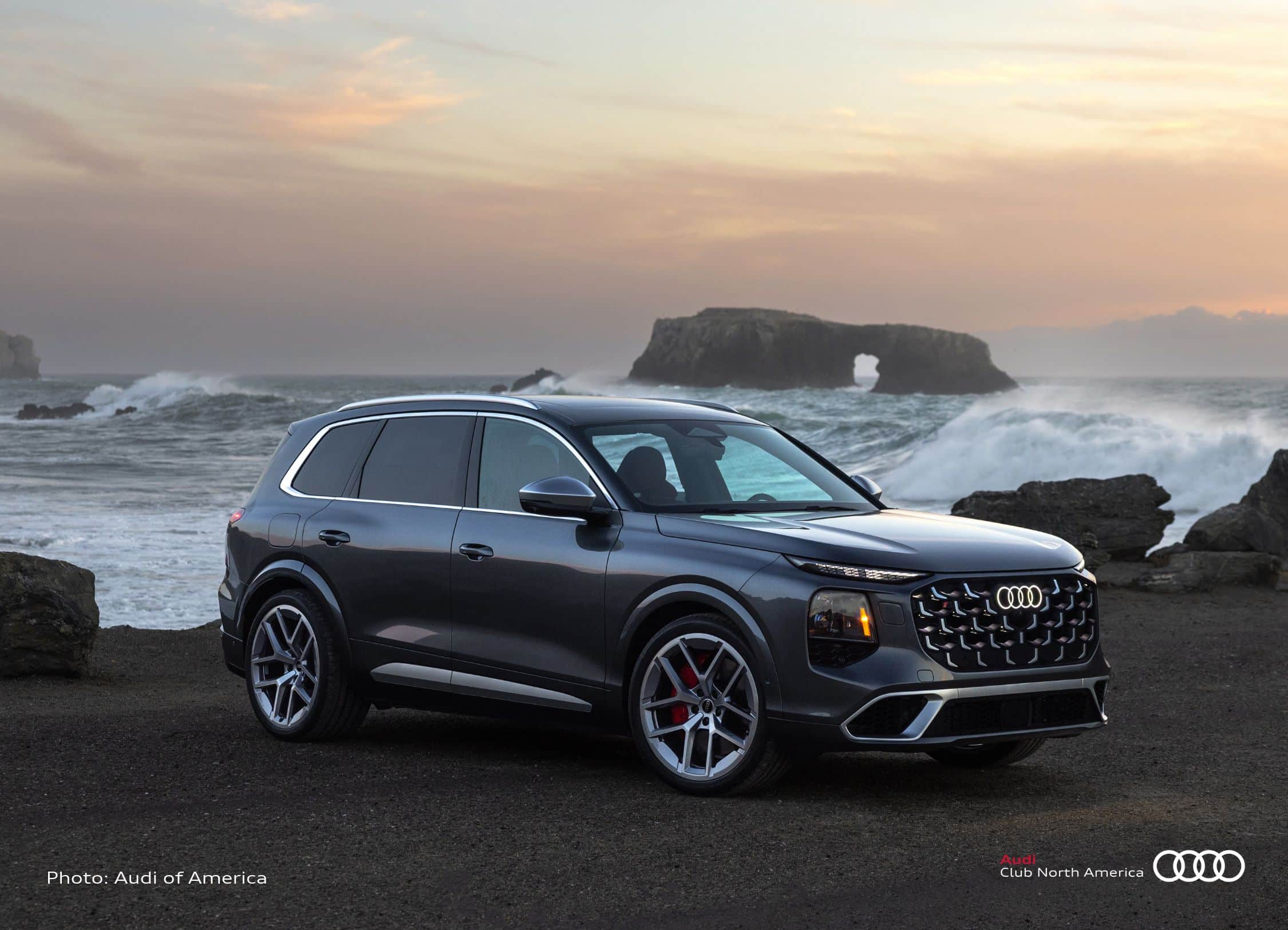
Newer proportions are evident in these models. The Q7 offers true three-row space without the bulk of a full-size SUV. The current geometry adds a more upright D-pillar and a nearly flat roofline. These changes to the roofline award a more streamlined look and add third row headroom. The wheelbase of the Q7 is the same as the outgoing 2026 model, however the 2027 Q7 is 1.7 inches wider and 2.8 inches taller.
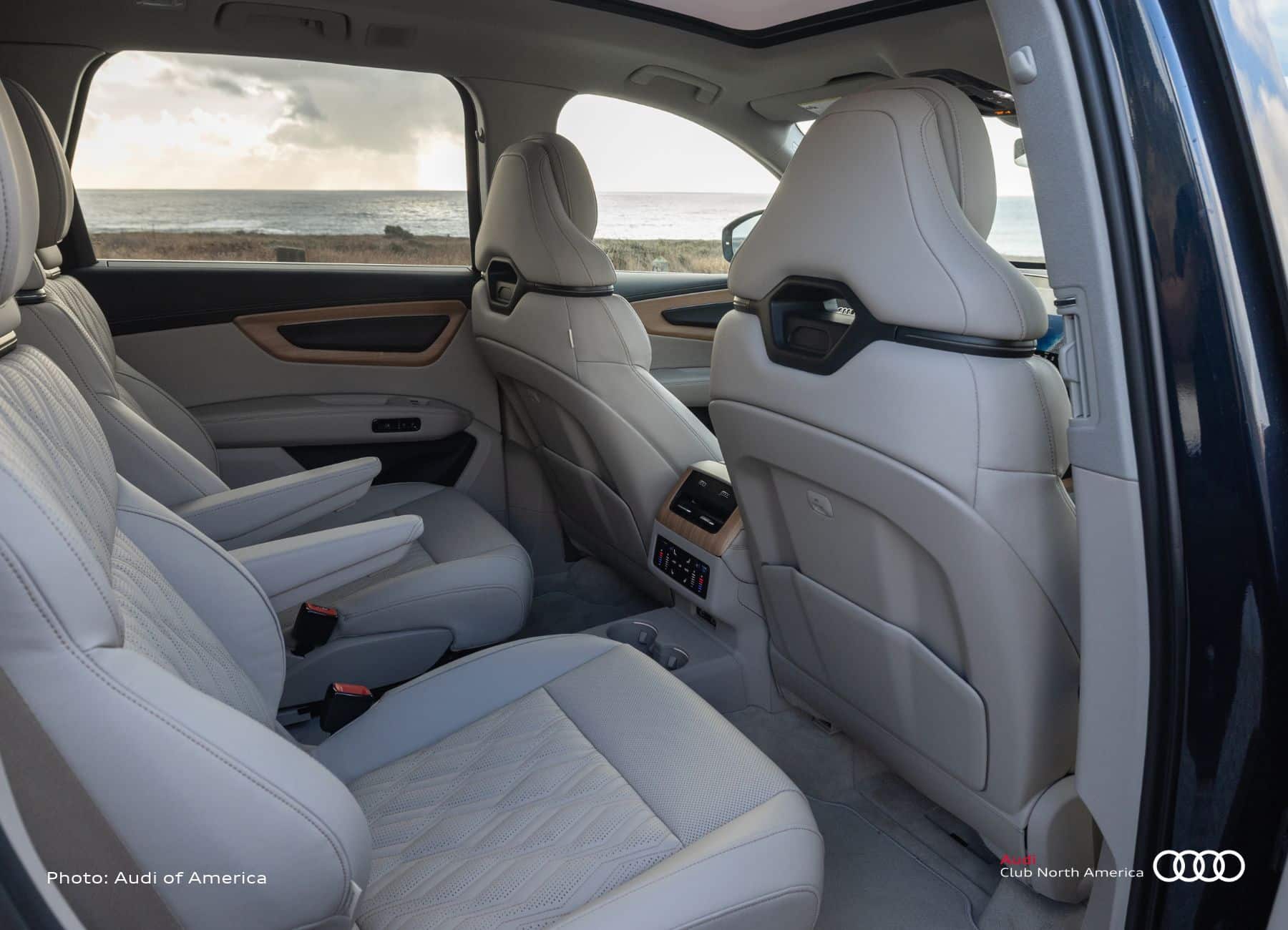
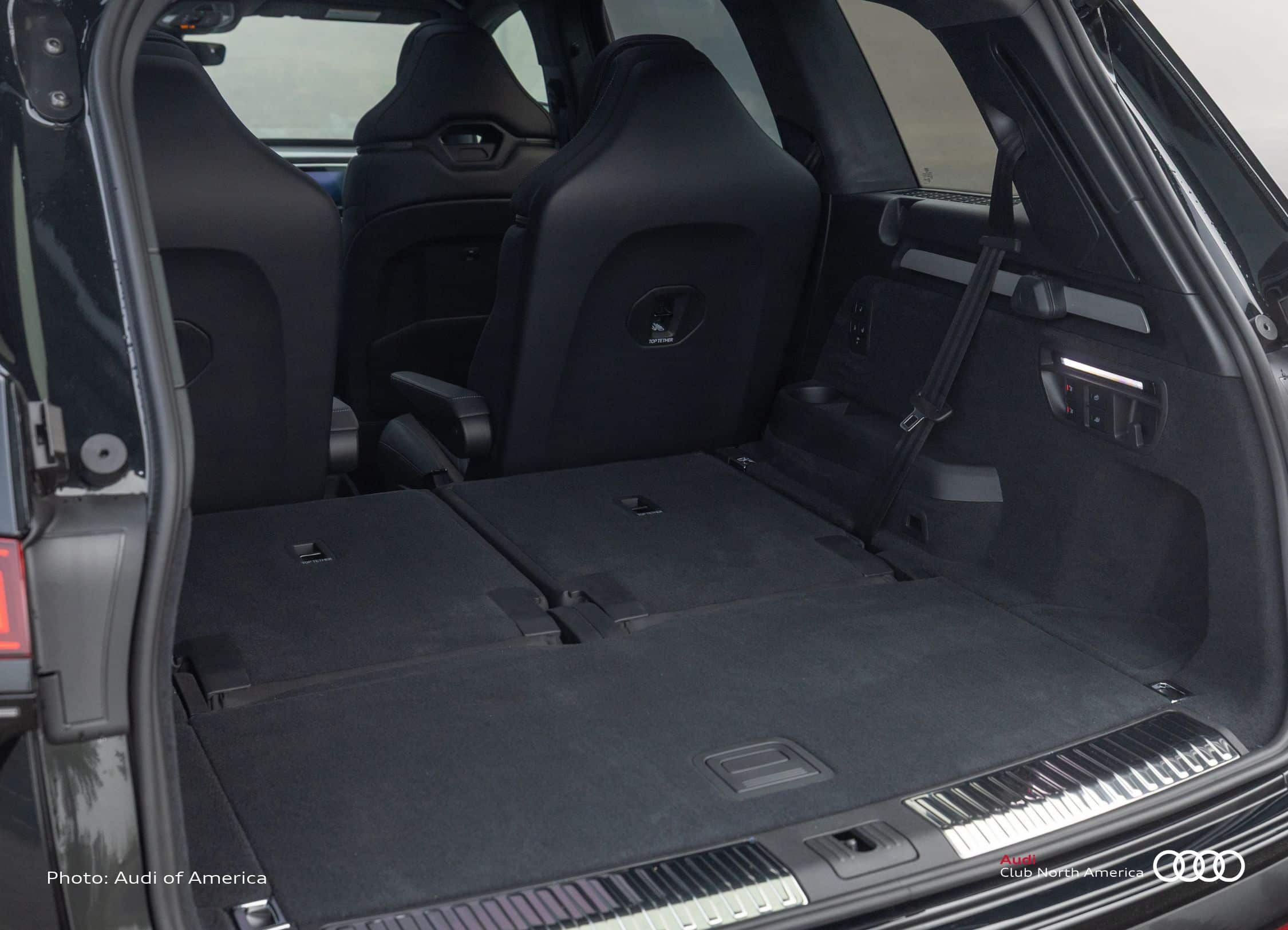
Seven seats come standard, with room for three child seats with up to five latch points, across the second row in the seven-passenger configuration. It is also worth noting that the second row is a true one-third split, allowing for a slightly better seating arrangement.
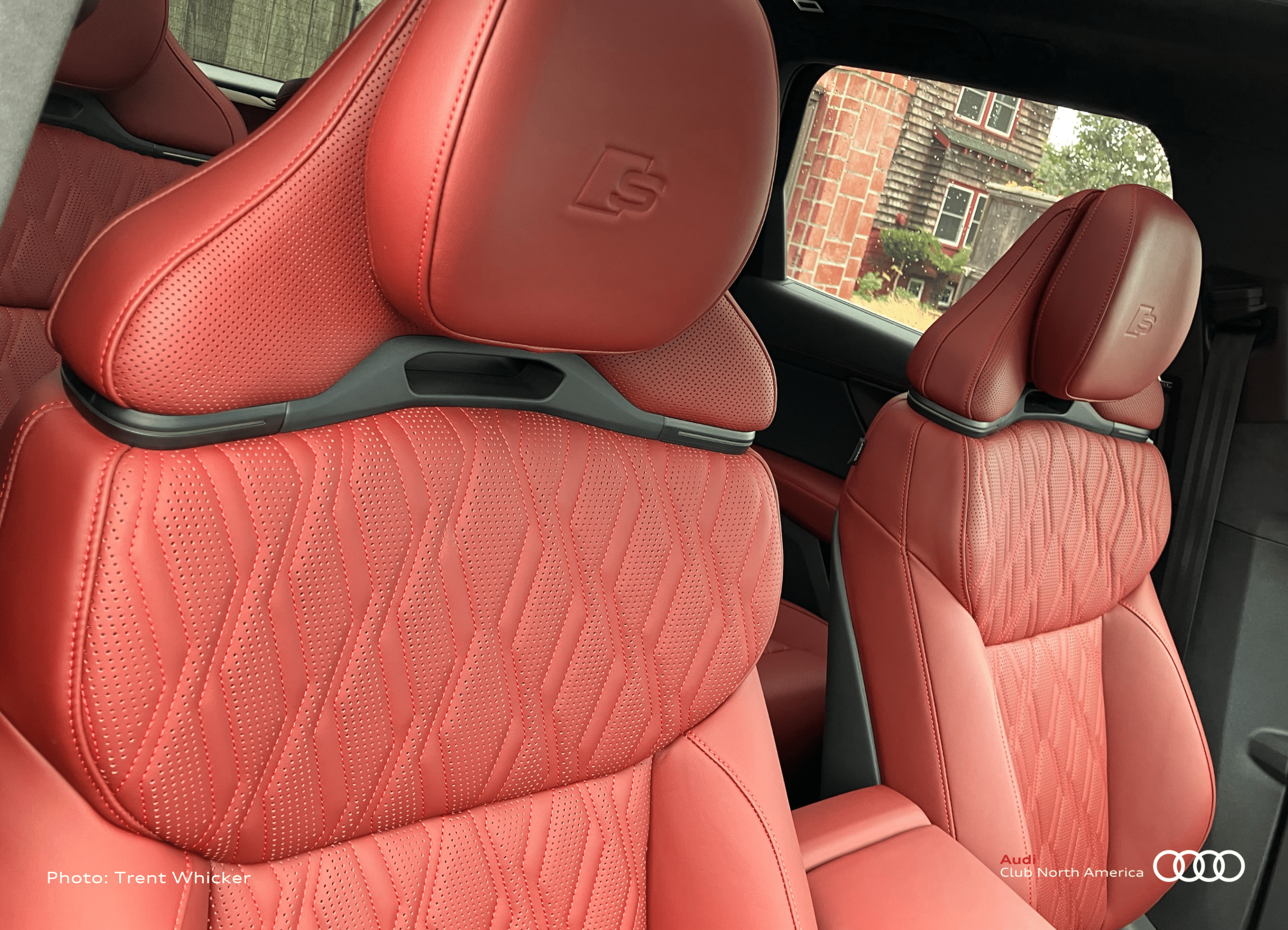
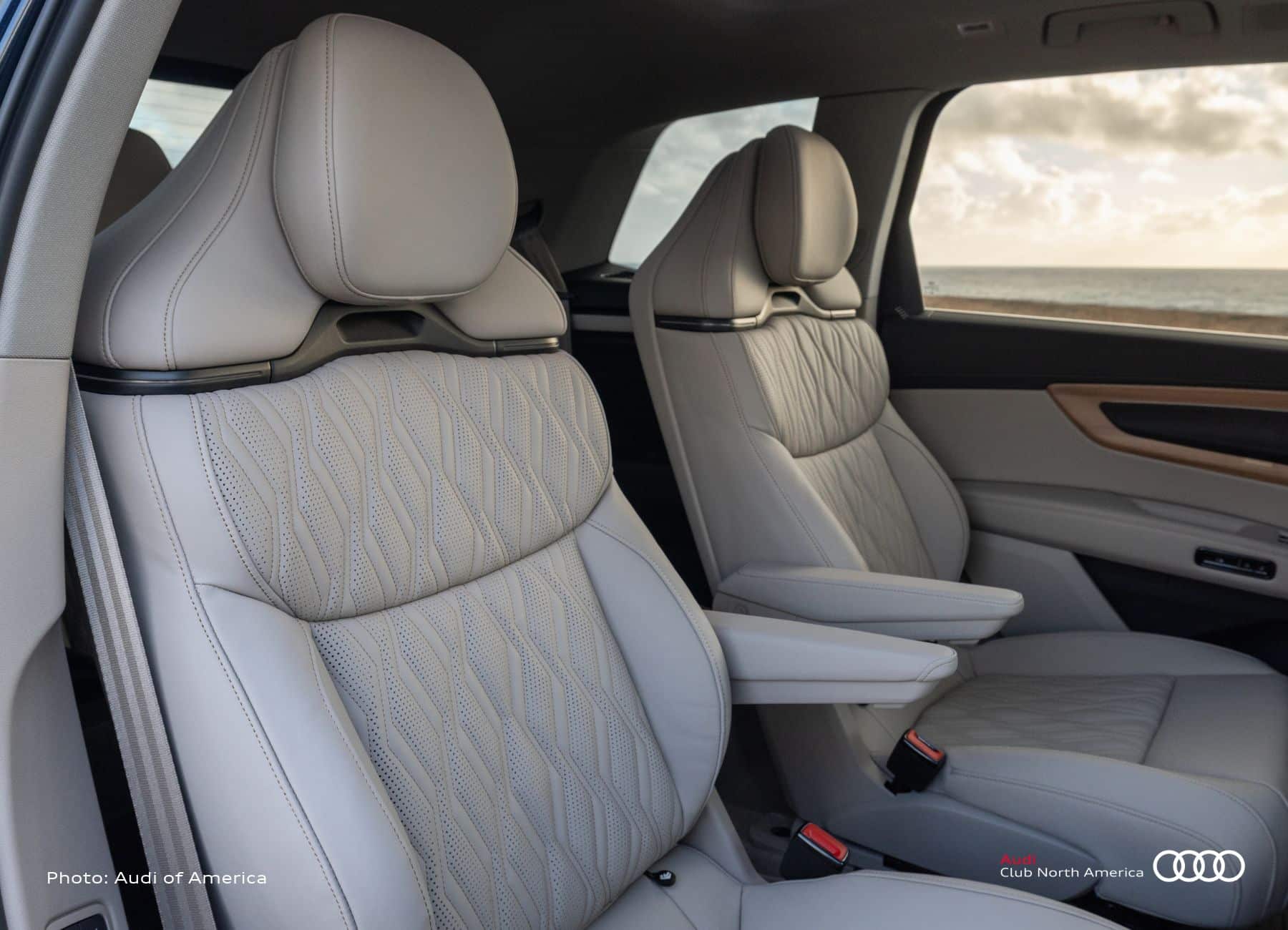
Although it is a package-dependent option, the tested models offer second row captain chairs. These seats are power adjustable with heat, armrests and surround-sound audio output near the headrest. This is a welcomed luxury and a way to provide space without providing that strange mini-van feel of a bench seat.
Space is very abundant with maximum cargo space at 78.1 cubic feet with second and third-row seats folded. There’s enough versatility to commute four adults and luggage in the back with ease.
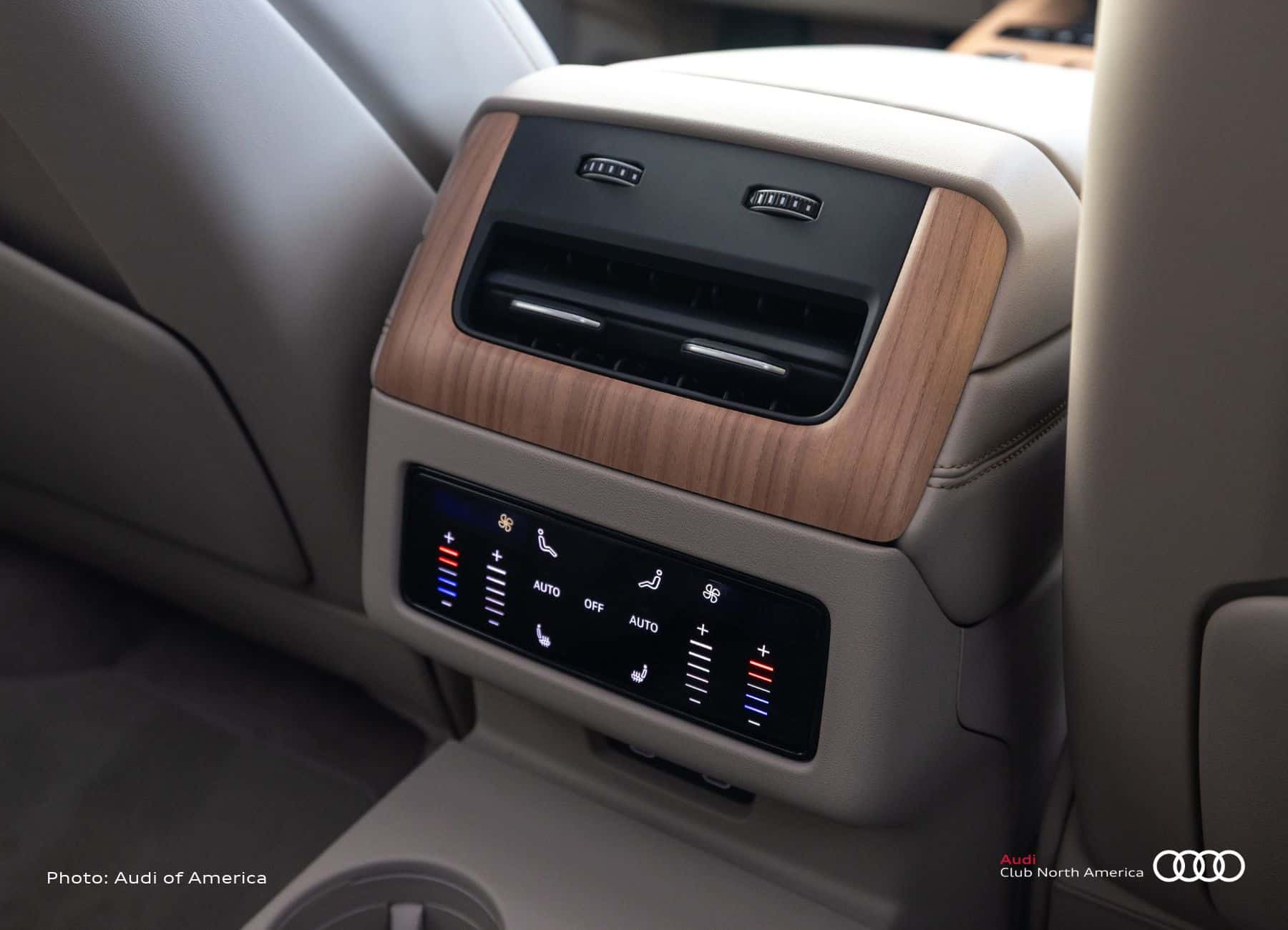
We admire the practical details such as a hands-free tailgate, power sunshades, and dedicated rear climate controls while riding passenger. Climate controls are standard for second-row passengers, plus USB-C fast charging from 45–100W, which is also available to power laptops and tablets for second and third-row passengers.
The optioned automatic powered doors added a distinctly premium touch, particularly when loading passengers in tight parking spaces and avoiding accidental door dings.
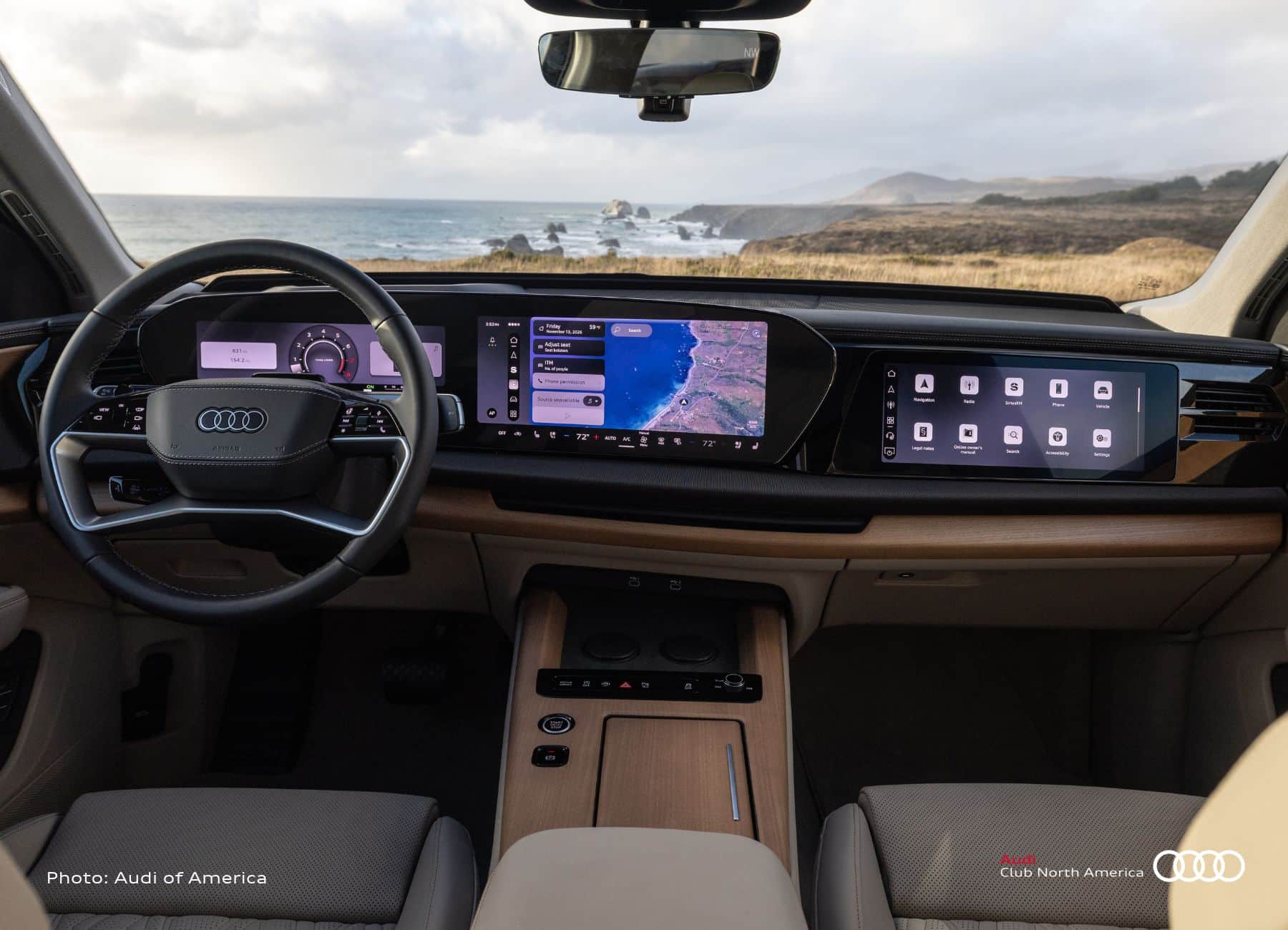
The Audi Digital Experience
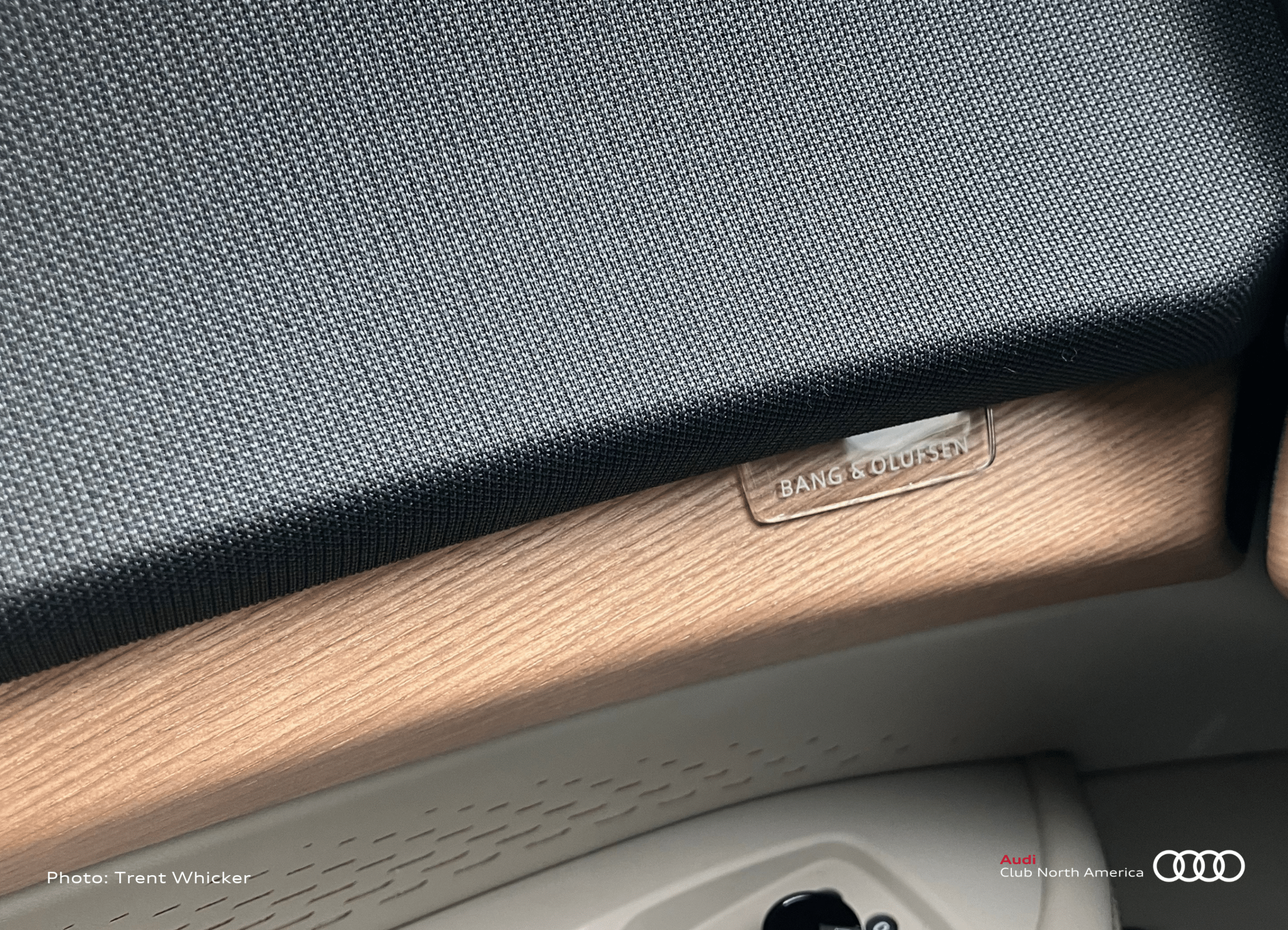
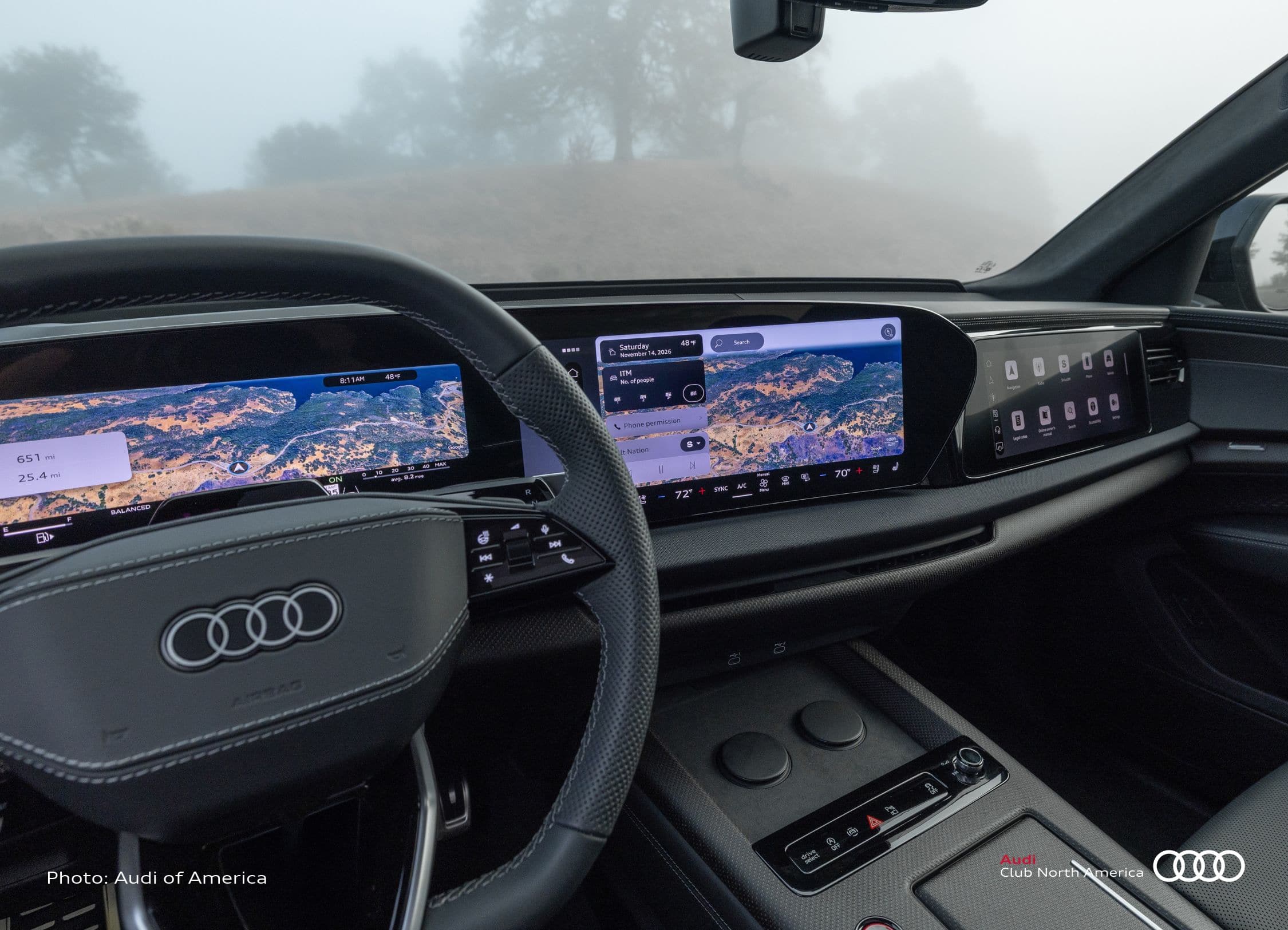
The interior provides a thoughtful welcome with standard ambient LED interior lighting and a panoramic glass sunroof with available variable light control to enhance the cabin’s ambiance. The ambient lighting in these cars was easy to customize and could be paired to match the Bang & Olufsen 4D sound system, which essentially makes for a rolling theater experience if one desires.
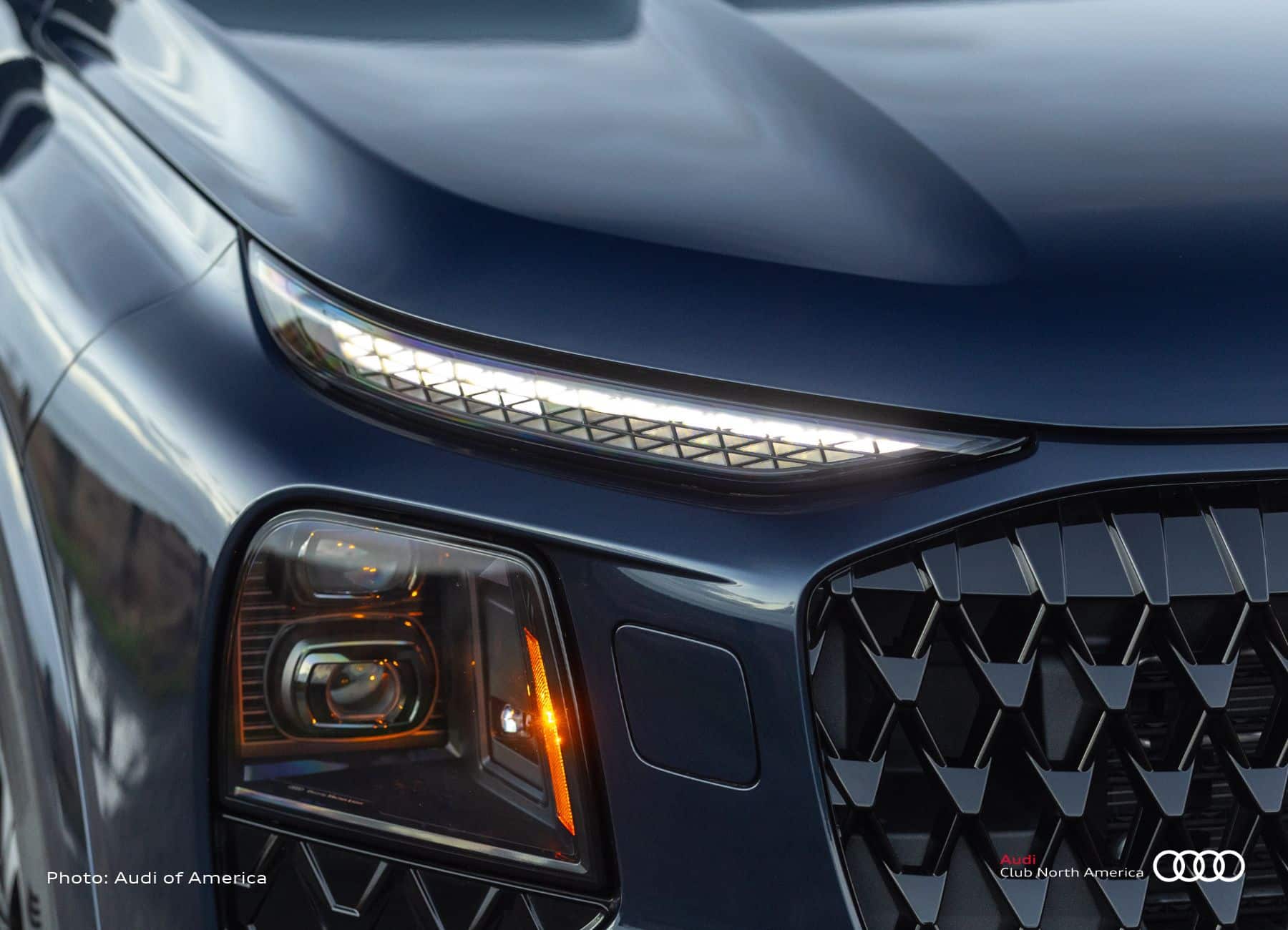
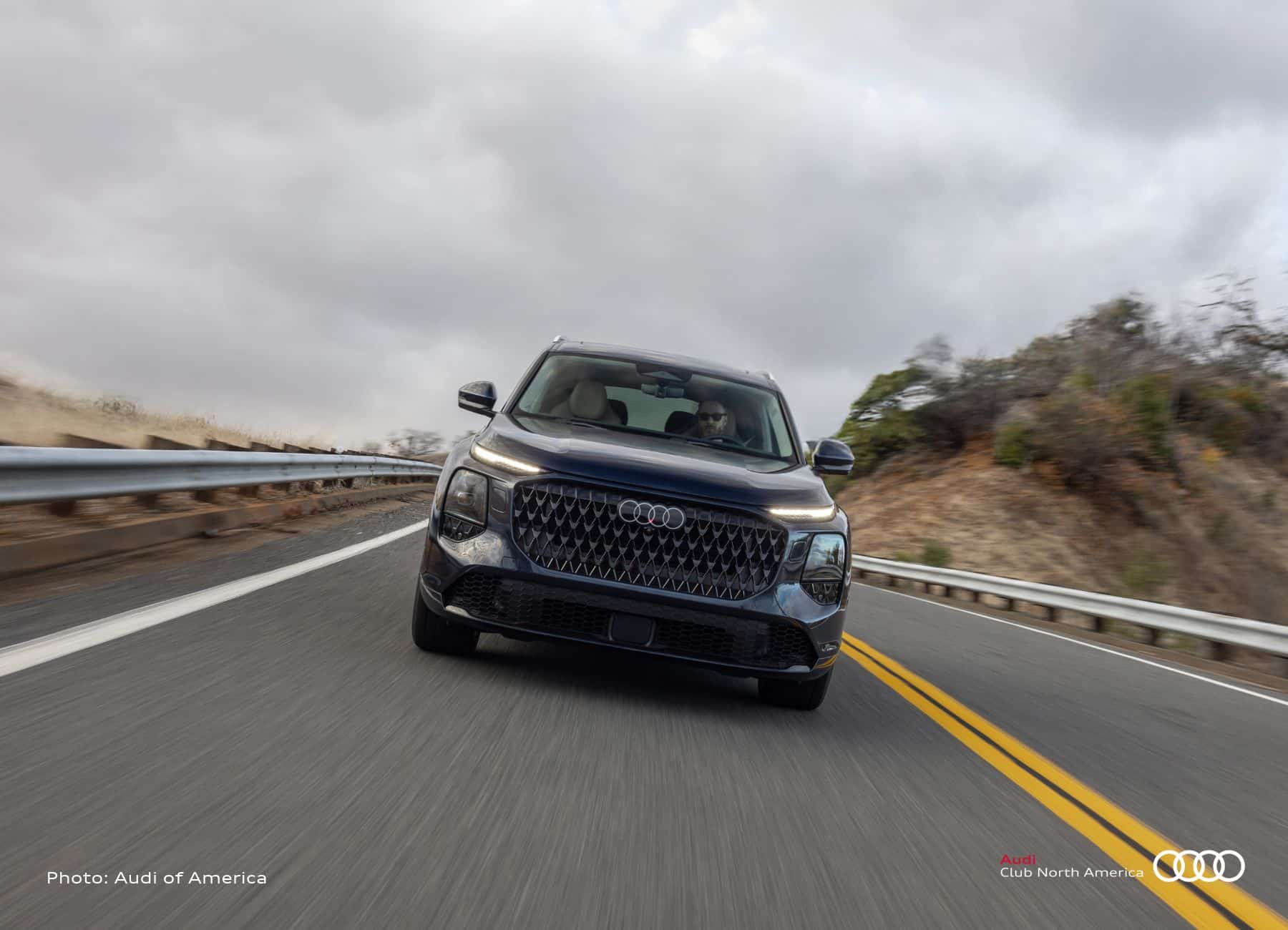
Digital Matrix LED headlights are introduced on the Q7 for the first time in the U.S. market. The result is a system that automatically adjusts the high-beam pattern to avoid dazzling other drivers while maintaining maximum illumination of the surrounding road. The result is greater visibility on dark roads without sacrificing the benefits of high-beam lighting.
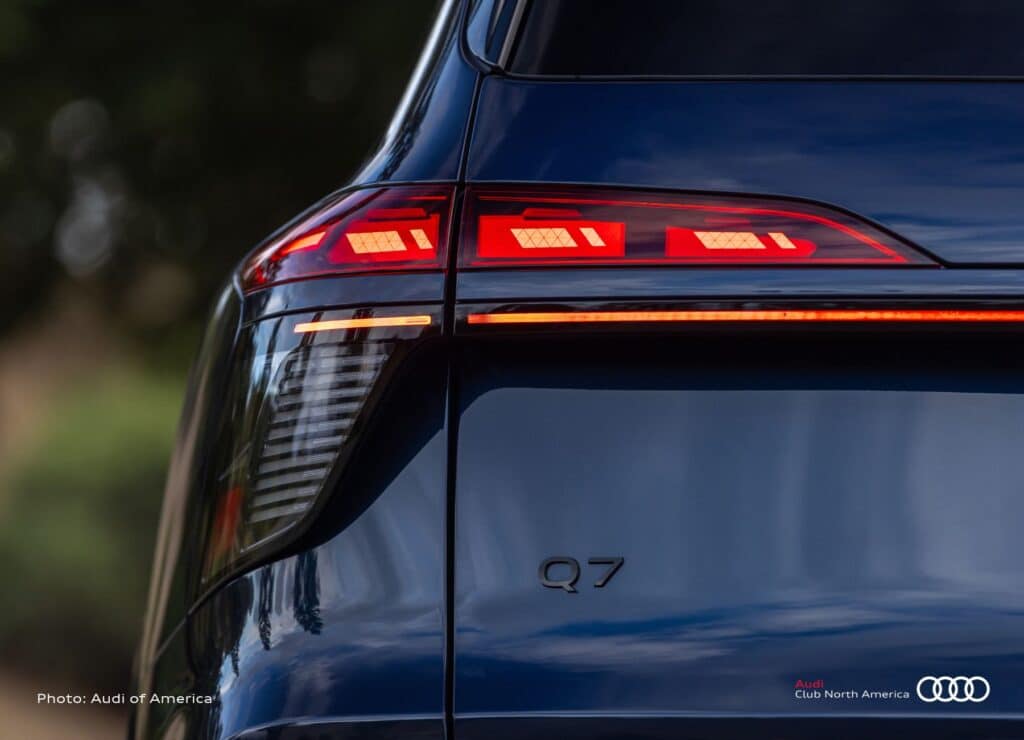
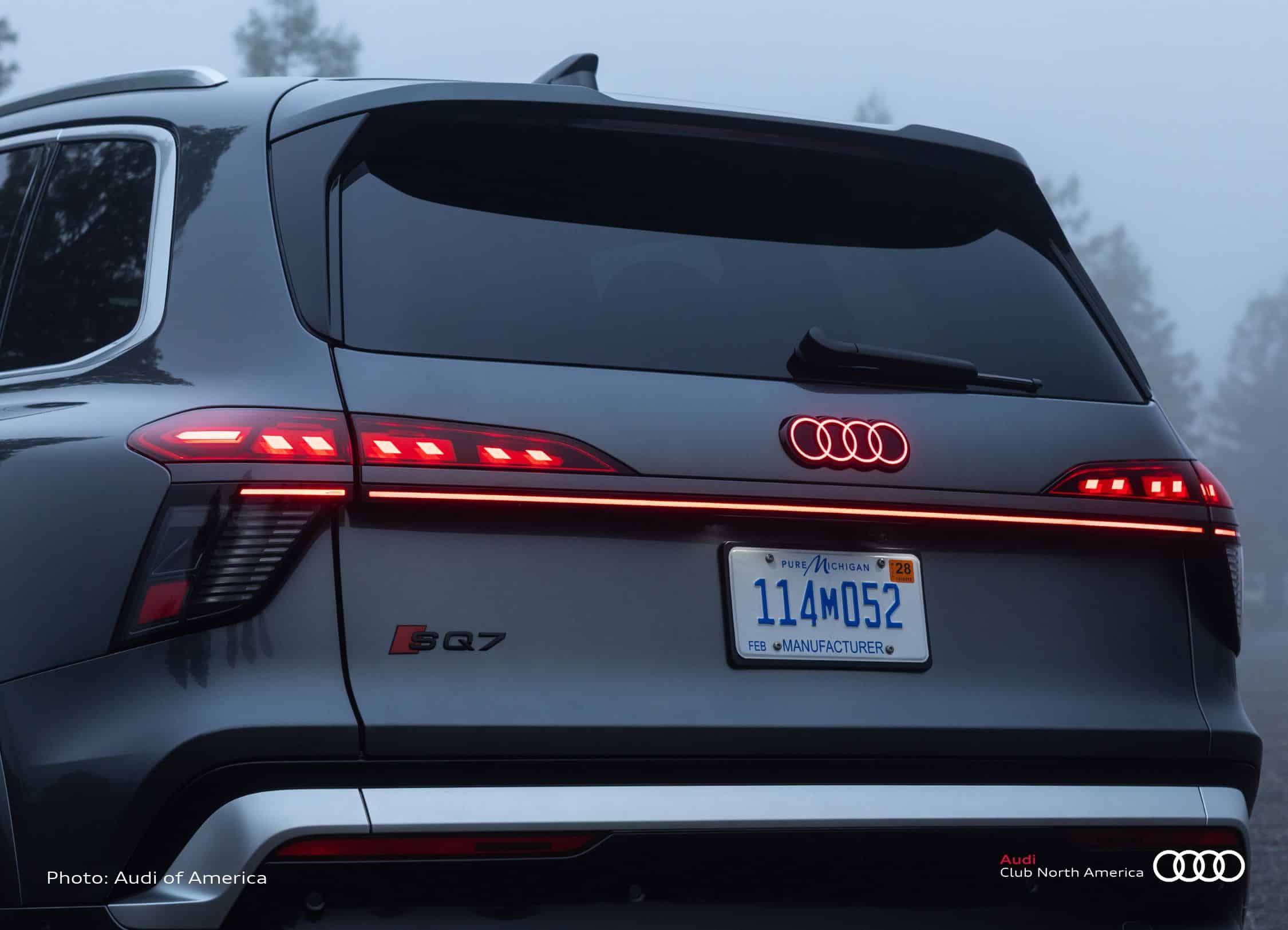
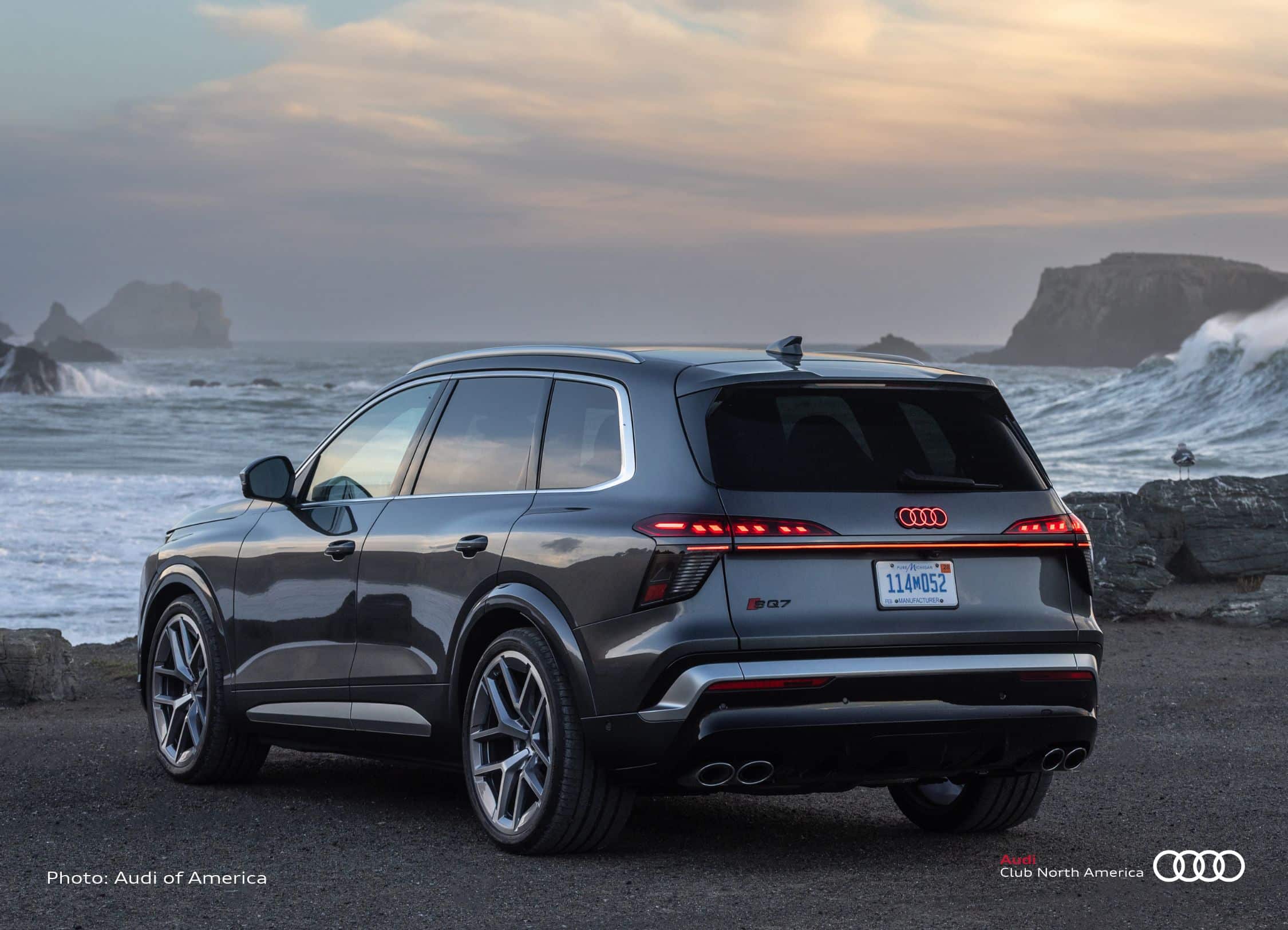
Taillamps are the third-generation styled OLED, which are customizable through the system menu between separate key cycles. This design on the Q7 also includes advanced turn signals that illuminate the pavement on each respective side of the vehicle. These ground-projected indicators make a driver’s intentions more visible to nearby road users, including pedestrians and cyclists.
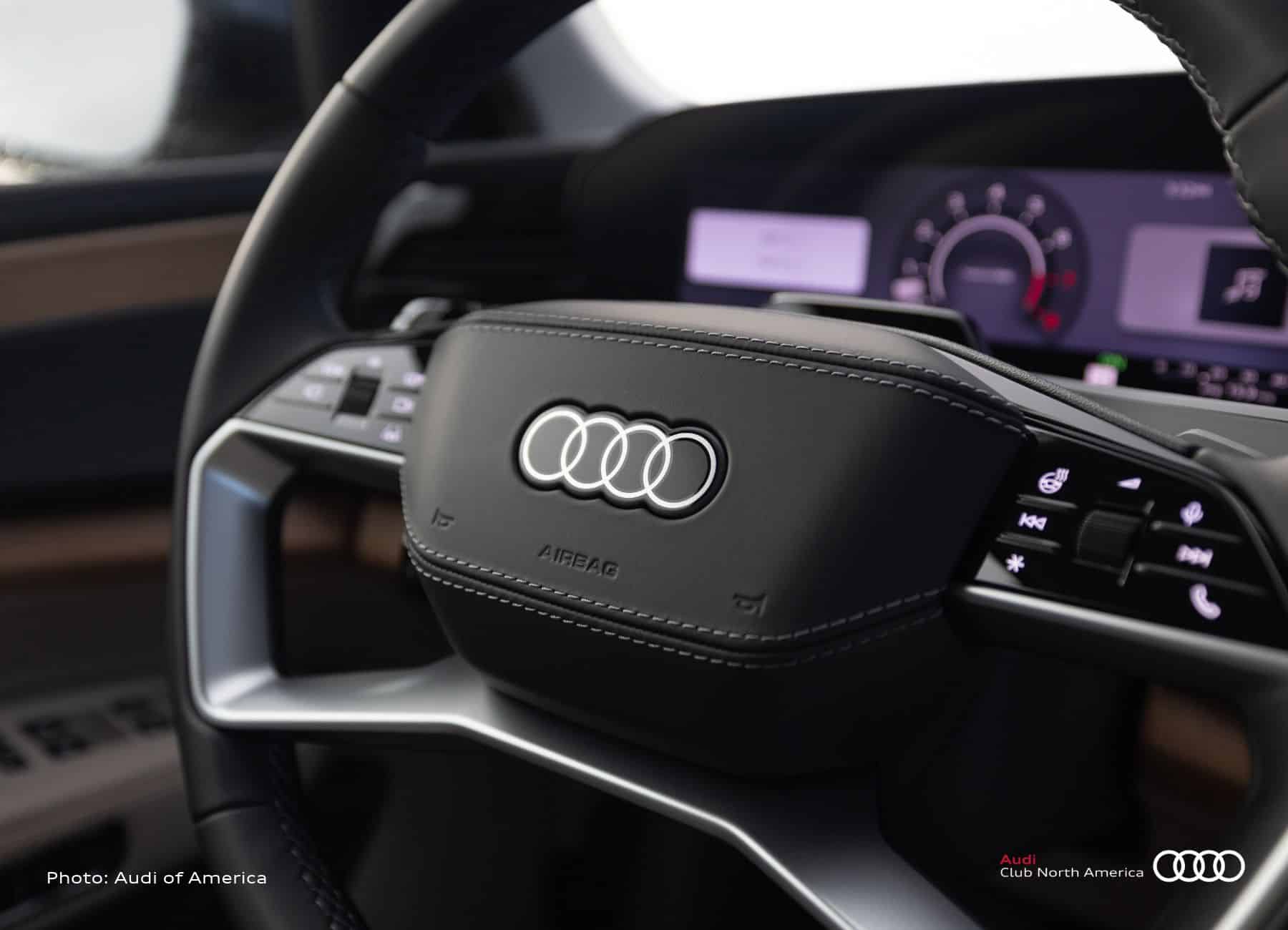
Riding as a front passenger does not disappoint. A 12.3-inch display allowed a real ‘co-pilot’ experience. It was a breeze changing the navigation, music, and seat functions through an intuitive menu screen. Bluetooth connectivity also allows passengers to watch media with ease and with headphone connectivity – certainly a way to avoid distractions.
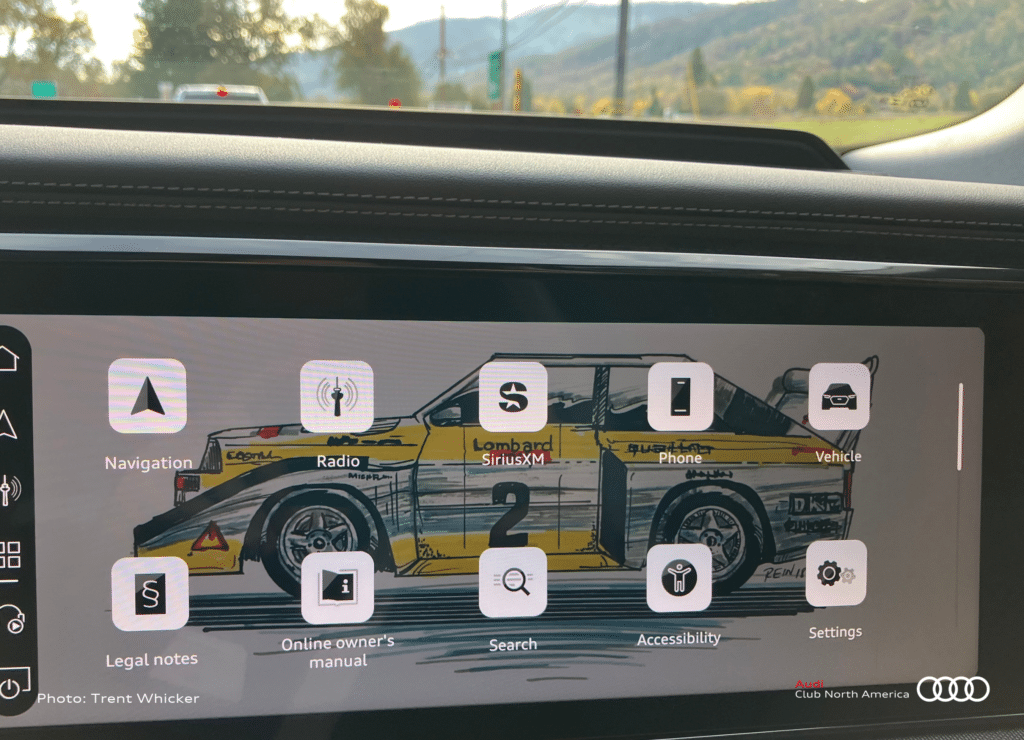
Creature comforts we continue to admire in previous iterations of the Q7 are available in new models, such as adaptive cruise control and heads-up display. Driving aids came in handy with navigating the busy highway commuter traffic we experienced on the CA-101. Although attempted but not perfected due to busy highways and curvy roads, we tested the Level 2+ hands-free driving.
All 2027 SQ7s, Q7 Premium Plus and above include Adaptive Cruise Assist plus as standard. The Audi Connect NAV (an option you pay for) will also help you with stop-light countdowns, adding another tool to the commuter’s arsenal and welcoming passengers to the new ‘Audi Digital Age’.
Driving Impressions
Comparing older models, such as those on the MLB Evo platform, we were able to tell stark differences in the steering, suspension and performance of this new model built on Audi’s Premium Platform Combustion (PPC) architecture.
The Q7 we test drove was composed, effortlessly capable in its own way. The driving modes are essentially the same as the previous generation, testing each with a variety of driving environments. Most of our time was spent driving up and down mountain passes in Dynamic Mode. We tested the car’s ability to handle threshold braking and shifting in a great setting through the Navarro River Redwoods State Park – navigating an array of broken tarmac and wet roads.
The addition of rear steering helps greatly with the handling. It works in two ways:
- Low speeds (below approximately 37 mph): The rear wheels turn in the opposite direction of the front wheels, helping reduce the turning radius. This is especially useful when parking, navigating tight garages, and making U-turns.
- Higher speeds (above approximately 37 mph): The rear wheels turn in the same direction as the front wheels, improving stability, responsiveness, and lane-change behavior on highways.
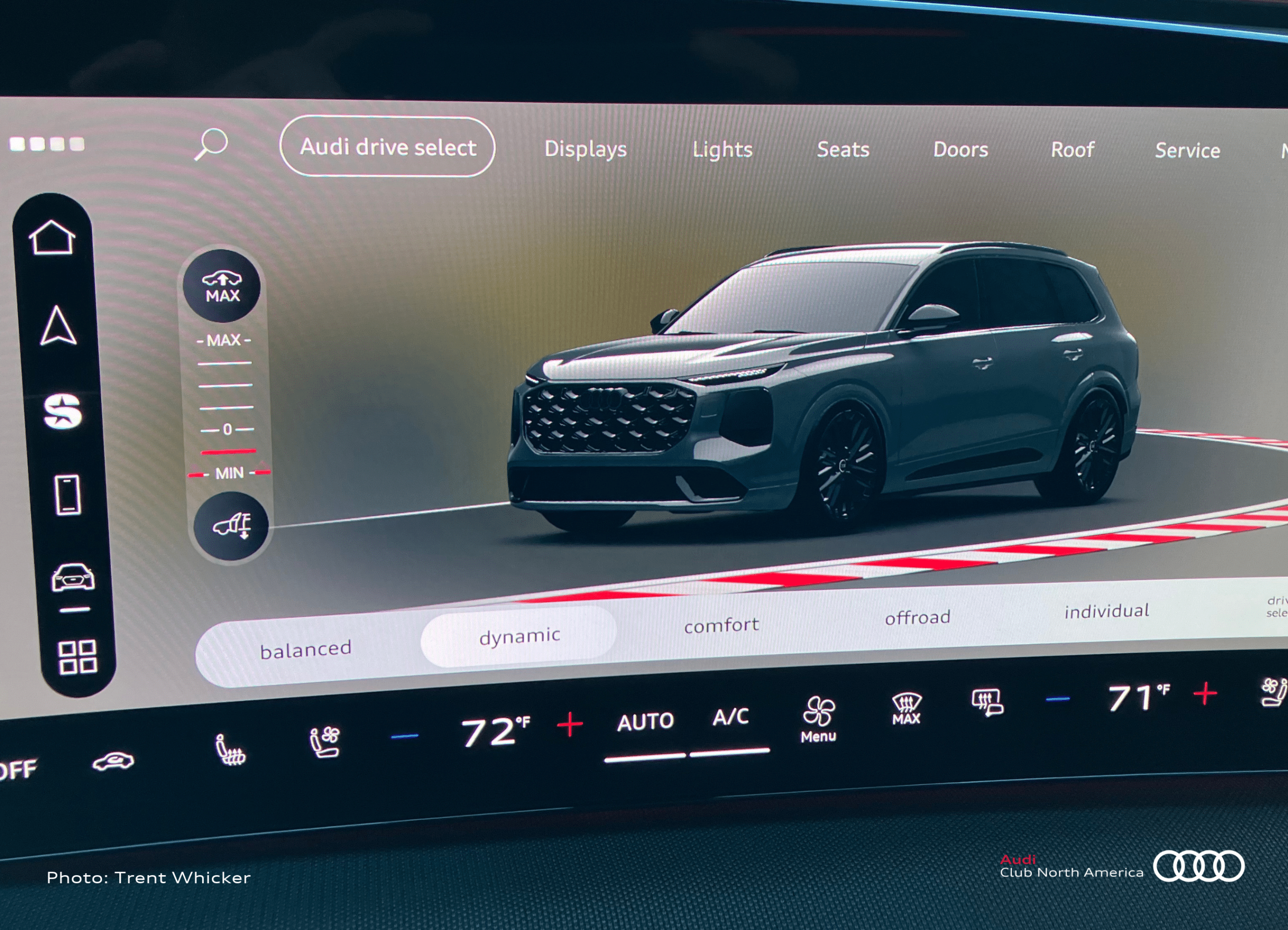
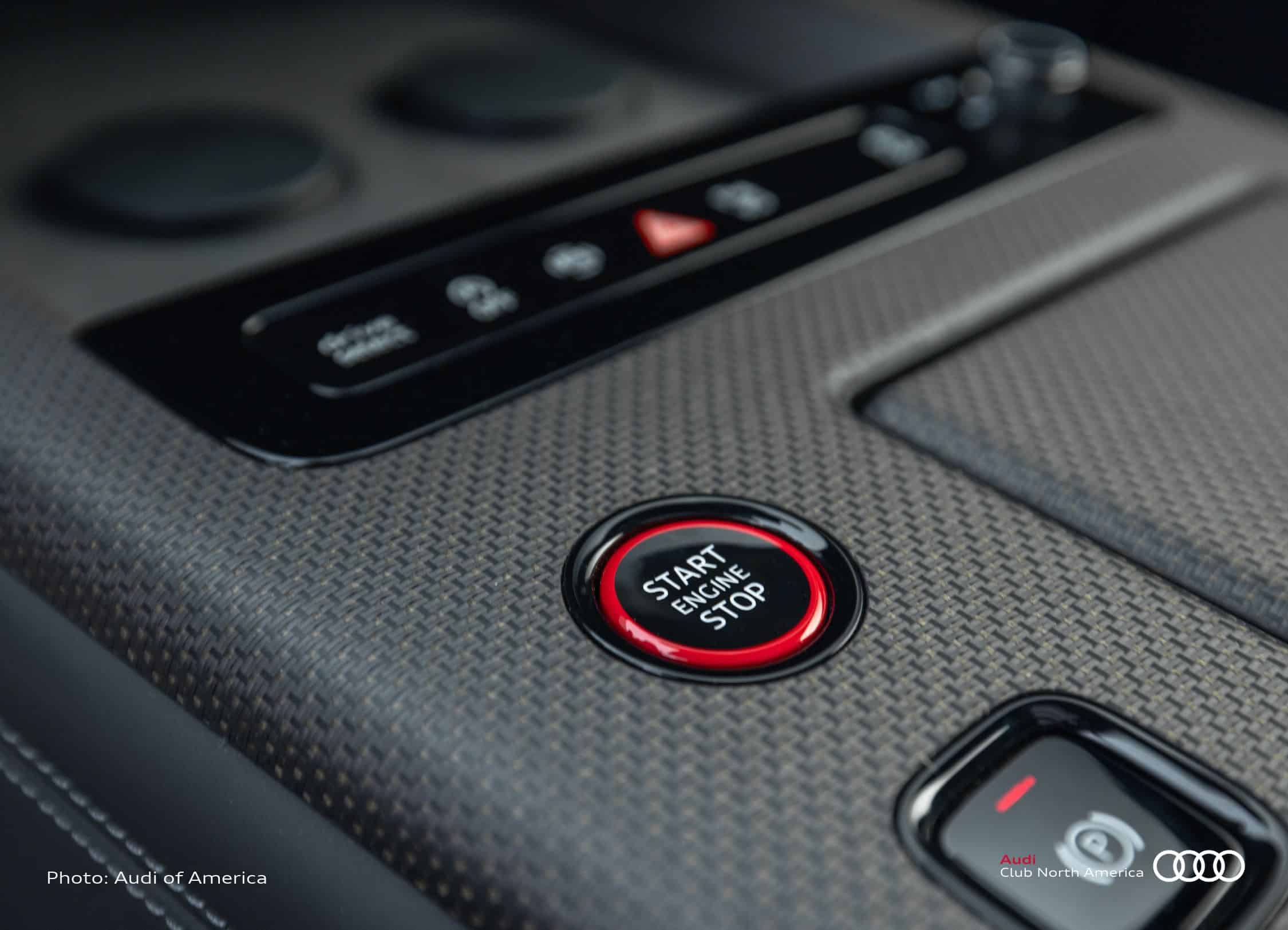
Gear shifting is quick and responsive through the application of paddle shifters on both the Q7 and SQ7. Toggling through the driving modes, we made sure to get the most of the stiffer sway bars and rear-biased quattro system on the SQ7. You can toggle ride height through the menu screen.
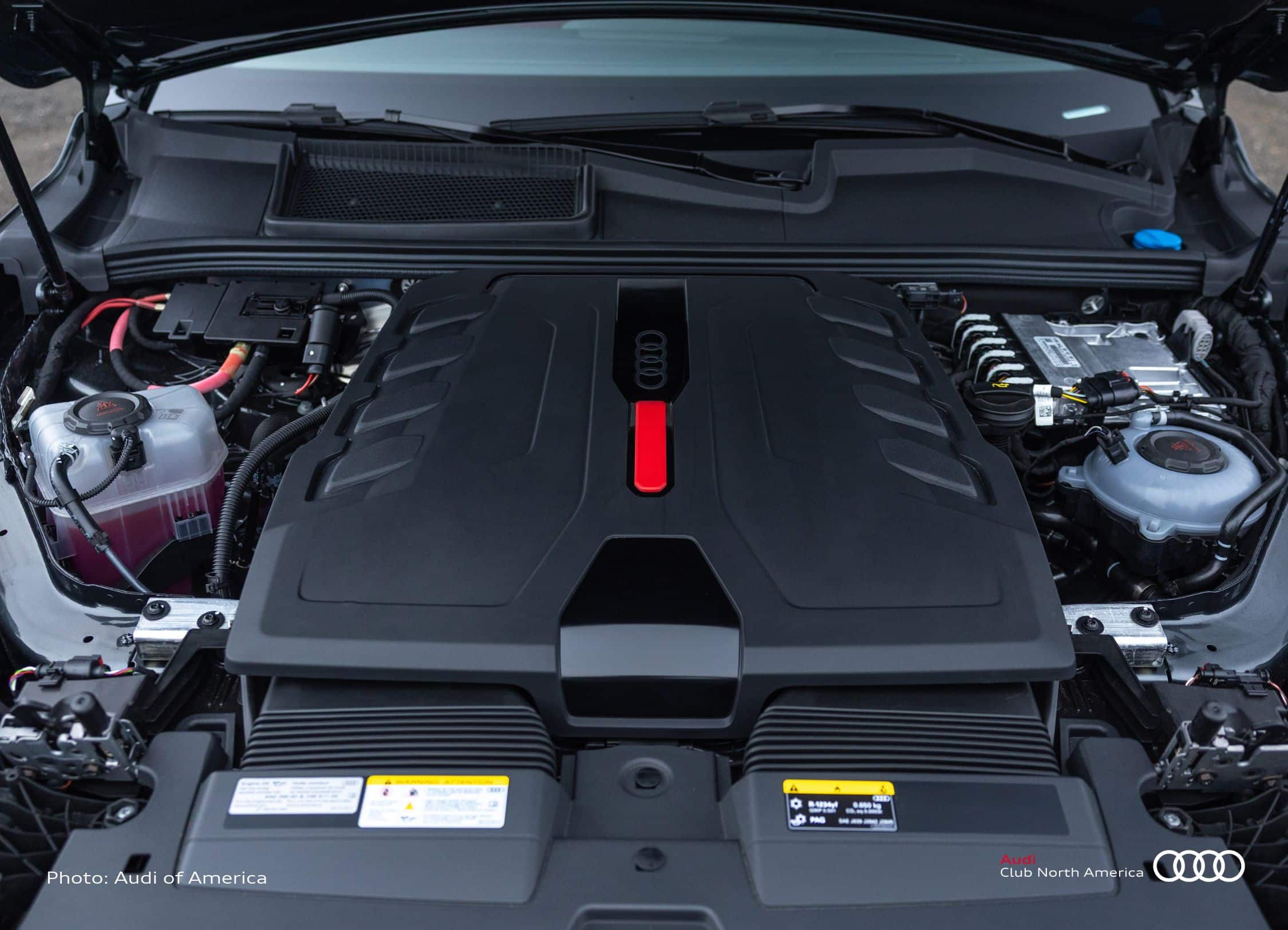
The electronic differential activated through Dynamic setting was very impressive. The SQ7 provided the responsiveness you would expect from the torque-heavy S sport package’s 591 hp 4.0-liter twin turbo V8. With a sharper response than the standard Q7, the V8’s character was emotionally engaging, almost forgetting that we’re tossing around 5,467-pound SUV. For context, the 0 to 60 mph time for the Q7 is 4.8 seconds and 3.7 seconds for the the SQ7. The first generation R8 0 to 60 mph is 4.4 seconds.
Both the Q7 and SQ7 offer more substance, standard. Both offer unique experiences, but both incorporate a broad range of capability. Audi continues to achieve an engineering marvel in making very large cars seem so agile.
For families who need the space of a performance lifestyle, without the abundance of a Q9, the new Q7 offers a great in-between the Q-lineup. These cars are already on dealership lots across the U.S. and Canada.
As tested:
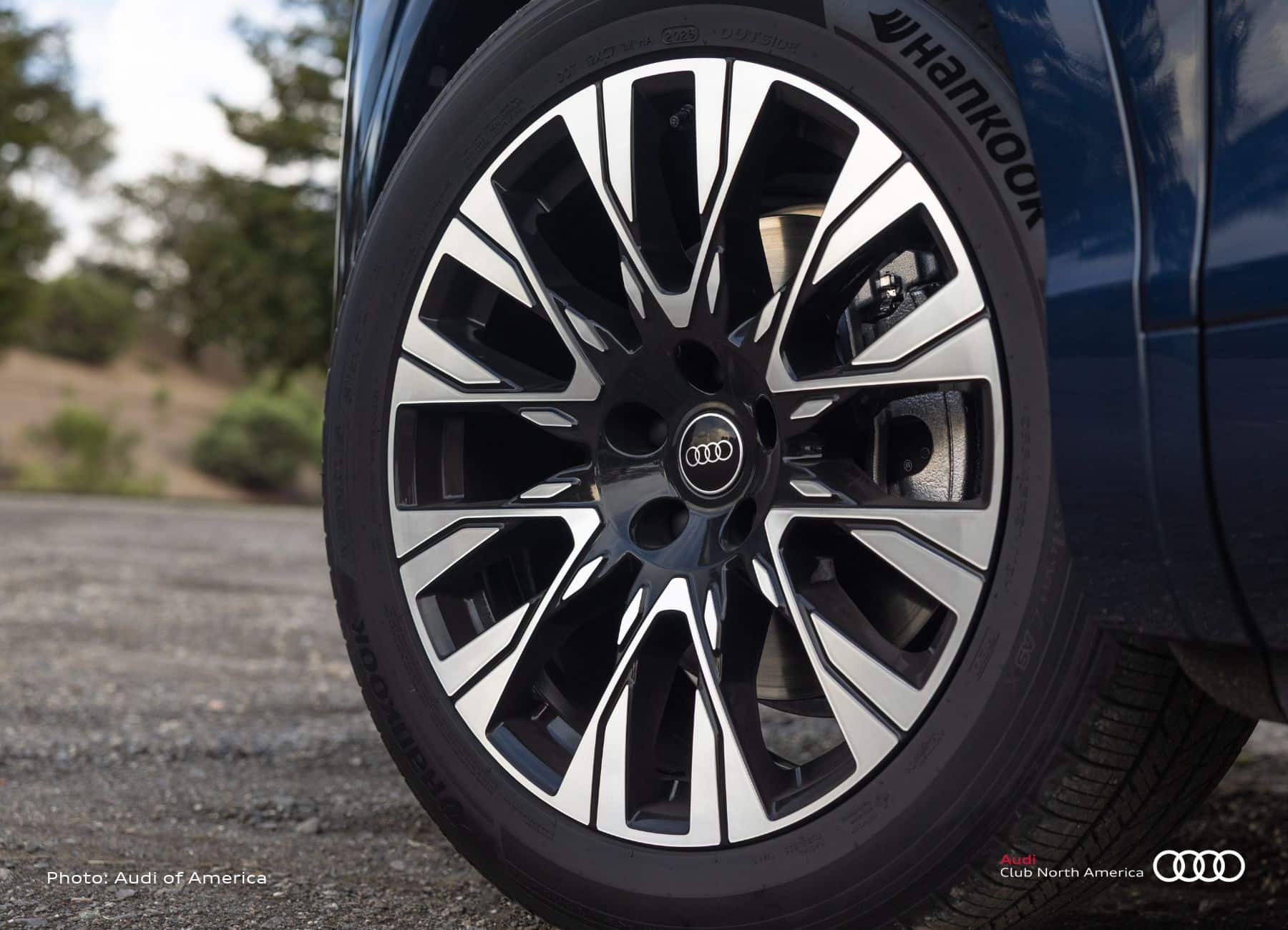
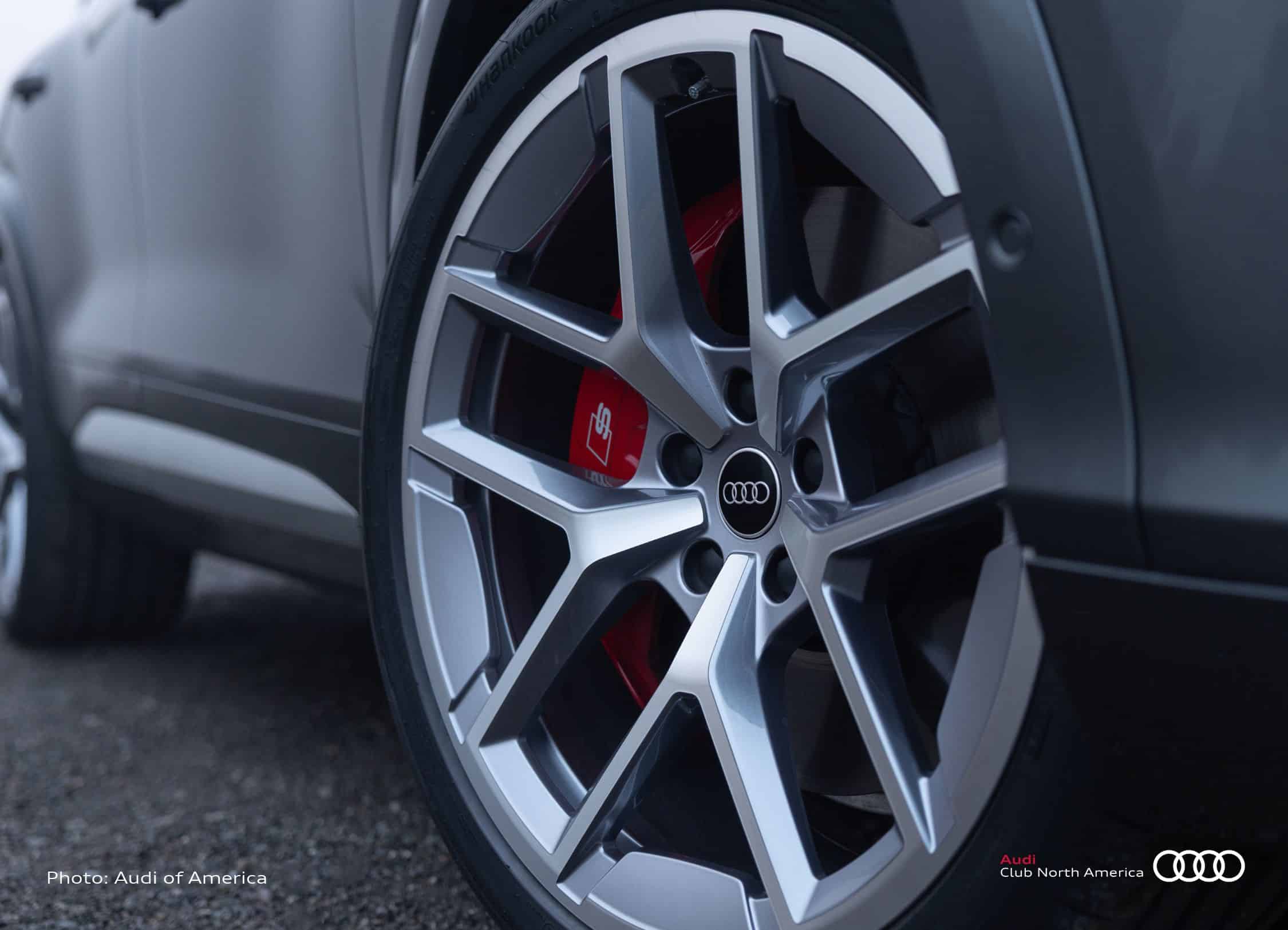
- The 2027 Audi Q7 quattro Prestige was finished in Waitomo Blue metallic with a Stone Beige leather interior. A 2.9-liter twin-turbo V6 making 429 hp and 442 lb-ft of torque. Optional equipment includes the 21-inch wheel package, Bang & Olufsen® 4D Premium sound system, trailer hitch, and second-row captain’s chairs. Price as tested: $90,140.
- The 2027 Audi SQ7 we tested was finished in Daytona Gray pearl with an Arras Red leather interior. A 591-hp 4.0-liter twin-turbo V8. Optional equipment includes the 23-inch wheel package, Bang & Olufsen® 4D Premium sound system, Luxury package, Executive package, Vision package, S sport package, trailer hitch, and second-row captain’s chairs. Price as tested: $115,790.


Responses